

A prequalification can clarify your potential borrowing capacity, but it doesn’t replace a firm project estimate. For financing for an exterior home remodel in Citrus Heights, define the work and its cost first, then compare loan options with the amount you need and repayment terms you can manage. This order can help you avoid borrowing too little or taking on more than the project requires.
Exterior projects can help protect a home from moisture and wildfire exposure while improving its appearance, but the right financing depends on the project scope and your circumstances. Advantage Plus Construction Group specializes in exterior work, including fiber cement siding, stucco systems, and moisture management, serving Sacramento County, Placer County, El Dorado County, and nearby communities such as Roseville, Rocklin, Folsom, Carmichael, Fair Oaks, and Orangevale. This guide explains how home equity loans, HELOCs, renovation financing, and Citrus Heights rehabilitation programs differ, and when to estimate costs relative to applying. You’ll also learn which terms and repayment conditions to review before choosing a path forward.
Key Takeaways
- Compare a home equity loan’s lump-sum structure with a HELOC’s flexible draw period, and weigh how changing rates and repayment phases may affect payments.
- Review eligibility, repayment conditions, and project deadlines before choosing a city or federal repair program.
- Use prequalification to understand potential borrowing capacity, then refine your financing choice around a firm project estimate.
- Calculate the full borrowing cost, including interest, payments, and service charges, rather than focusing only on the amount you can borrow.
- A detailed exterior project scope can help align financing with the work needed to protect and improve your Citrus Heights home.
Understanding loan terms and repayment requirements
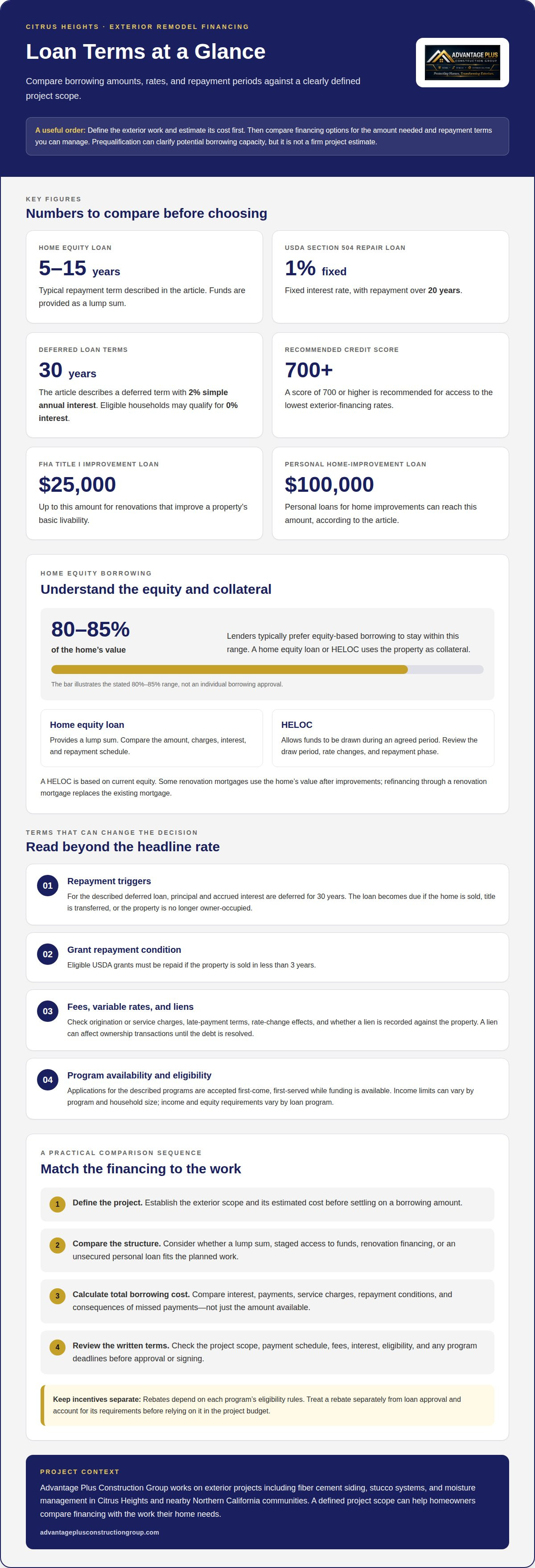
Compare the amount borrowed, interest, repayment schedule, and conditions triggered by a sale or title transfer. These terms determine both your ongoing payments and the obligations attached to the home.
Borrowing Amount and Loan Selection
The amount you need is a key factor when choosing a home improvement loan. A home equity loan provides a lump sum, while a HELOC lets you draw funds during an agreed period. Match the loan structure to the project scope: replacing siding and addressing moisture concerns may call for a different draw pattern than completing several exterior improvements in stages, such as addressing building envelope needs before investing in a custom pool build with CPS Outdoors. Include loan charges when comparing options.
Deferred Terms and Interest Rates
These loans have a 30-year deferred term and a 2% simple annual interest rate. Very-low-income households, seniors age 62 or older, and/or permanently disabled households may qualify for 0% interest. Principal and accrued interest are deferred for 30 years, but the loan becomes due if the home is sold, title is transferred, or the property is no longer owner-occupied.
Repayment Terms and Borrower Requirements
Home equity loans typically have repayment terms of 5 to 15 years. USDA Section 504 repair loans carry a 1% fixed interest rate and are repaid over 20 years. A credit score of 700 or higher is recommended for access to the lowest exterior-financing rates. Income and equity requirements vary by loan program; lenders assess income, existing debts, available equity, and the amount requested.
Applications are accepted first-come, first-served while funding is available. Income limits can vary by household size and program. Household size affects the applicable income limit.
To assess a contractor’s and lender’s standing, review their credentials through the relevant state licensing or financial regulator, and check available complaint or disciplinary records. Before approval or signing, compare the written scope, payment schedule, interest, fees, and repayment conditions. Read every contract and loan document carefully.
Citrus Heights rehabilitation financing and accessibility grants are distinct from rebates. Incentives for energy-efficient windows, roofing, or siding depend on each program’s eligibility rules. Treat any rebate separately from loan approval, and account for its requirements before relying on it in your project budget.
The USDA Section 504 Home Repair program is governed by the Housing Act of 1949 as amended and 7 CFR Part 3550, according to the Electronic Code of Federal Regulations. Eligible USDA grants must be repaid if the property is sold in less than three years.
Renovation mortgage or home-equity financing?
These financing routes differ in how lenders evaluate the home, project, and requested funds. Compare the approval requirements and how well each process fits your plans.
Home Equity Loans and Lines of Credit
For homeowners considering a home equity loan or HELOC, compare the lender’s qualification criteria, fees, and repayment schedule. A second-lien option may preserve an existing first mortgage, subject to qualification and eligible equity. Lenders typically prefer equity-based borrowing to stay within 80% to 85% of a home’s value. Review how the proposed borrowing affects your complete housing debt, not just the new payment.
Renovation and Property Improvement Loans
An FHA Title I Property Improvement Loan can fund contractor-provided materials and labor. For do-it-yourself improvements, it can fund materials only. FHA Title I loans can provide up to $25,000 for renovations that improve a property’s basic livability. Purchase-and-renovation mortgages can include approved improvements alongside a home purchase, with contractor review, a defined scope, and an appraisal based on completed work.
GreenSky home improvement loans are another option to compare, but focus on the specific written offer and funding conditions. Contractors may refer homeowners to independent third-party lenders rather than lending directly. Check whether the financing covers the planned work and how the lender handles payments to the contractor. Those details matter as much as the advertised loan type.
Secured and Unsecured Financing
Secured loans use collateral, while unsecured loans do not pledge the home as collateral. A home equity loan or HELOC is secured by the property; a personal loan is commonly unsecured. Personal loans for home improvements can reach $100,000. Compare the interest, fees, repayment obligations, and consequences of missed payments, then consider whether tying repayment to the home fits your financial priorities.
Financing Risks, Fees, and Liens
Review each offer for origination or service charges, late-payment terms, and any lien recorded against the property. A lien can affect ownership transactions until the debt is resolved. For variable-rate offers, check how rate changes could affect payments and the repayment schedule. Weigh those risks against the full written terms rather than judging financing by the initial payment alone.
Some renovation mortgages use the home’s value after improvements, while a HELOC is based on current equity. Refinancing through a renovation mortgage replaces the existing mortgage. That distinction can matter if preserving current mortgage terms is important. For a clearly defined scope to use in financing comparisons, request an exterior project estimate.
Application timing and prequalification
Start with a preliminary review, then submit a complete application when the project scope is clear. For Citrus Heights homeowners, timing matters because financing approval and contractor scheduling are separate steps.
Prequalification can help estimate borrowing capacity before you make a final commitment. It gives homeowners an early view of how income, existing debt, housing expenses, and available equity may affect an application. Treat that estimate as a planning tool, not approval. The lender determines the final terms and amount after reviewing the complete application.
Begin by identifying the work and likely funding route. A limited repair, a broader exterior remodel, and a renovation mortgage can involve different review processes. Ask the lender what information its initial screening uses, whether it conducts a credit inquiry, and how long the prequalification remains usable. These answers can help you avoid relying on an outdated estimate of borrowing capacity as the project scope changes.
Before applying, assemble the project and household details requested by the specific program. A clear file helps lenders assess the amount, repayment capacity, and property involved. Common categories include:
- Completed application forms and borrower identification.
- Income records and details about existing debts and housing expenses.
- Property information, ownership details, and existing mortgage obligations.
- A written project scope, contractor estimate, and expected work schedule.
Each lender sets its own forms and supporting-document requirements. Confirm the required documents at the outset so missing paperwork doesn’t interrupt the review.
Timing depends on the financing route. A renovation mortgage may require a defined scope, contractor review, and an appraisal based on the completed improvements. That process can suit a purchase or refinance plan, but may add coordination before work begins. If you’re considering this type of loan, map the financing steps alongside the purchase or refinance timeline.
USDA Section 504 Home Repair applications are accepted year-round through local Rural Development offices. That application window doesn’t remove the need to prepare program paperwork or meet eligibility requirements. For any program, submit complete forms and respond promptly to document requests. Future rental income for an addition or accessory dwelling unit should count toward qualification only when that loan’s rules allow it.
Use this sequence to keep decisions aligned: estimate the work, prequalify for the likely borrowing need, then apply using the lender’s required forms. If the scope changes after prequalification, update the financing amount before accepting terms. A well-timed application can help keep the project plan, funding, and approval process in step.
Financing after estimating project costs
Get a firm estimate with clear quantities before applying for financing. Then compare the total borrowing cost with the full project scope, including interest, payments, and service charges.
Comparing Financing Costs and Payments
Use the same project estimate to compare each financing offer. Review the amount borrowed, interest rate, repayment period, monthly payment, and service charges together. A lower payment can reflect a longer repayment period, which may increase total interest. For a HELOC, account for variable rates and possible payment changes as balances and repayment phases shift.
Include all project-related expenses in your funding plan, not just labor and materials. Permit expenses, if required, also affect the amount needed. Home improvements don’t necessarily increase a home’s value by an amount equal to their cost, so weigh durability, maintenance, protection, and resale considerations without treating resale value as guaranteed repayment.
Credit cards require careful comparison. Rates may average over 24% after promotional periods end. A promotional offer can therefore carry a different cost after its initial period. Compare the post-promotion rate and payment obligations with the loan’s full repayment schedule before choosing how to fund the renovation.
Contractor Plans and Lender Loans
Contractor financing may involve a referral to an independent third-party home improvement lender; the contractor may not lend money directly. A bank or credit union sets its own loan terms and application requirements. Compare written offers by interest, fees, repayment schedule, approval conditions, and how funds reach the project.
Some contractors quote financed project prices that are 10-15% higher than their cash prices. Compare the written project price as well as the loan cost, and make sure each offer covers the same scope and quantities. A difference in included work can make two financing options appear more similar or more affordable than they are.
For exterior work in Citrus Heights, permit requirements depend on the project scope, and approval from the local authority may be required. Include applicable permit expenses in the estimate and financing amount so your loan reflects the full project budget. A clear estimate that distinguishes work items and quantities makes it easier to match the requested amount to the renovation.
Once the estimate is settled, ask each lender to assess the same borrowing amount and repayment period. Check whether the loan can cover the complete scope and when funds become available. Renovation loans may require specific fund-management steps, while a HELOC allows draws during an agreed period. Match the funding process to the project schedule instead of borrowing before the work and amount are defined.
Before accepting terms, compare the written loan offer with the estimate, line by line. Confirm the financed amount, payment schedule, interest, service charges, and any permit expenses. This final review helps you assess eligibility and the full investment before committing to the renovation.
Financing options for exterior home renovations
Choose a financing route by matching its purpose and conditions to the property, work, and funding schedule. In Citrus Heights, public repair assistance and private borrowing follow different paths, so homeowners should assess program fit before relying on a particular source.
Match the funding source to the project
Start by separating necessary exterior repairs from optional upgrades. Then identify whether the work addresses property maintenance, accessibility, or a broader renovation. That distinction can help narrow down which program rules apply. An accessory dwelling unit or structural addition, for example, isn’t automatically eligible under every renovation loan product.
Consider how soon the project needs funding and whether the work can be divided into phases. A loan tied to a purchase or refinance may follow a different sequence from financing for an existing home. Keep the application scope consistent with the actual exterior work, especially if plans include several unrelated improvements—such as pairing structural repairs with residential landscape design from Alma Gardening Company.
Consider Citrus Heights rehabilitation assistance
City rehabilitation programs focus on eligible owner-occupied homes, while accessibility assistance serves a specific access-related purpose. These differ from general borrowing for elective upgrades. Before including these funds in a renovation plan, consider whether the home, household, and proposed work match the program’s purpose.
Funding availability and approval affect whether local assistance can support your schedule. Treat a city program as one possible funding path, not a substitute for planning the full project budget. If the proposed work combines urgent repairs with appearance changes, distinguish those items in the scope and identify which address the property’s needs.
Review USDA repair support
USDA Section 504 Home Repair assistance is designed for eligible repair needs, with separate loan and grant eligibility rules. A grant has conditions that differ from a loan, including a repayment condition tied to an early property sale. Consider how long you expect to occupy the home when assessing whether assistance fits your plans.
Keep the work description focused on the repairs being requested. A broad exterior renovation may include items that don’t fit a repair program’s purpose. Aligning the proposed work with the program’s scope can clarify which expenses belong in that application and which need another funding source.
Choose a practical funding sequence
First, define the exterior work and separate essential repairs from optional changes. Next, identify relevant local or federal assistance and review its purpose, eligibility, and current availability. Then compare any remaining funding need with private borrowing options. This sequence keeps the project scope central instead of letting an available loan amount dictate unnecessary work.
Before committing, check whether the funding route supports the project’s timing and full scope. Keep any application plans separate from assumptions about approval, and account for the possibility that one source may cover only part of the work. For a defined exterior scope to use in those comparisons, request an exterior project estimate.
Advantage Plus Construction Group: Exterior Envelope Services
Advantage Plus Construction Group helps Citrus Heights homeowners define exterior work before settling on a financing amount. A project estimate can clarify the scope of siding and stucco repairs, fiber cement siding, or broader Exterior Envelope Services, giving homeowners a concrete basis for comparing lender offers.
Exterior planning also considers how materials and installation address moisture exposure, durability, and curb appeal. A clearly defined project scope helps separate essential repairs from optional improvements, supporting more informed borrowing decisions. Financing remains a decision between the homeowner and lender.
For an exterior estimate tailored to your home, contact Advantage Plus Construction Group.
Move Forward With a Clear Exterior Plan
A financing plan for an exterior home remodel in Citrus Heights works best when it supports improvements suited to your home’s needs and priorities. Decide which exterior issues deserve attention first, then connect that scope to a funding option you can manage with confidence.
Advantage Plus Construction Group offers Fiber Cement Siding, Stucco Systems, and Exterior Envelope Services to help homeowners address exterior performance and appearance. Defining the project scope can ground your next financial decision, whether you want to improve weather protection, refresh curb appeal, or address aging exterior materials.
For a project-specific conversation, contact Advantage Plus Construction Group about your exterior plans. A thoughtful next step can turn uncertainty into a practical path forward, with your home’s long-term protection at the center.
Frequently Asked Questions
Should I get pre-approved for financing before getting a project estimate?
Prequalification can help you understand a potential borrowing range, but get a firm project estimate before submitting a final financing application. The estimate defines the work and the amount you need to fund. For example, siding replacement with concealed damage may require a different scope than a surface repair. If the estimate changes later, update your financing request before accepting loan terms.
Does applying for financing affect my credit score?
A formal credit application may affect your credit score if the lender makes a hard inquiry. Preliminary reviews using soft inquiries generally do not affect your score, but practices vary by lender and application stage. Before applying, confirm the lender’s inquiry type and credit-reporting practices, and review the application disclosure, especially if you plan to apply with several lenders.
Does financing change the price I'm quoted?
Financing doesn’t automatically change the exterior work or its scope, but a financed offer can include separate loan charges or a different project price. Compare written estimates for the same materials, quantities, preparation, and installation work. Then review any finance-related charges separately from the project amount. This helps you see whether a difference comes from the work, the financing, or both.
How can funds be used?
How funds may be used depends on the loan’s rules and approved project scope. A lender may restrict funds to specified home improvements, require contractor invoices, or release money through inspections or milestones. For example, funding for siding work may need to match the approved materials and labor rather than unrelated household expenses. Review the loan documents for permitted uses, disbursement steps, and what happens if the scope changes.
How long does an application take?
Application timing depends on the lender, the completeness of your forms, and the financing product. A straightforward review differs from a renovation mortgage that requires a defined scope, contractor review, and an appraisal based on completed work. Missing income or property documents can also slow the review. Plan financing alongside the project schedule, and don’t treat prequalification as final approval or available funds.
How much money can I get?
There isn’t one borrowing amount for every Citrus Heights homeowner. The approved amount depends on the financing program, income, existing obligations, eligible home equity, and the project’s documented scope. Public repair programs also set their own limits and eligibility rules. Start with the amount needed for the defined work, then compare it with the lender’s approval and repayment terms.
What exterior home remodeling financing options are available in Citrus Heights, California?
Options include home equity loans, HELOCs, personal loans, renovation mortgages, FHA Title I Property Improvement Loans, and qualifying local or federal repair programs. Each has different funding processes and eligibility criteria. For example, a purchase-and-renovation mortgage connects improvements to a home purchase or refinance, while a personal loan is separate from the mortgage. Compare permitted uses, approval steps, and repayment structure.
What are current home improvement loan interest rates and terms in Citrus Heights?
There isn’t one current interest rate or repayment term for every Citrus Heights loan. Public programs publish program-specific terms, while private lenders set offers based on the product and borrower. A HELOC may have a variable rate, so payments can change; fixed-rate products have a different repayment structure. Compare the written rate, term, fees, and payment schedule for each offer before choosing.


