

Could a worn patch of siding or a hairline stucco crack be more than a cosmetic concern? In Sacramento, strong sun, summer heat, and seasonal rain put steady demands on exterior materials, while visible wear doesn’t always reveal what’s happening beneath the surface. A practical plan for home exterior protection Sacramento CA homeowners can rely on considers both the visible finish and the details that help manage moisture.
Durability, moisture management, and curb appeal are worth considering together. This guide explains how fiber cement siding and stucco contribute to exterior protection, why preparation and installation details matter, and what to look for when reviewing your home. It also compares the materials by appearance, upkeep, and fit for your home, rather than relying on blanket claims. Advantage Plus Construction Group serves Sacramento-area homeowners with fiber cement siding, stucco systems, and exterior envelope services, coordinating material procurement, site preparation, and installation.
Key Takeaways
- Home exterior protection Sacramento CA homeowners can rely on depends on suitable materials and well-planned moisture-management details.
- Wall finishes and transitions around openings work together as part of the exterior’s protective system.
- Compare stucco and fiber cement by appearance, maintenance, installation approach, and fit for your home.
- Document visible wear during a simple checkup, but don’t assume surface signs reveal hidden damage.
- Plan exterior work as a coordinated project, with material selection, preparation, detailing, and oversight considered together.
What Home Exterior Protection Means for Sacramento, CA Homes
Home exterior protection is more than a fresh-looking finish. It involves exterior materials and details that help shield a home’s walls from weather and manage moisture. For homeowners considering home exterior protection Sacramento CA, that means looking at the finish as well as the areas around windows, doors, corners, and changes in material.
A cosmetic update can improve appearance without addressing how water is managed at wall junctions. Exterior wall protection is also a different scope from roofing or emergency repair. This guide focuses on siding, stucco, and related exterior-envelope details that contribute to protecting the walls.
What parts of a home exterior help protect the structure?
Siding and stucco form the visible face of an exterior wall, but they are only part of the wall assembly. Other components behind the finish also contribute to separating indoor spaces from outdoor conditions. Their arrangement and condition matter, as does the way the exterior is installed.
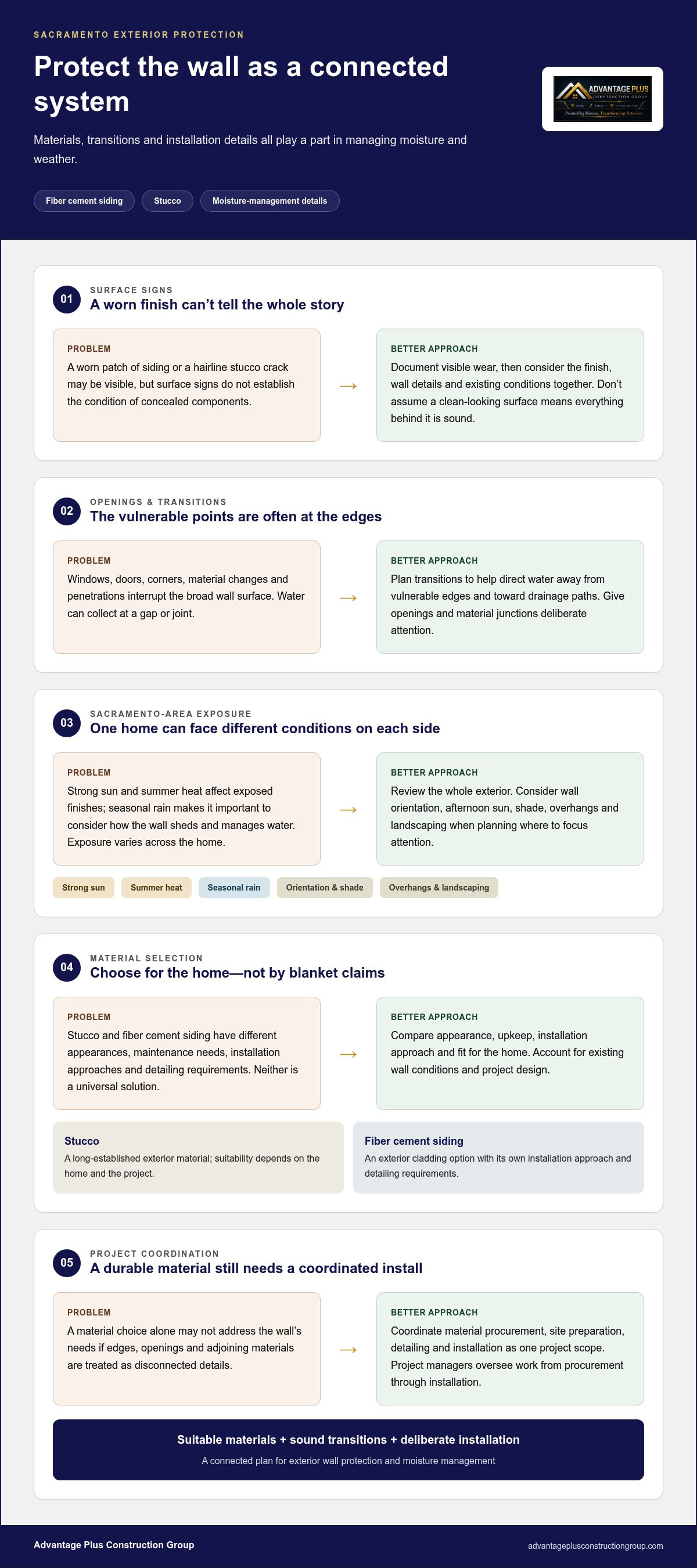
Pay particular attention to transitions: where a wall meets a window or door, where materials meet, and where edges or penetrations interrupt the surface. These details help direct water away from vulnerable areas and toward drainage paths instead of letting it collect at a gap or joint. A finish may look sound from the yard even when a transition needs closer attention.
Stucco is a long-established building material used in a range of exterior applications. For background on its composition and history, see this overview of stucco. Protection depends not just on choosing stucco or siding, but on matching the material to the home and completing the surrounding details with care.
Why Sacramento-area exposure matters when planning exterior work
Sacramento-area homes experience strong sun and heat as well as seasonal rain. Prolonged sun can affect exposed finishes, while rain makes it important to consider how the wall sheds and manages water. A suitable plan accounts for these conditions together rather than treating the finish as a stand-alone shield.
Exposure can vary across a single home. A wall facing the afternoon sun may weather differently from a shaded wall; orientation, landscaping, and overhangs also influence how surfaces age and where moisture may linger. Reviewing the whole exterior is more useful than applying one assumption to every side of the house.
Exterior protection is a coordinated system of suitable materials, sound transitions, and deliberate installation that helps a home’s walls resist weather and manage moisture. Keep this in mind when considering material condition, junctions, and site exposure. Professional preparation and installation bring these elements together to support the home’s performance and appearance.
How Sacramento Home Exterior Protection Works as a Connected System
A wall does not rely on its outer finish alone. The exposed cladding faces the weather, underlying wall components provide additional layers, and openings and transitions help manage water moving across the exterior. If one connection is poorly considered, choosing a durable material alone may not address the wall’s needs.
For home exterior protection Sacramento CA, this systems view makes project scope clearer. Instead of asking only, “Which finish should I choose?” consider how that finish and its details will work with the rest of the exterior. That question helps guide planning before installation.
How siding and stucco contribute to exterior wall protection
Fiber cement siding and stucco are both exterior cladding options, but each has its own installation approach and detailing requirements. Suitability depends on the home, existing wall conditions, and project design. Neither material is a universal solution or performs identically in every application.
The visible surface is only part of the picture. A clean-looking finish does not establish the condition of concealed components behind it. Project planning should consider what is visible, how edges and openings are handled, and how the chosen cladding meets adjoining materials. This connects the material choice to the actual exterior instead of treating it as a surface-only decision.
Why transitions and installation details deserve attention
Water-management details need particular care at windows, doors, corners, and places where exterior materials meet. These transitions interrupt the wall’s broad surface, so they should be planned to help direct water away from vulnerable edges and toward appropriate drainage paths. Careful detailing helps the wall work as a system rather than as disconnected patches.
Sound detailing helps a well-chosen exterior material function as part of a complete wall-protection system. Strong sun and heat can influence which parts of the home need closer observation, while seasonal rain makes transitions and drainage paths important planning considerations. Orientation, shade, overhangs, and landscaping all help shape the project plan.
Coordination starts before installation. Material procurement, site preparation, and application should align so edges, openings, and material changes are addressed as part of one scope. Advantage Plus Construction Group’s project managers oversee work from material procurement through installation. For an overview of the company’s exterior work, visit Advantage Plus Construction Group.
Stucco vs. Fiber Cement: Choosing Sacramento Exterior Protection
Stucco and fiber cement can both contribute to an exterior wall project, but they create different looks and require different installation approaches. Neither is right for every home. When choosing home exterior protection Sacramento CA, compare each material with your home’s design, the condition of the existing exterior, and the details needed to complete the work as a coordinated project.
The table outlines broad material considerations. The actual outcome depends on the home and project scope, so use it as a starting point rather than a substitute for assessing existing conditions.
| Consideration | Fiber cement siding | Stucco system |
|---|---|---|
| General appearance | A siding finish with a defined, panelized or linear look. | A continuous-looking finish that can have a range of surface textures. |
| Installation approach | Requires suitable preparation and careful coordination of boards, edges, and transitions. | Involves preparing the substrate and applying the system with attention to finish and junctions. |
| Maintenance planning | Consider how visible joints and surface condition fit your inspection and upkeep preferences. | Consider how the finish’s condition and surface characteristics fit your upkeep preferences. |
| Project-specific outcome | Depends on the home’s design, wall conditions, and execution of the installation details. | Depends on substrate condition, finish goals, and project-specific detailing. |
When fiber cement siding may fit a protection project
Fiber cement may suit homeowners who prefer the visual rhythm of siding and want to coordinate the exterior with the home’s architectural character. Consider how it will look across the façade, including at corners, openings, and material changes. Sacramento’s sun exposure also makes color and wall orientation worth considering when planning the finished appearance. Preparation and precise installation are central to the project, not optional finishing touches.
For material-specific planning, the topics Fiber Cement Siding Installation Sacramento and Stucco Contractors Sacramento CA help frame the questions this comparison raises. The choice should reflect the home’s existing conditions and your design goals.
When a stucco system may fit a protection project
Stucco may suit homes where a continuous, textured exterior is preferred. Its application and finish create different planning considerations from siding, so assess the substrate and how the system meets windows, doors, corners, and adjoining materials. A familiar appearance alone does not determine whether it fits the project. Review the wall and its transitions before settling on a scope.
Look beyond a simple “which lasts longer?” comparison. A sound decision balances appearance, preparation needs, existing wall conditions, and installation details. Advantage Plus Construction Group coordinates material procurement, site preparation, and installation for fiber cement siding and stucco projects. Explore exterior solutions with Advantage Plus Construction Group to consider how these options may fit your home.
A Sacramento Home Exterior Protection Checkup: What to Assess First
A useful exterior review starts with observation, not diagnosis. You can record what is visible without deciding what may be happening behind a wall finish. For home exterior protection Sacramento CA, a consistent checkup helps turn concerns into a focused project discussion.
What to observe during a visual exterior review
Walk around the home from ground level and look at siding or stucco, changes in finish, and areas around windows and doors. Note peeling, cracks, staining, gaps, or visible deterioration. These are reasons to document an area, not proof of concealed damage or its cause.
Seasonal context can help. If a stain or other concern becomes noticeable after rain, record when you saw it and where it appears. Avoid climbing or opening wall components during a visual review. The goal is a clear record, not an invasive inspection.
Use this sequence to make your observations useful:
- Observe: Review each visible wall and note changes in siding, stucco, finish, or condition around openings.
- Document: Take photos from a safe position and write down the location, approximate size, and when you noticed each concern.
- Assess transitions: Pay particular attention to visible joints and places where materials meet, such as around a window or at a change in cladding.
- Plan the scope: Use your record to guide a discussion of the areas needing attention and appropriate next steps.
How to turn observations into a project plan
Keep observations separate from assumptions. “A crack is visible beside the window” is specific; “water has damaged the wall behind it” is a conclusion that appearance alone cannot establish. Photos taken from the same position over time can help show whether a visible concern appears to change, while notes preserve the context.
Project scope and budget depend on existing conditions, material selection, preparation needs, and project details. A limited area of visible wear may call for a different plan than a broader exterior project, but the appropriate scope depends on assessment, not a guess based on one mark. Planning material procurement, site preparation, and installation helps coordinate the work. Advantage Plus Construction Group project managers oversee these steps from planning through installation.
If your notes show widespread wear or recurring concerns, learn what to watch for in Signs You Need New Siding on Your Home as you consider whether the exterior needs a broader assessment. Keep the record practical: location, appearance, and timing are more useful than an unsupported diagnosis.
Ready to turn your exterior observations into a considered project plan? Discuss your exterior protection project with Advantage Plus Construction Group.
Plan Long-Term Exterior Protection with Advantage Plus Construction Group
A well-planned exterior project involves more than choosing a material. The selected siding or stucco should suit the home, and preparation and installation details should account for existing conditions and transitions across the walls. For homeowners considering home exterior protection Sacramento CA, coordinating these decisions helps connect protective function with the finished appearance.
Advantage Plus Construction Group specializes in fiber cement siding, stucco systems, and exterior envelope services for the Sacramento region. The company coordinates material procurement, site preparation, and installation as part of an exterior project, with attention to how the work fits the home.
What coordinated exterior project oversight brings together
Project managers oversee work from material procurement through site preparation and installation. Connecting these stages helps keep decisions and work aligned as the project moves forward, supporting timely completion and budget compliance. Planning also keeps attention on the details that shape the finished exterior, from preparation through installation.
Advantage Plus Construction Group serves Sacramento-area communities including Roseville, Granite Bay, New Castle, Rocklin, Penryn, Loomis, Citrus Heights, Orangevale, Fair Oaks, Carmichael, and Antelope. Each home has its own design, existing materials, and exposure conditions. Project planning can account for these factors while keeping the selected material and installation scope connected.
- Material procurement: Coordinate the selected fiber cement siding or stucco system with the project plan.
- Site preparation: Plan the work around the home’s existing exterior conditions.
- Installation: Carry out the project with attention to the material and its details.
Take the next step toward a protected, polished exterior
Start with what you can see. Review the exterior’s condition, note visible concerns, and compare stucco and fiber cement against your design preferences and the home’s existing conditions. You do not need to diagnose concealed wall conditions on your own. A clear record of visible issues and your goals is a practical starting point for planning.
Advantage Plus Construction Group brings together fiber cement siding, stucco systems, and exterior envelope work. Careful planning, preparation, and project oversight help align the work with the protection and appearance you want for your home.
Ready to discuss your Sacramento-area exterior project? Discuss your exterior project with Advantage Plus Construction Group.
Make Your Next Exterior Decision with Confidence
A thoughtful exterior project begins with a clear priority: what do you want your home’s walls to do better, and what appearance do you want to preserve? Use that question to shape a focused conversation about home exterior protection Sacramento CA. A clear goal helps keep decisions practical and align the work with your home.
You do not need to have every detail resolved before moving forward. Bring your observations, questions, and design preferences to Advantage Plus Construction Group. The team works with fiber cement siding, stucco, and exterior envelope projects to help plan a direction suited to your home.
Discuss your Sacramento-area exterior project and take the next step toward an exterior that reflects your priorities.
Frequently Asked Questions
Is home exterior protection different from exterior painting?
Yes. Exterior painting refreshes or changes a surface finish, while home exterior protection Sacramento CA homeowners plan may also involve cladding, wall transitions, and moisture-management details. For example, repainting a wall will not by itself resolve a gap where siding meets a window. The right scope depends on the concern: a finish update, a cladding project, or work addressing how exterior wall components fit together. If your property only needs surface revitalization, contractors like propainterusa.com offer dedicated residential and commercial painting services.
Can fiber cement siding and stucco be used on the same home?
Yes, they can be combined when the home’s design and project plan support both materials. A homeowner might consider siding on one portion of the exterior and stucco on another, but the visual balance and the meeting point between materials need careful planning. Existing wall conditions matter, too. A coordinated design should address transitions so the finishes look intentional and connect appropriately.
Can new siding be installed over existing siding?
Sometimes, but it should not be assumed to suit every home. The existing siding’s condition, how securely it is attached, and the details around windows, doors, and trim can affect whether covering it is appropriate. Installing a new layer may also conceal the old surface, so it will not resolve underlying concerns simply by hiding them. Assess the existing wall and project requirements before deciding on removal or an overlay.
Does stucco need a separate moisture-management plan?
Stucco needs moisture-management details suited to its system and the specific wall, just as other claddings need details suited to their installation. Consider how the stucco meets windows, doors, penetrations, and adjoining materials, as well as how the substrate is prepared. A surface finish alone does not determine how the assembly handles water. The project plan should account for these connections rather than treating stucco as an isolated coating. Established stucco repair specialists, such as Premier Plastering, similarly emphasize addressing underlying moisture barriers and thorough patching rather than relying on quick cosmetic touch-ups.
What should I document before planning an exterior renovation?
Along with photos and location notes, gather any records you have about previous exterior work, such as project documents or notes about repairs and maintenance. Record which sides of the home show concerns and whether you noticed them after a particular weather event. This history can help distinguish a one-time observation from a recurring pattern. Keep your notes factual: visible signs are useful, but they do not establish concealed conditions.
Can Sacramento-area weather affect the timing of exterior work?
Yes. Sun, heat, and rain can affect project planning and the conditions under which exterior work proceeds, so timing and sequencing should reflect the work involved and the forecast. This matters across Roseville, Granite Bay, New Castle, Rocklin, Penryn, Loomis, Citrus Heights, Orangevale, Fair Oaks, Carmichael, and Antelope, though exposure and shade vary by home. A project schedule should account for weather without assuming one season fits every job.
Does exterior protection include the roof?
Not in the scope discussed here. This guide focuses on exterior walls and related envelope details, including siding, stucco, and their connections around openings or material changes. The roof is a separate part of the home’s exterior and requires its own project scope. If you are documenting concerns, note whether they involve a wall or roof area so the issue can be described clearly and the relevant work considered separately.


