

The best house siding for Northern California’s climate depends on the home, but fiber cement is a strong all-around option when wildfire exposure, durability, and manageable upkeep matter. It is non-combustible and does not absorb moisture like wood, though it does need periodic repainting. Coastal fog, inland heat, budget, and preferred maintenance all affect the decision.
Appearance is only part of the choice: siding helps protect your home, and installation affects how well that protection performs. This comparison looks at fiber cement, stucco, vinyl, and wood, including installation, upkeep, cost considerations, wildfire exposure, and coastal moisture. Use the trade-offs to narrow your options for Northern California conditions.
Key Takeaways
- Compare siding by climate exposure as well as appearance: inland heat, wildfire risk, and coastal moisture can change which trade-offs matter most.
- Fiber cement combines non-combustibility with long-term durability, but factor periodic repainting into your maintenance plan.
- Installation details matter. Sound flashing, moisture management, and applicable building-code requirements help protect the wall assembly.
- Look beyond upfront cost by weighing upkeep, repair needs, and how each material performs in the conditions around your home.
- Use the decision guide to narrow choices for wildfire-exposed walls or fog-prone coastal areas before selecting a finish and style.
What is Fiber Cement?
Fiber cement siding combines cement and reinforcing fibers to create durable exterior cladding. Before choosing a finish in Northern California, compare its fire resistance, upkeep, and temperature performance with stucco, vinyl, and wood.
Fiber Cement Durability and Fire Resistance
Fiber cement siding can last 30-50 years or more with proper maintenance. It is non-combustible, a useful distinction from combustible wood siding in wildfire-exposed areas. Hardie® fiber cement products have a Class A fire rating when tested under ASTM E84, and a flame spread index of zero. These product-specific figures illustrate fire performance, not a guarantee that an entire home is fireproof.
Cold conditions also matter: fiber cement is less brittle than vinyl and is less likely to crack or split in extreme cold. It does not absorb moisture like wood. In colder Northern California locations, pairing fiber cement with insulation can help protect against cold and reduce energy bills.
Hot-Summer Performance of Fiber Cement and Stucco
Inland Northern California can bring sharp temperature swings. Summer temperatures in the Central Valley and inland areas such as Sacramento can reach 105°F and fall to 65°F at night. Siding in these conditions must withstand thermal expansion and contraction, while its finish needs to resist fading under intense UV exposure.
Fiber cement and stucco are both worth considering for hot summers, but their installation and upkeep differ. Stucco is low maintenance after installation, and expert application helps prevent cracking. Fiber cement comes in a range of colors and styles, including cedar-look shingles. For either material, consider each wall’s exposure and the care its finish will need.
Fiber Cement Maintenance
Durability doesn’t mean maintenance-free. Fiber cement typically requires repainting every 10-15 years, so include finish care in your ownership plan. That schedule differs from wood siding, which typically needs painting, staining, or sealing every 3-7 years. Wood also needs regular protection against moisture, UV damage, rot, and insects.
With fiber cement, consider the finish as well as the siding. Color and style shape the home’s appearance, and periodic repainting helps maintain the surface. Stucco is low maintenance after installation, though skilled application matters to help prevent cracks.
| Option | Durability and exposure | Care consideration |
|---|---|---|
| Fiber cement | 30-50 years or more; non-combustible | Repaint typically every 10-15 years |
| Stucco | Suitable to compare for hot-summer conditions | Expert application helps prevent cracking |
| Vinyl | Dark colors may warp or fade in inland heat; can become brittle in extreme cold | Assess heat and impact exposure |
| Wood | Absorbs moisture and is combustible unless treated with fire retardant | Paint, stain, or seal typically every 3-7 years |
Choose by matching the wall’s main exposure to the material’s trade-offs: fiber cement for non-combustibility and longer repainting intervals, or stucco where its finish and installation requirements suit the home. For inland sites, weigh heat and UV exposure; for colder areas, compare moisture behavior and insulation needs.
Installation complexity and building-code considerations
Siding installation involves more than attaching a finish to an exterior wall. Material movement, water management, and fire exposure all affect the assembly. A sound plan matches the siding layout to the wall and applicable code requirements.
According to the California Building Standards Commission, the 2025 California Building Standards Code, including the stand-alone California Wildland-Urban Interface Code, took effect on January 1, 2026. For homes in applicable wildland-urban interface areas, fire-resistant siding may be required. The rules and exceptions depend on the project, so identify the property’s location and scope before settling on materials.
California’s Wildland-Urban Interface Code requires at least 6 inches of metal flashing or noncombustible material at ground, decking, and roof intersections. These transitions deserve careful attention: they meet surfaces where water can collect or enter the wall. The code lists ASTM E2707 and SFM Standard 12-7A-1 as direct-flame test standards for qualifying exterior wall assemblies. That distinction matters when comparing a siding product with the performance of a complete wall assembly.
The code’s application section lists additions to and remodels of buildings originally constructed before July 1, 2008, among its exceptions. That is a specific exception, not a blanket exemption for every older home or project. Confirm the construction date and the work being planned as part of determining which provisions apply. The California Building Standards Code is the relevant starting point for that review.
Temperature changes also affect installation. Siding materials expand and contract as conditions shift, so layout and fastening must follow the chosen product’s requirements. A hot inland wall may face different conditions from a shaded elevation. Shingles, panels, and architectural details create different edges and junctions, which must be integrated carefully with flashing and the surrounding exterior.
Installation errors can lead to moisture intrusion, premature material failure, and voided warranties. Wood siding, for example, needs flashing to direct water away from the house and support ventilation. Proper removal of the old exterior matters too, because concealed damage can affect the new assembly. Precision is essential, not cosmetic.
Before work begins, clarify the project scope, identify vulnerable transitions, and coordinate the siding layout with the wall’s exposure. Professional installation helps manage removal, flashing, and moisture details that protect the structure over time. For homes where these components need to work together, consider how exterior envelope services can address the siding and surrounding wall assembly as one system.
Maintenance and long-term ownership costs
Fiber cement, wood, vinyl, stucco, and engineered wood differ in expected lifespan and ongoing care. Compare finish schedules, wear from exposure, and repair needs to understand each material’s long-term demands.
Siding Cost and Long-Term Maintenance
Long-term ownership involves more than choosing a siding material. Removing existing cladding, replacing flashing or trim, and addressing concealed rot can all affect the work required. Vinyl is generally the most budget-friendly option upfront, while wood can need more frequent finishing. Compare maintenance and likely repairs alongside the initial project scope.
Use a practical checklist: note the finish, each wall’s sun exposure, and the upkeep the material requires. A shaded elevation and a sun-exposed wall can weather differently, so assess each side rather than assuming the whole home needs the same attention.
Siding Lifespan and Maintenance
Fiber cement siding can last 30-50 years or more with proper maintenance, and typically requires repainting every 10-15 years. Engineered wood is described as lasting 30-50 years with proper maintenance. These lifespan estimates make finish care part of the comparison, not an afterthought.
Wood siding typically needs painting, staining, or sealing every 3-7 years. Regular finishing helps protect it from moisture, UV damage, and insects. By comparison, stone and brick veneer are described as lasting 50-100+ years with virtually no maintenance, though their installation differs from traditional siding.
Durability Across Siding Materials
Fiber cement, wood, vinyl, stucco, and engineered wood each require a different care plan. Wood needs regular finishing and can be vulnerable to rot and insects. Vinyl does not need repainting, but dark colors may warp or fade in intense inland heat, and vinyl can become brittle in extreme cold. Stucco is low maintenance after installation, while expert application helps prevent cracking.
Engineered wood is described as lasting 30-50 years when properly maintained. Fiber cement can offer a longer repainting interval than wood, though it still needs finish care. A lifespan estimate describes the material under proper maintenance, not a promise for every Northern California home.
To compare ownership demands, list each option’s finish schedule, exposure risks, and repair considerations. A wall receiving strong sun, for example, may need more finish attention than a shaded elevation. In Sacramento and nearby communities, consider the home’s specific sun and moisture exposure when deciding which maintenance routine is manageable over time.
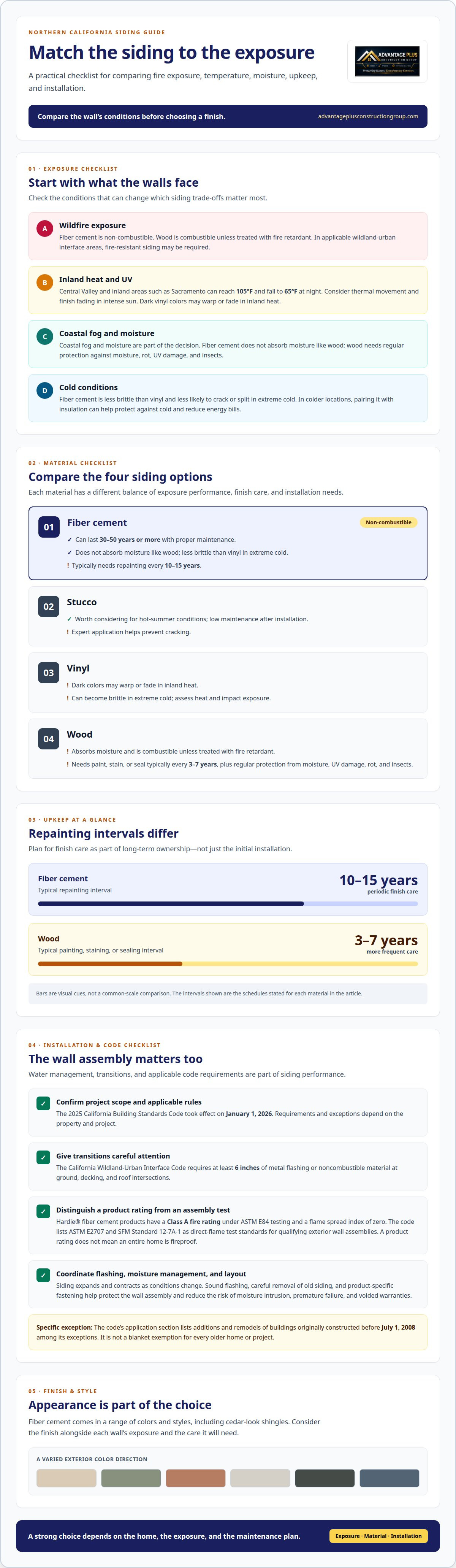
Siding choices for wildfire-exposed wall areas
On walls exposed to wildfire risk, prioritize resistance to ignition rather than appearance alone. Fiber cement is non-combustible, while wood is combustible unless treated with fire retardant. Vinyl can melt under high heat and offers little fire protection, so these materials do not provide equivalent protection.
The University of Nevada, Reno Extension advises favoring noncombustible siding, especially when neighboring homes are within 30 feet. That recommendation makes nearby structures part of the exposure assessment, alongside the home’s own walls. Siding is one part of exterior protection, not a guarantee against wildfire damage; wall details and surrounding conditions also matter.
Inland Northern California brings another challenge: summer heat and intense UV exposure. Homes around Sacramento, Folsom, and parts of the East Bay need siding that tolerates temperature changes and resists fading. Fiber cement comes in a range of colors and styles, including cedar-look shingles, giving homeowners options without choosing combustible wood.
Which colors and materials resist sun fading best? There is no established single best color, so compare the material and finish rather than assuming one shade will last longest. View samples on the home at different times of day, since sunlight can make colors appear different on exposed and shaded walls.
Consider vinyl carefully on hot, sun-exposed elevations. Dark vinyl can absorb substantial heat and may warp or fade in extreme inland conditions. Vinyl can also warp or melt near heat sources such as grills and fire pits, or from reflected sunlight. Include nearby patios and reflective surfaces in your exposure review.
Fiber cement is a durable option where wildfire exposure and strong sun overlap. Its non-combustible composition distinguishes it from untreated wood, and its available styles can create a cedar-like appearance without wood siding. The finish still needs care, so weigh fire resistance and appearance against repainting needs over time.
Conditions vary between inland and coastal Northern California homes. A sun-exposed wall in the Sacramento area may need more attention to heat and UV exposure, while a shaded elevation can have different finish-care demands. Compare each wall’s exposure rather than assuming one color or material performs the same on every side.
Use a wall-by-wall review: identify nearby homes, direct heat sources, sun exposure, and the material’s fire behavior. For a close neighbor, the 30-foot guidance from the University of Nevada, Reno Extension supports giving noncombustible siding serious consideration. Then compare finish choices against the home’s sunlight patterns and maintenance needs.
Northern California coastal moisture and fog
Fog, humidity, and ocean moisture shape siding decisions along Northern California’s coast. Fiber cement, stucco, wood, and overlapping-board siding each respond differently to wet conditions.
In coastal or rainy areas, compare materials for moisture resistance and protection against rot and mildew. Fiber cement does not absorb moisture like wood, while wood needs regular care to help prevent rot and insect damage.
Bay Area Fog and Humidity
Bay Area fog and North Bay coastal conditions expose exterior walls to recurring moisture, cooler temperatures, and humid air. Siding and wall details need to manage water rather than trap it. Fog can keep shaded elevations damp longer, so assess them separately from sun-exposed sides when planning finishes and maintenance.
Salt air is another coastal consideration. Evaluate how the finish and exposed joints may hold up, and pay attention to where siding meets trim, windows, and other transitions.
Siding Resistance to Rot, Mold, and Pests
Fiber cement does not absorb moisture like wood, an advantage when comparing materials for damp conditions. Wood can absorb moisture and is vulnerable to rot, termites, and carpenter ants if maintenance falls behind. Stucco is low maintenance after installation, but expert application helps prevent cracking that could undermine the exterior finish.
Shiplap uses overlapping boards to form a tight seal that helps protect against wind and moisture. The design addresses exposure, but material choice and installation details still matter. Compare it with fiber cement and stucco based on the home’s wettest elevations, finish needs, and tolerance for ongoing upkeep.
Review the walls individually rather than treating the whole property as one exposure. Note where fog lingers, where rain reaches the siding, and where landscaping shades the wall. In coastal seasons, shaded areas may stay damp longer than sunlit surfaces, making drainage and drying important parts of the assembly.
Look closely at wall transitions before choosing a finish. Window edges, lower wall sections, and roof or deck connections are all places where moisture management matters. Effective flashing and careful installation help direct water away from the structure; siding alone cannot fix a poorly managed wall assembly.
Narrow the options by comparing moisture behavior, maintenance demands, and appearance together. Fiber cement suits homeowners seeking a durable material that does not absorb moisture like wood. Stucco offers a low-maintenance surface after expert application. Shiplap’s overlapping boards create a wind and moisture barrier, while wood needs attentive protection against rot and pests.
For a coastal home where siding and moisture management need to work together, explore fiber cement siding solutions for a durable exterior approach.
Advantage Plus Construction Group: Fiber Cement Siding
Advantage Plus Construction Group helps homeowners assess fiber cement siding when durability, wildfire exposure, coastal moisture, or maintenance priorities shape the decision. The company installs fiber cement siding and stucco systems and provides exterior envelope services, connecting the visible finish with the wall details that help protect a home.
Turn to Advantage Plus Construction Group when weighing fiber cement against stucco or planning an exterior update that considers installation and moisture management alongside material choice. Start with your home’s exposure, preferred appearance, and comfort with ongoing finish care. These priorities help focus the project on lasting protection and curb appeal.
Contact Advantage Plus Construction Group to discuss siding options for your home.
Set Your Siding Project Up for Success
Choosing the best house siding for Northern California’s climate starts with a clear brief for your home. Note which elevations receive direct sun, where dampness lingers, and the exterior look you want. Then rank your priorities: appearance, maintenance, resilience, or a balance of all three. This makes material comparisons more useful and keeps decisions consistent throughout the project.
Before committing to a finish, gather samples and view them against your home at different times of day. List questions about the wall assembly, installation details, and how the finish fits your maintenance preferences. A considered plan can help you move ahead with confidence and protect your home’s character.
For guidance on your siding project, contact Advantage Plus Construction Group. Take the next step toward an exterior that feels right for your home.
Frequently Asked Questions
What siding materials work best in Northern California’s climate?
Fiber cement, stucco, and carefully maintained wood each suit different Northern California conditions. For the best house siding for Northern California’s climate, match the material to your home’s exposure: wildfire concerns favor non-combustible options, while coastal walls need effective moisture management. Inland homes call for attention to heat, sunlight, and finish care. Compare the wall assembly and ongoing maintenance, not just appearance.
How does siding perform in Northern California wildfire zones, and what fire-resistance ratings or requirements apply?
Non-combustible siding is a strong consideration in wildfire-exposed areas. Hardie® fiber cement products have a Class A fire rating under ASTM E84 and a flame spread index of zero. These ratings describe product test performance, not the fire performance of every wall assembly. California’s Wildland-Urban Interface Code also identifies ASTM E2707 and SFM Standard 12-7A-1 for qualifying exterior wall assemblies.
What are typical installed siding costs per square foot in Northern California?
Use a project-specific installed estimate rather than relying on a single per-square-foot figure. Installed pricing depends on the project, and wall area, old siding removal, flashing, trim, access, and concealed damage all affect the scope. A per-square-foot comparison is useful only when it includes the same work for each option, especially preparation and repairs beneath the existing exterior.
What California building codes and local rules apply to siding, wildfire zones, and exterior fire ratings?
The California Building Standards Commission says the 2025 California Building Standards Code, including the stand-alone California Wildland-Urban Interface Code, took effect on January 1, 2026. In applicable locations, the WUI Code calls for at least 6 inches of metal flashing or noncombustible material at ground, deck, and roof intersections. Project scope and location affect which provisions apply, so treat the wall assembly and its transitions as part of code planning.
How does siding choice affect energy efficiency, insulation, and indoor comfort in Northern California?
Insulation and installation details influence how an exterior wall handles cold and temperature changes. Fiber cement can be paired with insulation to help protect against cold and reduce energy bills. If cold-season comfort is a concern, consider siding and insulation together rather than expecting the exterior finish alone to provide insulation. Sun exposure and wall condition also affect comfort.
How long does each siding type last, and what maintenance does it require?
Fiber cement can last 30-50 years or more with proper care; engineered wood is described as lasting 30-50 years with maintenance. Wood typically needs paint, stain, or sealant every 3-7 years, while fiber cement generally needs repainting every 10-15 years. Stucco needs expert application to help prevent cracking. Use these comparisons to plan upkeep alongside expected service life, not as guarantees for a particular home.
What should homeowners check before replacing siding, including permits, moisture damage, and contractor qualifications?
Before replacement, define the work area, look for signs of moisture damage, and plan how the existing exterior will be removed. Check permit requirements for the project’s jurisdiction and scope. When evaluating installation, focus on relevant siding experience, accurate flashing and moisture-management work, and clear oversight from preparation through finish. Homeowners in Roseville, Granite Bay, New Castle, Rocklin, Penryn, Loomis, Citrus Heights, Orangevale, Fair Oaks, Carmichael, and Antelope should also consider local exposure conditions.
What siding colors and materials best resist fading from Northern California sun and UV exposure?
Fiber cement comes in a range of colors and styles, but its finish still needs to resist fading under intense UV exposure. Dark vinyl may warp or fade in inland heat.


