

What makes durable home siding Sacramento homeowners can rely on? The material matters, but so do the layers behind the finish, site preparation, and installation details. Sacramento’s hot, sunny periods and seasonal rain make it important to consider how the entire exterior envelope is planned, not just how the siding looks.
Fading, moisture concerns, ongoing maintenance, and premature repairs are reasonable things to consider when planning an exterior renovation. Choosing a material is only one step: how it fits the home and is installed also affects the result. This guide explains what to weigh when comparing fiber cement and stucco, why the underlying wall matters, and how to plan a project around your home’s conditions.
You’ll learn how material selection, moisture management, and preparation work together, and what to discuss when planning an exterior renovation. Advantage Plus Construction Group project managers oversee material procurement, site preparation, and installation for exterior projects. A coordinated plan can help align the finished appearance with the work needed to protect your home.
Key Takeaways
- Durable home siding Sacramento homeowners can rely on depends on the whole exterior assembly, not just the visible finish.
- Material choice, moisture management, and precise installation all contribute to exterior performance.
- Compare fiber cement and stucco by considering your home’s exposure, preferred appearance, upkeep priorities, and installation needs.
- Use a four-step checklist to note visible concerns, clarify priorities, consider the existing assembly, and plan the project.
- A coordinated approach to fiber cement siding, stucco, and exterior-envelope work can help shape a project around your home.
What Makes Home Siding Durable in Sacramento?
Durable siding is part of an exterior system designed to protect a home and retain its appearance and function through exposure and ordinary care. That doesn’t mean any exterior finish is maintenance-free. When evaluating durable home siding Sacramento homeowners should look beyond product labels and consider how the material, installation, underlying surface, and site conditions work together.
Sacramento-area homes experience hot, dry periods as well as seasonal rain. Sun and heat affect exterior finishes, while rain makes it important to manage how water meets and moves across the home. A material label alone can’t tell you how a particular wall will perform. Wall orientation, shade, exposure, detailing, substrate condition, and maintenance all matter. Conditions may also differ between nearby communities and between walls on the same house.
Which Sacramento conditions can challenge an exterior?
Sun exposure varies across a home. A wall that receives direct sunlight for much of the day faces different conditions from a shaded wall. Heat and repeated temperature changes can place demands on exterior materials and finishes, with effects depending on the material and how it has been installed and maintained.
Seasonal rain is another consideration. Water should be directed away from vulnerable areas and managed at transitions rather than allowed to collect where details meet. Roof edges, windows, doors, corners, and changes in materials are all locations where planning matters. A home’s shade, orientation, and exposure are relevant whether it’s in Sacramento, Roseville, Rocklin, Loomis, or Citrus Heights. Assessing the specific property is more useful than assuming one product performs the same way everywhere.
Why the exterior assembly matters as much as siding
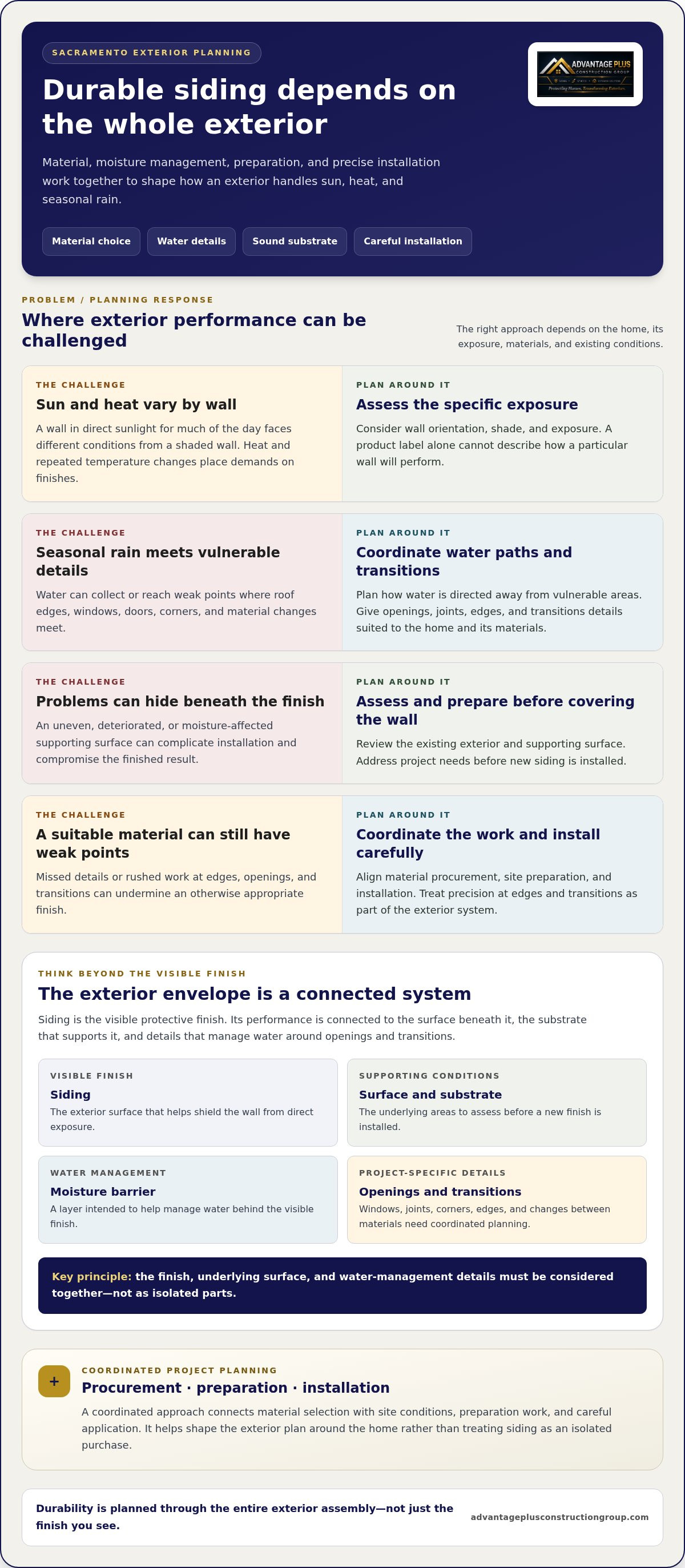
The building envelope is the connected set of exterior layers and details that separates indoor space from outdoor conditions. Siding is the visible protective finish, but it works alongside the surface beneath it and the details that manage water around openings and transitions. If the substrate is unsound or details aren’t coordinated, an otherwise suitable finish may not provide the protection a homeowner expects.
That’s why siding selection should be considered as part of exterior envelope protection, not as an isolated purchase. This Siding overview provides general background on siding materials and their uses, but a home’s existing conditions should guide project planning. Advantage Plus Construction Group’s exterior-envelope work brings that broader perspective to fiber cement siding and stucco projects, with attention to material procurement, site preparation, and installation. The goal is to coordinate the exterior rather than select a finish in isolation.
How Siding, Moisture Management, and Installation Work Together
A siding material performs as part of a coordinated exterior. The visible finish, the surface beneath it, the substrate that supports it, and the details around openings and edges all affect how a wall handles exposure. Durable siding relies on material, detailing, and installation working together. Gaps in that coordination can undermine an otherwise appropriate material.
How water management supports siding durability
Water management means directing water away from vulnerable areas and limiting the chance that moisture reaches or remains in parts of the wall not intended to stay wet. It doesn’t mean the exterior is waterproof. A moisture barrier is a layer intended to help manage water behind the visible finish. The building envelope is the connected set of exterior layers and details that separates indoor space from outdoor conditions.
Openings, joints, edges, and transitions need attention specific to the project. A window set into a siding wall, for example, creates a meeting point between the opening and surrounding exterior. Corners and changes between materials create other transitions. The right approach depends on the home, materials, and existing conditions, so a generic detail may not suit every wall.
Water management also means looking beyond the siding surface. The finish helps shield the wall from direct exposure, while other parts of the assembly help manage water that passes behind or around it. Planning those roles together is more dependable than assuming siding alone will stop every moisture issue. This is a central consideration when planning durable home siding Sacramento homeowners can depend on.
Why site preparation and workmanship affect long-term performance
Before new siding goes on, the existing exterior and supporting surface need attention. An uneven or deteriorated surface, or one affected by moisture, can complicate installation and compromise the finished result. The visible face may not reveal every underlying condition, so preparation includes assessing what is present and addressing project needs before covering the wall.
Sequencing matters, too. Materials need to be coordinated with site preparation and installed carefully at edges, openings, and transitions. Rushed work or missed details can leave weak points in an assembly, even when the siding is suitable. Precision application is part of building a coherent exterior, not just a cosmetic extra.
For homeowners considering fiber cement, this guide to fiber cement siding installation in Sacramento explores planning and application. Advantage Plus Construction Group project managers oversee procurement, site preparation, and installation for exterior renovations, coordinating the work around the home’s conditions and project priorities. Homeowners planning fiber cement siding or stucco can explore Advantage Plus Construction Group’s exterior services as they plan the whole exterior.
Fiber Cement, Stucco, and Other Siding: What Durability Trade-Offs Matter?
No siding type is automatically right for every Sacramento-area home. Compare materials as part of an installed exterior system, taking into account the home’s exposure, desired appearance, upkeep expectations, and existing wall condition. This makes the search for durable home siding Sacramento homeowners can trust a project-specific decision instead of a broad claim about one material.
| Material category | Exposure considerations | Appearance | Upkeep considerations | Installation context |
|---|---|---|---|---|
| Fiber cement | Consider the wall’s sun and weather exposure along with the selected product’s requirements. | Offers a finished siding surface suited to a range of exterior designs. | Follow the applicable care and finish instructions; upkeep depends on the product and installation. | Plan for the substrate, detailing, and precise application as part of the full exterior. |
| Stucco | Assess how the proposed system fits the home’s existing conditions and project design. | Creates a continuous, textured exterior appearance. | Keep the finish and visible condition under observation, following system-specific care guidance. | Evaluate the complete stucco system and its transitions, not just the surface finish. |
| Other categories, such as vinyl, wood, or metal | Performance considerations vary by material, product, and site exposure. | Each category has its own visual character. | Care needs differ; consult the relevant product guidance. | Assess suitability and installation details for the particular home. |
When fiber cement may suit an exterior renovation
Fiber cement is one material to consider when planning a siding replacement. Its performance depends on more than the category name: finish selection, careful detailing, a sound substrate, installation, and routine attention all contribute. Review the manufacturer’s care instructions for the specific product rather than assuming every fiber cement system has identical requirements. The company’s fiber cement installation guide discusses this project category in more depth. For a focused look at material trade-offs, see the fiber cement and vinyl siding durability comparison.
When a stucco system may fit the home
Stucco is an exterior system, so the decision involves how the full installation fits the home, not simply whether you like its finish. Existing wall conditions, project design, transitions, and installation planning all matter. A smooth or textured surface alone can’t establish how the complete assembly will perform. Homeowners weighing this approach can explore considerations for professional stucco systems in Sacramento.
Advantage Plus Construction Group installs both fiber cement siding and stucco. The useful comparison isn’t which one wins in every situation, but which system aligns with the home’s conditions, appearance goals, and maintenance priorities, supported by attentive preparation and installation.
A Sacramento Homeowner’s Checklist for Evaluating Durable Siding
A deliberate review can turn vague concerns about an aging exterior into useful project priorities. Before choosing a material or planning replacement, document what you can observe, decide what matters most to your household, and consider the condition of the whole exterior. This four-step checklist can help you discuss durable home siding Sacramento options with a clearer picture of your home’s needs.
- Inspect what’s visible. Walk around the home and note peeling or changed finishes, cracked or loose-looking sections, gaps, and areas where water appears to collect or leave marks. Record the locations and whether a concern returns after rain or routine care. These observations can guide a project discussion, but they can’t confirm what may be happening behind the siding.
- Identify your priorities. Decide what you want the project to address: visible deterioration, moisture concerns, a refreshed appearance, or long-term ownership needs. Separate essential protection needs from preferences such as color and texture. Clear priorities make it easier to compare materials without relying on broad claims about which one lasts longest.
- Assess the full assembly. Consider the visible siding alongside transitions, openings, edges, and the supporting wall surface. Concealed substrate or moisture conditions may need an appropriate project assessment; appearance alone can’t establish the extent or cause of a hidden issue. Don’t assume new siding by itself will resolve pre-existing damage.
- Plan the project and care. Compare upkeep instructions for the materials and finishes under consideration, and factor in the home’s exposure and your ownership plans. Distinguish routine care, which follows product guidance, from repairs that address deterioration or damage. A well-planned scope accounts for appearance as well as the protective work the exterior needs.
What to assess before deciding on replacement
Make your notes specific: identify the wall or feature, describe what you see, and record when the concern appears or returns. For example, note whether a finish change is limited to one exposed wall or appears in several places. This record won’t diagnose the cause, but it gives the project team a clearer starting point. Review signs you need new siding alongside your own observations.
How to plan for maintenance and project priorities
Maintenance needs vary with the material, finish, site exposure, and manufacturer guidance. Use instructions for the specific product rather than assuming two finishes in the same category require identical care. Balance curb appeal with protective priorities and consider how the exterior fits your longer-term plans for the home. This keeps renovation decisions grounded in both function and appearance.
Advantage Plus Construction Group project managers coordinate material procurement, site preparation, and installation for fiber cement siding, stucco, and exterior-envelope projects. Plan your siding or stucco project with the home’s existing exterior and your priorities in view.
Plan Durable Home Siding in Sacramento with a Whole-Exterior Approach
Material research is a useful starting point, but the right project plan begins with the home itself. Existing exterior conditions, exposure, appearance goals, and maintenance preferences all shape the choice between fiber cement siding and stucco. A whole-exterior approach brings those factors together so the finish, preparation, and installation are treated as parts of one renovation, not separate decisions.
What a coordinated exterior project should account for
A carefully managed project connects the proposed material to what’s already on the home. That means understanding visible conditions, preparing the site, coordinating material procurement, and planning application details around the project. Each step supports the next. Treating the work as a simple surface change can leave existing conditions or transitions with too little attention.
Advantage Plus Construction Group focuses on fiber cement siding, stucco systems, and exterior-envelope services. Experienced project managers oversee renovation work, coordinating procurement, site preparation, and installation with attention to schedule and budget. This oversight helps organize the work as it moves forward, while the project plan remains tailored to the home’s actual conditions and priorities.
The company serves homeowners in Roseville, Granite Bay, New Castle, Rocklin, Penryn, Loomis, Citrus Heights, Orangevale, Fair Oaks, Carmichael, and Antelope, as well as the wider Sacramento region. Exposure can vary from one home to another, so the project plan should account for the specific property: which areas receive more sun, how the existing exterior is performing, and what you want the finished façade to achieve.
Take the next step toward a more protective exterior
Bring the key decisions together: local exposure, the complete exterior assembly, material fit, and upkeep. Consider which visible concerns need attention, which appearance goals matter most, and how long-term ownership plans shape the renovation. These priorities can turn general research about durable home siding Sacramento into a clearer direction for your home.
A strong plan balances protection with appearance and treats preparation and application as essential parts of the work. Fiber cement and stucco each have a place in exterior renovation; the right fit depends on the home and project goals, not on a universal promise about durability.
For homeowners planning a siding or stucco renovation in the Sacramento region, Advantage Plus Construction Group can help shape a project around the home’s existing exterior and priorities. Discuss your Sacramento-area exterior project.
Give Your Exterior a Thoughtful Path Forward
An exterior project is an investment in how your home looks, performs, and serves you over time. Rather than expecting a single material to solve every concern, use your priorities to shape a scope that fits the property. A considered plan for durable home siding Sacramento homeowners can feel confident in starts with asking the right questions before work begins.
Bring your observations and goals into the planning process. Clear expectations around appearance, protection, and ongoing care can turn a complex renovation into a series of practical decisions. The result should suit your home rather than rely on a broad promise about what lasts.
Advantage Plus Construction Group specializes in fiber cement siding and professional stucco installation, with experienced project managers overseeing procurement, site preparation, and application across the Sacramento region. For a project-focused conversation about your exterior, Discuss your Sacramento-area exterior project.
A well-planned next step can bring greater clarity and confidence to the work ahead.
Frequently Asked Questions
How long does durable home siding last in Sacramento?
There’s no fixed lifespan that applies to every siding project. Service life depends on the material, installation quality, exposure, maintenance, and the manufacturer’s guidance for the selected product. A sun-exposed wall may face different demands from a shaded one, even on the same home. When planning durable home siding Sacramento homeowners should use product-specific information and the home’s actual conditions rather than rely on a broad lifespan claim.
Can fiber cement siding be installed over existing stucco?
It depends on the existing stucco, the substrate beneath it, and the design of the proposed installation. Loose or deteriorated sections, for example, raise different concerns from a sound, even surface. The existing wall needs an appropriate assessment before deciding how to proceed. Don’t assume that covering stucco suits every home; the project plan should account for actual conditions and how the new siding will be supported.
Can new siding fix existing dry rot?
No. New siding shouldn’t be treated as a fix for dry rot or other damage already present in the wall. If damage is concealed, the affected area needs appropriate assessment, and necessary treatment should be part of the plan before new exterior work covers it. A fresh finish may improve appearance, but it doesn’t show that underlying damage has been resolved. Addressing existing conditions is central to lasting protection.
Does durable siding eliminate exterior maintenance?
No siding should be assumed to be maintenance-free. A material may suit a homeowner seeking manageable upkeep, but care still depends on the product, finish, exposure, and installation. Follow the manufacturer’s instructions for inspection and routine care, including directions for cleaning or maintaining the finish. Keep routine upkeep distinct from repairs: damage or recurring concerns may call for a closer assessment rather than ordinary cleaning alone.
How can I tell whether siding damage is cosmetic or moisture-related?
Visible changes can raise questions, but they can’t confirm the cause on their own. Peeling, discoloration, cracks, or marks near openings are observations to record, especially if they recur after rain or appear to spread. Note where they occur and when you first noticed them. Moisture or substrate conditions may be concealed behind the finish, so an appropriate project assessment is needed to distinguish a surface issue from a deeper concern.
Will new siding make my Sacramento home more energy efficient?
New siding alone doesn’t guarantee improved energy performance or lower utility bills. Results depend on the full wall assembly and other home conditions, including insulation, air leakage, windows, and how the exterior project is designed. If energy performance is a priority, include it in project planning rather than treating siding as a standalone solution. Reviewing the home’s existing conditions can help clarify which parts of the exterior renovation are relevant.
Is stucco prone to cracking in Sacramento?
Cracking shouldn’t be assumed to occur in every stucco installation, nor should every crack be dismissed as harmless. Outcomes depend on system design, installation, and conditions specific to the home. The location, pattern, and change over time can help inform an assessment, but appearance alone can’t establish the cause or what action is needed. Consider a stucco system as a complete installation, with attention to the home and project details.


