

What if siding that looks easy to maintain needs more attention than you expect? Low maintenance siding options can reduce recurring cleaning, repairs, and repainting, but none eliminate upkeep altogether. The difference depends on the material, how it’s installed, and the conditions around your home.
It’s reasonable to want an exterior that protects your investment without adding a demanding chore to your routine. Product claims can make materials sound simpler to care for than they are. In the Sacramento area, sun, heat, and seasonal moisture also make it important to consider how siding may perform over time, not just how it looks on day one.
This guide compares common siding materials, including vinyl, metal, engineered wood, fiber cement, and stucco, by the care they typically require. You’ll learn what cleaning, repairs, and finish upkeep may involve, and why site preparation and precise installation matter to the overall exterior assembly. Advantage Plus Construction Group installs fiber cement siding and stucco systems for Sacramento-area homes, with project planning that accounts for the full exterior. Use the comparison to weigh upkeep against your priorities and plan an approach that suits your home.
Key Takeaways
- Low maintenance siding options still need care. Compare routine cleaning, finish upkeep, and repair considerations rather than expecting zero maintenance.
- Consider your home’s exposure to sun, rain, shade, and nearby vegetation when anticipating how siding may need attention.
- Compare vinyl, fiber cement, stucco, engineered wood, and metal by upkeep, appearance, and repair needs.
- Choose siding by weighing maintenance priorities alongside exterior protection, material selection, and assembly details.
- Project planning, site preparation, and installation all contribute to the performance of fiber cement siding and stucco.
What Low-Maintenance Siding Options Really Mean for Homeowners
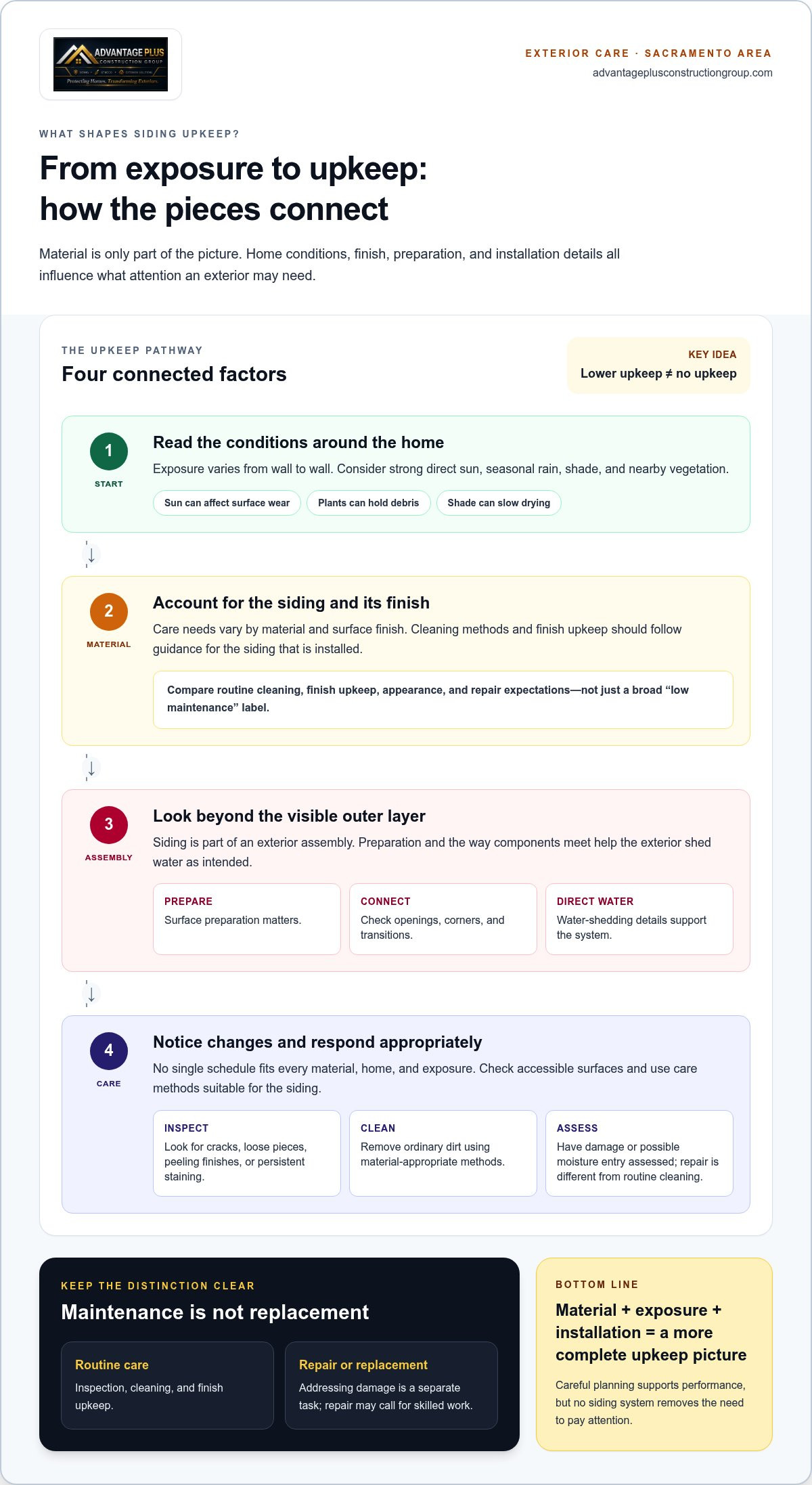
Low-maintenance siding generally requires less frequent or less demanding routine care than higher-upkeep materials. It still needs inspection, cleaning, and attention when damage appears. “Low maintenance” describes a manageable level of care, not a promise that an exterior can be ignored or will never need repair.
Maintenance is also different from replacement. Washing dirt from a surface, checking for visible changes, and maintaining a finish are routine tasks. Repairing a damaged section may require skilled work, while replacing siding is a larger project. Considering these separately gives you a more practical picture of ownership than relying on a broad label.
Siding materials vary in appearance, properties, and care needs. The overview of Siding (construction) offers background on common cladding types, but upkeep at a particular home also depends on exposure and how the exterior assembly was installed. Good material selection and careful installation support performance; neither removes the need to pay attention to the building envelope.
Which tasks count as siding maintenance?
Start by looking for changes. From a safe vantage point, check for visible cracks, loose or displaced pieces, peeling or damaged finishes, and persistent staining. Cleaning may remove ordinary dirt and surface buildup, while finish upkeep varies by material. Follow care guidance for the installed siding rather than assuming every surface should be cleaned or treated the same way.
- Routine care: Look over accessible exterior surfaces and clean them using methods appropriate for the material.
- Surface upkeep: Monitor the visible finish and address wear or buildup before it detracts from the exterior.
- Repair: Have damage or possible moisture entry assessed. Repairs are different from ordinary cleaning and may call for professional attention.
There is no single schedule that fits every siding type, home, and exposure. A shaded wall near plants may collect different debris than a more open, sun-exposed wall. Homeowners can notice changes, but assessing or repairing a damaged assembly is a separate task that may require professional expertise.
Why does lower upkeep matter beyond convenience?
Predictable care makes it easier to keep an exterior looking orderly and notice changes that may need attention. A clean, well-kept surface supports curb appeal, while timely attention to visible damage helps you keep the siding’s role in the home’s exterior defense in view. Less routine work can also make ownership easier to plan.
Reduced cleaning or finish upkeep does not remove moisture-management responsibilities. Siding is one part of an exterior assembly, and water-related concerns should not be dismissed because a material is described as low maintenance. The right choice depends on what matters most to you: routine effort, preferred appearance, repair expectations, and protection. There is no universal winner, only a material and installation approach suited to the home and the way you want to care for it.
What Determines How Much Upkeep Siding Will Need?
The same siding material can need different attention on different parts of a house. Sun exposure, seasonal rain, shade, nearby plants, surface finish, and installation details all influence what homeowners may see and how water moves away from the exterior. The material is only one part of the upkeep picture.
Installation quality shapes long-term siding upkeep because well-planned details help the exterior shed water as intended and limit avoidable wear. No assembly removes every maintenance need, but careful preparation and precise application help siding perform as part of a coordinated exterior system.
How Sacramento-area conditions can shape exterior upkeep
Sacramento-area homes experience hot, dry periods as well as seasonal rain, but exposure varies from house to house. A wall that receives strong direct sun may show surface wear differently from one shaded by trees or neighboring structures. Nearby vegetation can hold debris against a wall or make some areas slower to dry, affecting how often they need attention.
Rain makes water-shedding details important. Pay attention to how siding meets openings, corners, and transitions between materials. These junctions help direct water away from vulnerable areas. Shade and plant growth can affect how quickly a surface dries or accumulates debris, while more exposed walls face different conditions. Guidance from the Polymeric Exterior Products Association can offer material-specific context for polymeric siding, but a home's particular exposure still matters.
Why the full siding assembly matters
Siding is the visible outer layer, not a standalone moisture solution. Its performance depends on the layers and details behind it, including surface preparation and how components meet. A gap, poorly handled transition, or weak water-shedding detail can affect the assembly even if the siding itself is suitable for the project.
That is why a Sacramento exterior envelope protection guide should consider more than the cladding choice. Site preparation and precise application help the exterior work as a system through changing conditions. Project managers at Advantage Plus Construction Group oversee procurement, site preparation, and installation for residential exterior projects.
- Sun and heat: Consider which elevations receive prolonged direct exposure and how the finish may need attention.
- Rain and drainage: Review transitions and water-shedding details as part of the full assembly.
- Shade and vegetation: Note where debris gathers or surfaces stay shaded, since these areas may need different cleaning attention.
Match a material to the home by considering its exposure and assembly, not just a broad low-upkeep claim. Homeowners planning fiber cement siding, stucco, or related exterior envelope work can discuss a Sacramento siding project with Advantage Plus Construction Group.
Low-Maintenance Siding Options Compared by Routine Upkeep
A useful comparison looks beyond the material name. Cleaning needs, finish care, repair considerations, and the look a material can achieve all affect how it fits your home. The table below is a general guide, not a fixed maintenance schedule. Product specifications, exposure, and installation details can change what care is appropriate, so use current manufacturer guidance for the specific material selected.
| Material | Routine cleaning | Finish upkeep | Repair considerations | Visual flexibility |
|---|---|---|---|---|
| Vinyl | Clean surface dirt as needed; check for visible damage. | Does not use a painted finish in the same way as painted siding; care varies by product. | Damaged panels may need attention to maintain a consistent surface. | Available in varied profiles and appearances; confirm choices by product. |
| Fiber cement | Clean appropriately for the product and watch for visible wear. | Finish care depends on the applied finish and manufacturer guidance. | Check damaged areas and exposed edges; repair approach depends on the assembly. | Can support a range of profiles and architectural looks. |
| Stucco | Keep the surface free of accumulated dirt using suitable care methods. | Appearance and surface treatment vary by system. | Pay attention to cracks or changes in the surface; assessment depends on the condition and cause. | Offers a continuous, textured surface with varied finish appearances. |
| Engineered wood | Clean as directed and inspect exposed or vulnerable areas. | Coatings and finish upkeep depend on the specific product. | Address visible damage in line with product requirements. | Often selected for wood-like profiles and appearances. |
| Metal | Remove surface dirt as appropriate and check for visible damage. | Finish care varies by material and coating. | Scratches, dents, or finish damage may need attention suited to the product. | Profiles and finishes offer a distinct contemporary or utilitarian look. |
How fiber cement and stucco compare on upkeep
Fiber cement and stucco have different surfaces, so their care needs aren’t interchangeable. With fiber cement, the finish type and visible edge or surface condition inform upkeep. Stucco’s textured surface calls for attention to its condition, including changes such as cracking. Neither label alone predicts the care a particular home will need. Advantage Plus Construction Group installs both materials. A fiber cement and vinyl siding comparison should also account for product details, not just broad category claims.
How other common siding materials compare
Vinyl, engineered wood, and metal have distinct finish and repair considerations. Vinyl still benefits from cleaning and inspection, while engineered wood care depends on its finish and product guidance. Metal finishes vary, and visible scratches or dents call for product-appropriate attention. Check material-specific care instructions against current manufacturer guidance before settling on a maintenance plan. These low maintenance siding options involve trade-offs, not a universal winner.
Use the comparison to identify which tasks you’d most like to minimize, then weigh them against the appearance and repair considerations that matter to you. The best fit is the material whose upkeep expectations align with your home and ownership priorities.
How to Choose Low-Maintenance Siding for Your Home
Choosing siding is a balance, not a search for a material with a flawless marketing claim. A practical decision accounts for the care you want to reduce, the appearance you value, the home’s existing conditions, and how the exterior will protect the structure. Use this five-step process to turn those priorities into a project plan.
- Identify the upkeep you most want to reduce. Is your main concern frequent washing, repainting, or the effort involved in addressing surface wear? Rank those tasks. A material that minimizes one kind of care may still need attention in another area, so define what “easier to maintain” means for your household before comparing options.
- Assess the home’s exposure. Note which elevations receive strong sun, where shade and nearby vegetation collect debris, and where seasonal rain may affect walls and transitions. Exposure can vary around one house. Consider the home’s design too, including corners, openings, and places where different exterior materials meet.
- Compare materials against your priorities. Review cleaning needs, finish upkeep, repair considerations, and visual flexibility together. A preferred color or texture, for example, may involve different finish care than another look. Use product-specific guidance for the materials under consideration, and avoid choosing solely because a category is advertised as low upkeep.
- Review the existing conditions and assembly. The structure beneath the visible siding, its current condition, and the way exterior components meet can influence material selection and project scope. Consider how the planned siding will work with the full exterior envelope instead of treating the cladding as an isolated surface.
- Plan the work and its execution. A clear project scope should account for material procurement, site preparation, and installation details. These steps connect the selected material to the home’s actual conditions and help coordinate the exterior system from preparation through application.
Weigh appearance, routine care, repair expectations, and exterior protection as a whole. Existing conditions may affect the preparation required; architectural style may shape which profiles or finishes suit the house. For a Sacramento-area project, factor in the home’s particular exposure rather than assuming every property experiences the same conditions. A strong choice aligns with those realities and your priorities.
Compare proposals by scope and execution
A useful proposal makes the work understandable: what is being installed, how the site will be prepared, and how the planned components will be applied as a coordinated system. Advantage Plus Construction Group’s project managers oversee procurement, site preparation, and installation for residential exterior projects. Clear scope and careful execution matter alongside material choice because they shape how the finished exterior serves the home.
For a project-specific discussion about fiber cement siding, stucco, or exterior envelope work in the Sacramento region, discuss your siding project with Advantage Plus Construction Group.
Plan a Low-Maintenance Siding Project with Advantage Plus Construction Group
Choosing a siding material is only one part of creating an exterior that suits your home and upkeep priorities. The project also needs a clear plan for materials, preparation, and installation. Advantage Plus Construction Group serves Sacramento-area homeowners with fiber cement siding, stucco systems, and exterior envelope services.
These choices affect more than curb appeal. A well-planned project considers how the selected material fits the home, what the existing exterior requires, and how the complete assembly is intended to perform. No exterior is maintenance-free, but thoughtful coordination can align the work with your goals for protection, appearance, and manageable care.
What professional project oversight contributes
Project managers oversee material procurement, site preparation, and installation for residential exterior projects. That coordination connects the chosen materials to the home’s conditions and helps organize the work from preparation through application. Clear planning and careful craftsmanship matter at transitions and other details where components come together, not just across the visible wall surface.
Advantage Plus Construction Group serves communities including Roseville, Granite Bay, New Castle, Rocklin, Penryn, Loomis, Citrus Heights, Orangevale, Fair Oaks, Carmichael, and Antelope. For homeowners comparing low maintenance siding options, project oversight brings material preferences and exterior needs into the same conversation. The goal is a considered scope and coordinated installation, without relying on vague claims about what any material can do.
Take the next step toward a more manageable exterior
Before discussing a project, consider what you want the new exterior to accomplish. A short list can make the conversation more useful:
- Material preferences: Note whether you’re considering fiber cement siding, stucco, or a combination of exterior treatments.
- Home conditions: Describe visible wear, areas of concern, and features of the home that may affect planning.
- Upkeep priorities: Identify the recurring care you most want to reduce and the repair expectations you’re prepared to manage.
- Appearance goals: Consider the finishes, textures, and overall look that will complement your home.
These details help shape a project around the property rather than an abstract material claim. Advantage Plus Construction Group plans fiber cement, stucco, and exterior envelope projects for Sacramento-area homes, with project managers overseeing procurement, preparation, and installation.
Ready to plan an exterior project with your priorities in view? Start an Advantage Plus Construction Group project inquiry.
Turn Your Siding Priorities Into a Clear Project Plan
Turn your preferences into a brief you can use to guide project planning. Note the exterior details you want to preserve, the look you hope to achieve, and the routine tasks you most want to reduce. Photos of areas that concern you can also make the discussion more specific.
This preparation connects the choice among low maintenance siding options to the realities of your home, rather than leaving it at a general material comparison. It also gives you a way to weigh visual goals against upkeep expectations and the condition of the existing exterior. No material removes every responsibility, but a well-considered plan can make those responsibilities easier to anticipate.
When you’re ready to move from research to a project conversation, share your priorities and questions with Advantage Plus Construction Group. A focused discussion can help clarify a practical direction for your Sacramento-area home.
Discuss your exterior siding project with Advantage Plus Construction Group. A confident plan starts with the right questions.
Frequently Asked Questions
Is low-maintenance siding completely maintenance-free?
No. Low-maintenance siding still needs appropriate cleaning and occasional checks for visible damage; it may simply require less routine attention than some alternatives. The right care depends on the material and its manufacturer’s instructions. When comparing low maintenance siding options, distinguish ordinary care from repair needs, and don’t assume a “low-maintenance” label means the exterior can be ignored.
How often should exterior siding be inspected?
There isn’t one inspection interval that suits every siding material and home. Follow the manufacturer’s maintenance guidance, and look over the exterior when you notice a change, such as a loose piece, a crack, or staining that persists after cleaning. It’s also sensible to check walls after severe weather or nearby work that could have affected them. Use a safe vantage point, and leave hard-to-reach areas to qualified professionals.
Can pressure washing damage siding?
Yes. Excessive pressure, a close-range spray, or directing water toward joints can damage a finish or force water behind siding. The safe method depends on the material and product guidance, so don’t assume a pressure washer is appropriate for every surface. Dirt may be better addressed with a gentler cleaning method. Follow the manufacturer’s care instructions before washing.
Can fiber cement siding be painted?
Often, yes, but the right approach depends on the specific product, its existing finish, and its condition. Before painting, check the manufacturer’s instructions for surface preparation and compatible coatings. A wall with peeling paint or visible damage may need more than a fresh coat, so assess the surface first. Don’t paint over signs of moisture or deterioration without understanding the cause and addressing it appropriately.
Can new siding be installed over existing siding?
Sometimes, but it depends on the existing wall and the planned assembly. Covering old siding can conceal damage or moisture concerns, and added thickness may affect trim, windows, doors, and transitions. A project assessment should consider the condition of the current surface and how the new materials will fit the home. Removing existing siding may be necessary to address concealed problems or prepare the wall for the planned installation.
Does siding affect a home’s energy efficiency?
It can contribute as part of the exterior wall system, but siding alone doesn’t determine a home’s energy performance. Insulation, air leakage, and how the wall assembly is installed also matter. If comfort or energy use is a concern, consider the wall as a complete system rather than expecting a new outer surface to solve every issue. The project scope and the home’s existing conditions shape what improvements may be appropriate.
Can siding be repaired, or does damaged siding need replacement?
Some damage can be repaired without replacing all the siding, particularly when it’s limited to a specific area and the surrounding assembly remains sound. More widespread deterioration, recurring damage, or signs of moisture behind the surface may call for a broader assessment. For homes in Roseville, Granite Bay, New Castle, Rocklin, Penryn, Loomis, Citrus Heights, Orangevale, Fair Oaks, Carmichael, and Antelope, the repair decision should account for the home’s condition, not location alone.


