

In Citrus Heights, siding needs to do more than improve a home’s appearance. Long, hot summers, occasional heavy rain, and wildfire seasons make durability and exterior protection part of the same decision. For homeowners considering fiber cement siding in Citrus Heights, this material combines cement, sand, cellulose fibers, and other durable materials to create a finished exterior with resistance to common moisture and pest problems.
It’s reasonable to weigh curb appeal against long-term performance. Advantage Plus Construction Group specializes in fiber cement siding and exterior systems, serving Sacramento County, Placer County, El Dorado County, and surrounding Northern California communities, including Roseville, Granite Bay, New Castle, Rocklin, Penryn, Loomis, Citrus Heights, Orangevale, Fair Oaks, Carmichael, Antelope, Sacramento, Auburn, Folsom, and Eldorado Hills.
This guide explains how fiber cement siding suits local conditions, the profiles and styles available, its potential effect on curb appeal and resale presentation, and what installation involves. You’ll also learn which project details shape the work, so you can assess both the appearance and protective performance of the material.
Key Takeaways
- Understand what fiber cement siding is made from and how its profiles, colors, and textures can shape your home’s exterior.
- Learn how the material’s resistance to moisture, rot, pests, and fire relates to Citrus Heights’ hot summers and seasonal weather.
- See how siding style and finish can refresh curb appeal, while resale outcomes depend on the home and project.
- Follow the main installation stages, from assessing the existing exterior to fitting and finishing the new siding.
- Identify the project details that influence installation costs, including material choices and the complexity of the work.
What is fiber cement siding made from?
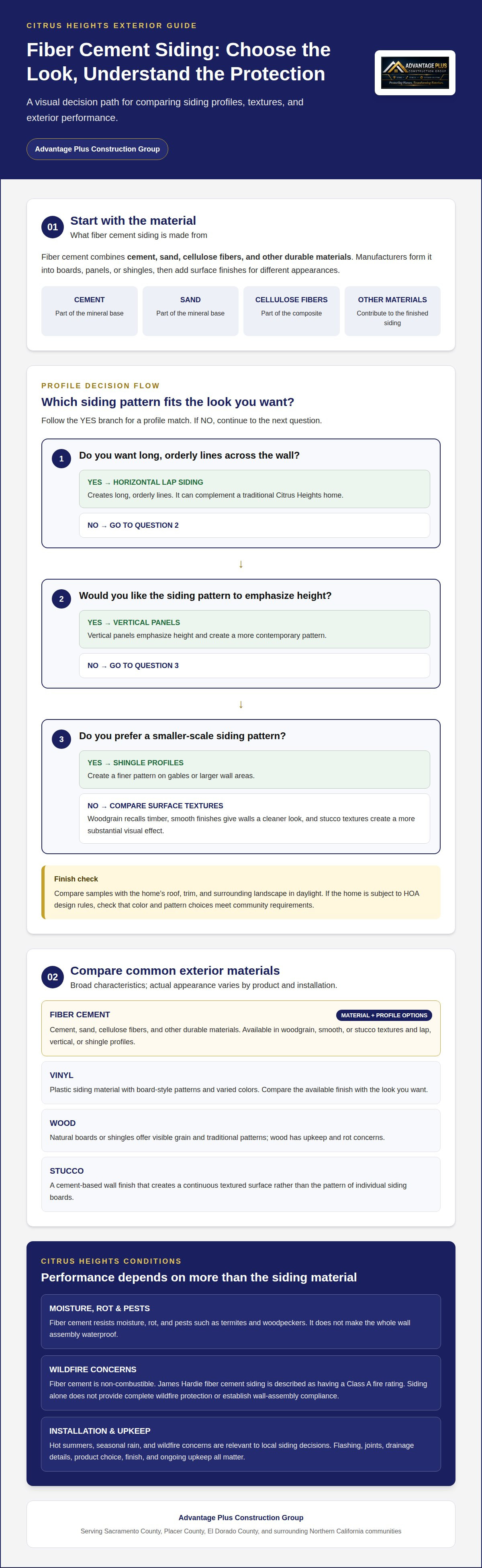
Fiber cement siding combines cement, sand, cellulose fibers, and other durable materials. In Citrus Heights, it offers an alternative to vinyl, wood, or stucco, with distinct options for texture and profile. Both composition and appearance matter: one affects exterior performance, while the other shapes the home’s architectural character.
Each ingredient contributes to the finished siding. Cement and sand form its mineral base, while cellulose fibers are part of the composite. Manufacturers shape the material into boards, panels, or shingles, then add surface finishes to create different visual effects. The result can evoke painted wood without using wood boards as the siding material.
Design starts with profile, the shape and arrangement of siding on a wall. Horizontal lap siding creates long, orderly lines. Vertical panels emphasize height, while shingle profiles create a smaller-scale pattern. These options can change how a home looks from the street, even when the color stays the same. Hardie® Plank lap siding is available in multiple textures, profiles, and ColorPlus® Technology finishes.
Texture adds another design layer. Woodgrain surfaces recall timber, smooth finishes give walls a cleaner look, and stucco textures create a more substantial visual effect. Color also influences the overall impression. A light shade can set off trim, while a deeper shade can emphasize the siding profile and roofline. If your home is subject to HOA design rules, make sure color and pattern choices meet the community’s requirements.
The table compares common exterior materials by broad design and material characteristics. Actual appearance varies by product and installation.
| Material | Composition | Common visual options | Design consideration |
|---|---|---|---|
| Fiber cement | Cement, sand, cellulose fibers, and other durable materials | Woodgrain, smooth, or stucco textures; lap, vertical, or shingle profiles | Offers varied surface patterns and forms |
| Vinyl | Plastic siding material | Board-style patterns and varied colors | Compare its available finish with the home’s desired look |
| Wood | Natural wood boards or shingles | Visible grain and traditional siding patterns | Wood’s natural appearance comes with upkeep and rot concerns |
| Stucco | Cement-based wall finish | Continuous textured surfaces | Creates a different pattern from individual siding boards |
Choose a profile, texture, and color that suit the home’s architecture, your maintenance preferences, and your priorities for the exterior.
For example, horizontal lap siding can complement a traditional Citrus Heights home, while vertical panels create a more contemporary pattern. If you want a wood-inspired appearance, consider woodgrain fiber cement; if you prefer a quieter surface, compare smooth finishes. Shingle profiles create a finer pattern on gables or larger wall areas. Matching the siding and trim colors can unify these elements, while contrast makes each profile more noticeable.
Before choosing a finish, compare samples with the home’s roof, trim, and surrounding landscape in daylight. This helps you see how texture and color work on the actual exterior, rather than relying on a small catalog image.
Durability and weather resistance
In Citrus Heights, fiber cement siding faces hot summers, seasonal rain, and wildfire concerns. Summer temperatures regularly reach 100°F or higher, while winter storms can expose vulnerable seams and joints to moisture. The material resists moisture, rot, insects, and common problems associated with traditional wood siding, but its performance still depends on sound installation and ongoing upkeep.
Its cement-based composition helps fiber cement withstand rain and humidity without the rot associated with wood. It also resists termites, woodpeckers, and other pests that can damage wood siding. That resistance addresses common exterior threats, but it does not make the whole wall assembly waterproof. Flashing, joints, and drainage details still matter because water can enter through gaps or poorly protected transitions.
Fiber cement is non-combustible and will not ignite when exposed to direct flame. James Hardie fiber cement siding is described as having a Class A fire rating. These properties can make the material relevant to wildfire-conscious exterior planning, especially where fire exposure is a concern. They do not mean every siding installation provides complete wildfire protection; the surrounding construction and installation details also affect a home’s defenses.
Citrus Heights projects must follow applicable building and fire-safety provisions, and wildfire-related requirements depend on property location and project scope. Fiber cement’s non-combustible nature can support fire-resistance goals, but the siding material alone does not establish that a complete wall assembly complies.
Durability also depends on product density and finish. Medium-density fiber cement is designed to compete with wood and vinyl, with resistance to moisture, fire, and pests. High-density fiber cement offers increased durability, impact resistance, and refined aesthetics compared with medium-density products. A factory-applied ColorPlus® finish is one available option; product and finish choices influence maintenance.
Use a straightforward maintenance routine to protect the exterior:
- Inspect caulking joints periodically, especially around windows, doors, and trim.
- Address cracked or separated sealant so water has fewer paths behind the siding.
- Clean dirt with a soft brush and garden hose where the product’s care guidance allows.
- Repaint when the finish requires renewal, using preparation appropriate for the siding.
Medium-density fiber cement may require periodic repainting and caulking checks. Properly installed and maintained fiber cement can provide decades of dependable performance while retaining its appearance. ColorPlus factory finishes are described as lasting 30 to 50 years; actual finish care depends on exposure and product guidance.
For a home facing summer heat, seasonal rain, or wildfire concerns, evaluate the siding and its water-management details together. A focused siding performance review can help connect material selection with the home’s exterior conditions.
Curb appeal and potential home value
New cladding changes how a Citrus Heights home looks from the street. Fiber cement can refresh worn siding, create cleaner lines, and give trim and windows stronger visual definition. The design works best when its profile, finish, and color relate to the roof, entry, and architectural details.
Resale figures provide context, not a property-specific appraisal. The 2025 Remodeling Cost vs. Value Report estimates that fiber cement siding replacement recoups about 114% of its cost at resale and adds roughly $24,420 in resale value. The same report estimates vinyl siding replacement recoups about 97% of its cost. These figures are report benchmarks, not Citrus Heights-specific valuations.
Appearance can influence a buyer’s first impression, but the finish should suit the house rather than follow a short-lived trend. A traditional Citrus Heights home, for example, may look balanced with horizontal lap siding and complementary trim. A more contemporary facade might use vertical panels to emphasize height. In either case, consistent detailing around windows, corners, and doors helps the exterior look intentional.
Color selection affects more than the main wall surface. Compare siding with the roof, trim, front door, and nearby landscape before settling on a palette. Light siding with darker trim can outline windows clearly; a coordinated, lower-contrast palette can create a quieter look. HOA guidelines may also shape acceptable colors and exterior patterns in some Citrus Heights communities.
A resale project should address visible condition as well as style. Faded paint, damaged boards, mismatched repairs, or deteriorated trim can make an otherwise sound home appear poorly maintained. Replacing the exterior creates an opportunity for a consistent finish and attention to siding details that affect the home’s overall presentation.
Use these practical steps to evaluate design and resale priorities:
- Identify the home’s architectural character, such as traditional, ranch, or contemporary.
- Compare a siding profile with the roofline, window spacing, and visible trim.
- Review color samples outdoors beside the existing roof and fixed exterior features.
- Check HOA design guidelines before finalizing colors or visible patterns.
- Separate the report’s resale benchmark from a home-specific valuation or sale estimate.
Fiber cement offers design flexibility and a durable exterior surface, but curb appeal depends on a coordinated result. A carefully chosen profile and finish can modernize an older facade, while a well-planned color scheme can bring architectural details into focus. The Remodeling Cost vs. Value Report provides a comparison with vinyl, but the home’s condition, nearby properties, and buyer preferences also shape its market presentation.
For Citrus Heights homeowners, a strong selection balances visual fit, maintenance expectations, and the existing exterior’s condition. Treat resale figures as one planning reference, then choose a design that suits the home’s character and presents the exterior as a complete, considered system.
Fiber cement siding installation process
Installing fiber cement siding involves more than attaching boards to a wall. The work must account for the existing exterior, moisture pathways, openings, corners, and finish details. In Citrus Heights, summer heat and seasonal rain make careful planning important. A full re-side also changes the home’s appearance, so consider material layout and trim transitions before installation begins.
Whether a permit is required depends on project scope and applicable Citrus Heights requirements. A basic siding replacement and work that changes underlying construction can involve different considerations, so the planned work, not just the siding material, matters.
A typical installation follows a controlled sequence:
- Assess the existing exterior. Document the siding condition, wall openings, trim, and visible areas where moisture may have entered. This helps identify repairs that should precede new cladding.
- Plan the layout. Confirm the selected profile, board orientation, transitions, and finish. For example, horizontal lap boards need consistent alignment around windows and corners.
- Prepare the wall. Remove existing materials as required by the project, then address exposed surfaces and damaged areas. The wall must be ready for the planned water-management details.
- Install siding and trim. Fit boards or panels according to the chosen layout, taking care around windows, doors, corners, and other changes in the wall plane.
- Complete and inspect details. Finish joints and transitions, review the exterior for consistent alignment, and leave the site orderly.
Moisture management deserves particular attention during preparation and installation. Water can collect at windows, doors, roof-to-wall transitions, and trim joints if these areas are not properly detailed. A well-chosen board profile cannot compensate for a poorly handled opening. The installation sequence should preserve drainage paths and protect vulnerable transitions before finish work is complete.
Project duration varies with home size, access, design, and repair needs. The timeline for re-siding a Citrus Heights home, including a single-story home of around 1,500 square feet, depends on the project scope and site conditions. These factors are assessed before a schedule is confirmed.
Site conditions can also affect the work sequence. Landscaping close to walls, limited access, complex window trim, and concealed damage may require additional coordination. For example, replacing siding around a bay window involves more fitting and transition detailing than covering a broad, uninterrupted wall.
Installation planning should connect the selected siding profile with wall preparation, openings, moisture control, and final inspection. Considering these steps together helps create a consistent-looking exterior that performs as a complete system.
What factors affect fiber cement siding installation costs in Citrus Heights?
The cost of a fiber cement siding project depends on the home and is determined through a quote. In Citrus Heights, material selection, wall conditions, access, and installation complexity shape the scope. A clear estimate separates these factors, helping homeowners understand what the work includes before making design decisions.
Material choice affects the project. High-density fiber cement siding costs vary with panel size, finish, installation complexity, and regional labor rates. A smooth panel and a textured board may involve different product selections. Factory finishes and other finish options also influence material planning. The profile matters too, because lap boards, vertical panels, and shingles require different layouts.
Wall area and layout determine how much material and installation work the project requires. A broad, uninterrupted wall is more straightforward than a facade with several windows, doors, corners, and architectural transitions. For example, a home with bay windows requires more detailed fitting than one with simple rectangular openings.
Existing siding and concealed conditions affect preparation. Removing existing materials, preparing the wall, and addressing damaged areas can change the work involved. If removal reveals deterioration or moisture-related damage, the affected area may need attention before new siding is installed. Estimates should distinguish visible preparation from possible repairs uncovered during the project.
Access and site conditions also shape installation. Tight side yards, landscaping close to exterior walls, and difficult access can affect how crews move materials and complete each elevation. A home with clear access around its perimeter presents a different setup from one with fences or dense planting beside the siding.
For a useful project comparison, review whether each estimate identifies:
- The selected siding profile, panel size, and finish.
- The areas included, including trim, corners, and openings.
- Removal and wall-preparation work included in the scope.
- How visible damage or concealed conditions will be addressed.
- Site-access conditions that affect installation complexity.
These details make it easier to compare like with like. A lower initial scope may omit preparation or finishing tasks included in another estimate. Review the written scope to see how each material choice connects with the work planned for your home. For instance, specifying vertical panels without describing corner and window transitions leaves important installation details unclear.
In Citrus Heights, regional labor rates are another factor, along with the home’s design and selected finish. No single material choice determines the full project cost; the combination of product, preparation, and installation requirements does. Requesting a detailed quote is the practical next step to understand how those factors apply to your exterior.
Request a free, no-obligation siding estimate to receive a written scope tailored to your home’s materials, preparation needs, and installation details.
Advantage Plus Construction Group: Fiber Cement Siding
Advantage Plus Construction Group installs fiber cement siding for homeowners seeking a durable exterior and a refreshed appearance. The company principal spent five years as a James Hardie Technical Representative, bringing product-specific knowledge to siding decisions and installation planning.
For a Citrus Heights home, an on-site estimate can address the existing exterior, material preferences, and project scope. Request a free, no-obligation estimate to get a plan tailored to your home.
To take the next step, call Advantage Plus Construction Group at (916) 259-9913 or request your free, no-obligation on-site estimate. You’ll have a clear starting point for your exterior project.
Choose an Exterior That Fits Your Home
Your next step is to turn design preferences into a project plan based on your home’s condition. Consider which exterior priorities matter most, such as a refreshed appearance, lower maintenance, or improved moisture and fire resistance. For fiber cement siding in Citrus Heights, a home-specific assessment can connect those priorities with suitable materials and installation details.
Advantage Plus Construction Group offers fiber cement siding, stucco systems, and exterior envelope services for homeowners planning exterior improvements. A project discussion can help clarify the scope and material choices for your property.
To move forward, call Advantage Plus Construction Group at (916) 259-9913 or request your free estimate. Take the next step toward an exterior plan shaped around your home and priorities.
Frequently Asked Questions
How do I get started?
Start by identifying what you want the new exterior to improve, such as worn boards, moisture concerns, or a dated appearance. Advantage Plus Construction Group offers a free exterior consultation to discuss fiber cement siding and your home’s needs. You can call (916) 259-9913 to begin. Having a preferred look in mind, such as lap boards or vertical panels, can help focus the conversation.
Which Citrus Heights contractors install fiber cement siding, and what are their reviews?
Advantage Plus Construction Group installs fiber cement siding in Citrus Heights and focuses on durable, low-maintenance exterior solutions. This FAQ doesn’t provide customer review ratings or quote individual reviews, so it won’t present unverified customer feedback as fact.
What brands and styles of fiber cement siding are available near Citrus Heights?
James Hardie is a named fiber cement siding brand relevant to local projects. Its Hardie® Plank lap siding comes in multiple textures, profiles, and ColorPlus® Technology finishes. Available style categories include woodgrain, smooth, and stucco textures, with lap, vertical panel, and shingle profiles. If your home has varied wall shapes, consider how each profile will meet corners, windows, and trim.
How long does fiber cement siding last, and what maintenance does it need?
Properly installed and maintained fiber cement siding can provide decades of dependable performance. Maintenance needs vary by product and finish, but practical care includes periodically checking caulking joints, cleaning dirt with a soft brush and garden hose, and repainting when needed. For example, cracked sealant near a window deserves attention because that joint helps protect the exterior from moisture.
What are the pros, cons, and risks of fiber cement siding in Northern California's climate?
Fiber cement resists moisture, rot, pests, and fire, making it a strong option for the Sacramento Region’s hot summers, seasonal rain, and wildfire concerns. It still needs appropriate installation and maintenance: siding alone cannot prevent water intrusion through poorly detailed openings or joints. Plan for caulking checks and finish care, and consider the entire wall’s moisture-management details alongside the siding material.
How do you get estimates and prepare for a fiber cement siding installation in Citrus Heights?
Request a free exterior consultation from Advantage Plus Construction Group to discuss your home, siding condition, and preferred finish. Before the consultation, decide which exterior concerns matter most and note any preferred profiles or colors. Photos of visible damage and relevant HOA design requirements can help clarify the discussion. The estimate will reflect your material choices, preparation needs, site access, and installation details.


