

What if the damp patch inside your home isn’t where water is getting in? A stain, peeling paint, or musty smell can point to a problem, but it doesn’t reveal the source. If you’re searching “how to stop water intrusion exterior walls,” start by tracing the water’s path rather than covering the visible damage. Water can travel behind siding or stucco before appearing indoors, so a cosmetic patch may leave the underlying problem untouched.
It’s reasonable to want a clear next step before more moisture appears. This guide explains how to spot likely entry points, compare signs of exterior leaks with condensation or plumbing-related moisture, and record useful observations safely. You’ll also learn when recurring dampness, cracks, or failed seals may mean the wall assembly needs attention. For Sacramento-area homes, lasting protection depends on addressing the cause and treating the exterior as a system. Advantage Plus Construction Group specializes in fiber cement siding, stucco, and exterior-envelope work that can support this approach.
Key Takeaways
- Learn how to stop water intrusion exterior walls by tracing likely water paths instead of treating the first visible stain as the source.
- Check accessible areas around windows, doors, penetrations, joints, and material transitions for clues about vulnerable details.
- Compare the location, timing, and weather patterns of moisture to help distinguish exterior water entry from condensation or a plumbing issue.
- Record when and where symptoms appear, visible exterior conditions, and prior repairs to make an assessment more useful.
- Understand why durable siding or stucco work depends on coordinated wall details and careful installation, not just a new surface layer.
How Water Gets Through Exterior Walls, and What Sacramento-Area Homeowners Notice First
Water intrusion occurs when unwanted moisture passes through or around an exterior wall assembly. The clue you see indoors may be far from the entry point: moisture can move behind the exterior finish before reaching a room. A stain identifies an affected area, but not necessarily the source.
That distinction matters when deciding how to stop water intrusion exterior walls. A fresh coat of paint may hide discoloration, but it won’t correct a vulnerable opening or a failed connection between wall materials. Begin by noting where symptoms appear and when they change. Treat those observations as clues, not a diagnosis.
Which warning signs can appear inside or outside the wall?
Look for discoloration, bubbling or peeling paint, soft-feeling materials, musty odors, or dampness that returns after the surface dries. Note whether these signs cluster below a window, beside a door, near the base of a wall, or where siding or stucco meets another material. The pattern can help focus an investigation, but it doesn’t prove how moisture entered.
A wall may also look dry while moisture remains concealed behind its finish. Record changes over time and the conditions around them. In Sacramento-area homes, note whether a symptom appears or worsens after wet weather. That context is useful without assuming a particular local rainfall pattern.
How does water bypass an exterior wall’s protective layers?
The cladding, such as siding or stucco, forms the visible exterior surface. Behind it, flashing helps direct water away from openings and joints, sealant closes selected gaps, and a water-resistive barrier helps protect the underlying wall. These elements need to work together. A break, gap, or poorly coordinated transition can let water travel behind the cladding instead of draining safely outward.
Windows, doors, penetrations, and changes between materials deserve particular attention because they interrupt a broad, continuous wall surface. If flashing is missing, damaged, or poorly integrated, water can follow an opening inward or become trapped behind the exterior finish. A bead of sealant along the visible edge may not address a concealed route.
Water intrusion is moisture entering through or around the exterior wall assembly; condensation forms when indoor moisture collects on a surface, so the two problems can look similar but have different causes. The overview of structural dampness also describes how penetrating moisture differs from condensation and other forms of damp. Treat these categories as clues, not conclusions. Location and timing can guide a closer assessment, but they cannot confirm the source on their own.
Trace the Water Path: Exterior-Wall Details That Commonly Need Attention
Once you’ve noted where moisture appears, look for exterior details that could connect the symptom to a route behind the wall finish. To understand how to stop water intrusion exterior walls, consider more than the visible crack or stain: water may enter at one detail, travel along a layer, and emerge somewhere else. These areas are priorities for observation, not a remote diagnosis of your home.
Why windows, doors, and penetrations deserve close attention
At a window or door, trim, flashing, sealant, and adjacent cladding meet. If those parts don’t work together, water can pass behind the finish or follow the frame into the wall. From a safe, accessible location, look for gaps, separated sealant, damaged trim, or recurring dampness nearby. Hose bibs, vents, and other wall penetrations also interrupt the exterior surface and deserve a careful visual check.
Record what you can see and where it is. Don’t remove trim, cut into the wall, or probe concealed layers. Those steps can damage finishes or disturb details that need to be assessed as part of the assembly.
How siding, stucco, and wall transitions affect drainage
Fiber cement siding and stucco each form part of an exterior wall system, but neither surface alone explains how the full wall manages water. Joints, edges, terminations, and transitions between materials need coordinated protection so moisture that gets behind the cladding can be directed outward rather than toward vulnerable areas. The basic causes of moisture intrusion include rainwater infiltration and other moisture pathways, which is why identifying the route matters.
Cladding is the wall’s visible defense, but lasting water control depends on the details and protective layers working together behind it. A surface bead of sealant may help maintain an exposed joint, but it won’t necessarily restore damaged flashing, a discontinuous barrier, or a drainage path. If moisture returns after surface sealing, the underlying assembly may need attention rather than another cosmetic layer.
Keep the investigation focused: note which detail is closest to the symptom, whether the concern recurs, and what exterior conditions are visible. For Sacramento-area homeowners considering coordinated siding, stucco, or exterior envelope services, the work should address the water path and wall details together.
Water Intrusion or Condensation? Compare the Clues Before Choosing a Repair
A single stain can’t identify its cause or tell you which repair will last. Water from outdoors may travel behind a wall finish; condensation can collect on cool interior surfaces; and a plumbing leak may dampen a wall from within. The patterns below can help organize your observations, but they’re clues, not proof.
| Possible source | Location clues | Timing and weather clues | Nearby details to note |
|---|---|---|---|
| Exterior water entry | May appear near windows, doors, wall joints, or material transitions, though moisture can show up away from the entry point. | Recurrence after wet weather is useful to record, but doesn’t confirm an exterior leak. | Look at accessible trim, cladding edges, and visible joints for gaps or damage. |
| Condensation | Can form on cool interior surfaces, including windows or exterior-facing walls. | May occur without rain and vary with indoor humidity and surface temperature. | Note indoor conditions and whether moisture appears on more than one cool surface. |
| Plumbing-related moisture | May cluster near a bathroom, kitchen, laundry area, fixture, or supply line. | May continue regardless of outdoor weather; note any pattern related to water use. | Record nearby plumbing and whether dampness changes after fixtures are used. |
What clues may point toward rain entering from outside?
If a damp area reappears after wet weather, note the timing and inspect nearby exterior details from a safe, accessible location. Symptoms close to an opening or a transition between materials can help focus an assessment, but water can move through concealed layers before becoming visible. Take dated photographs and record which rooms or wall areas are affected. A weather-related pattern is useful evidence, not a confirmed diagnosis.
What clues may point toward condensation or another moisture source?
Indoor humidity can collect on a cold surface, even without a breach in the exterior wall. A damp patch near plumbing may also point to a fixture or supply line. Location and timing can help distinguish possibilities, but neither one symptom nor a photograph can establish the source. Avoid choosing a repair based on appearance alone.
Persistent, spreading, or concealed moisture deserves a professional exterior-envelope assessment, particularly when the source remains unclear or the problem returns after a surface repair. Careful evaluation can help determine whether the concern involves exterior details, indoor condensation, plumbing, or more than one factor. Distinguishing among these possibilities is central to how to stop water intrusion exterior walls without masking a symptom or overlooking its cause.
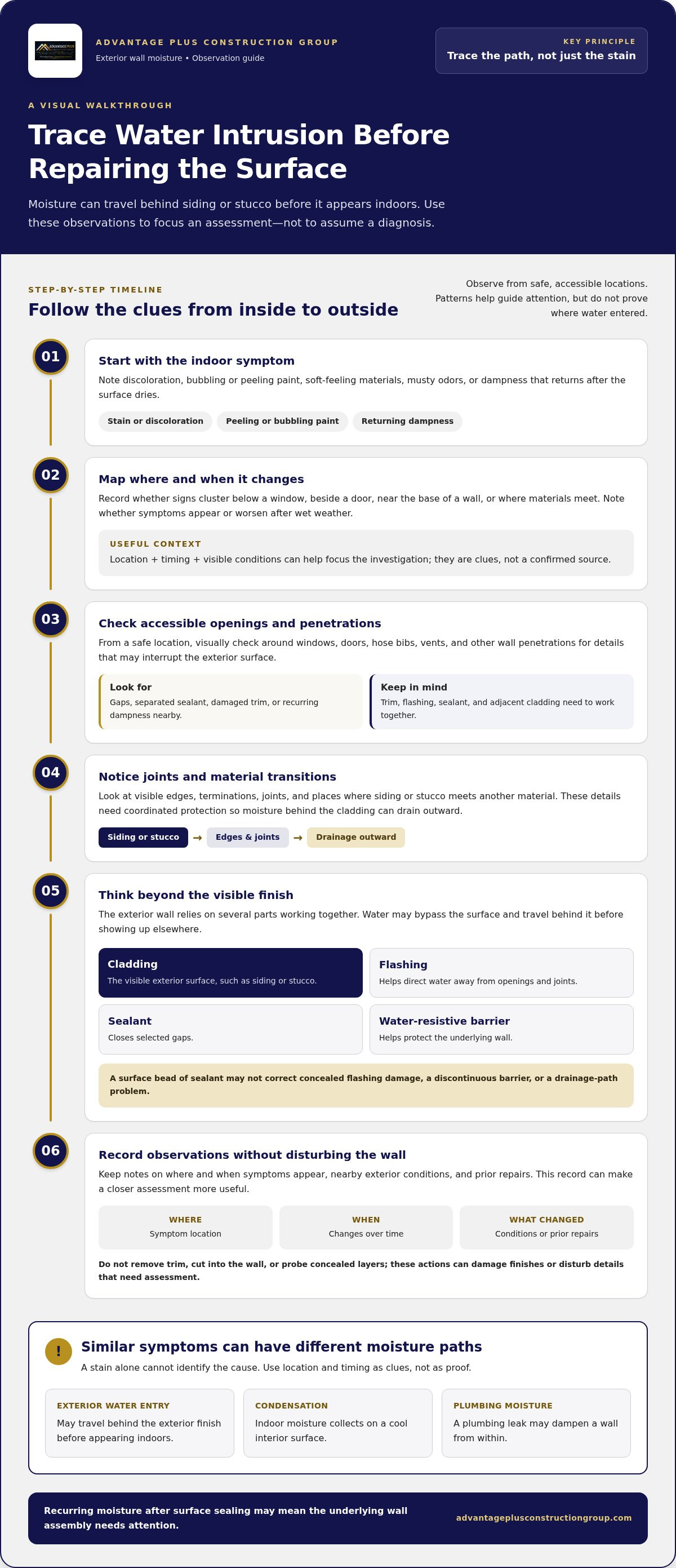
Water in Exterior Walls: A Safe, Step-by-Step Plan
A measured response protects the home and preserves evidence that can help identify the cause. You don’t need to open the wall or attempt a repair before understanding where moisture may be traveling. Start with observations you can make safely, then use them to guide a proper assessment.
- Document the symptoms. Note the date, affected room and wall area, when the dampness appeared, and whether it changes after rain or household water use. Photograph the same areas over time, and record any previous repairs or sealant work.
- Inspect only accessible exterior areas. From the ground, look at visible siding or stucco, openings, and joints near the interior symptoms. Take photographs after wet weather if it’s safe. Don’t climb ladders, remove trim, probe the wall, or open concealed layers.
- Limit further exposure without masking the cause. If water is actively affecting the area, move belongings away and avoid disturbing wet or deteriorating materials. Don’t seal over a suspected entry point before understanding how the wall is meant to drain. A surface patch may hide a clue without correcting the underlying path.
- Arrange an assessment when the pattern warrants it. Share your notes and photographs, along with the history of prior repairs. Recurring moisture, spreading damage, soft materials, or signs of concealed deterioration call for closer evaluation of the exterior wall assembly.
Which observations can homeowners safely record?
Keep your inspection simple and repeatable. Note visible gaps, damaged finishes, or changes around accessible siding, stucco, windows, doors, and material joints. Record which rooms are affected and whether a mark stays the same, dries, or returns. These details help distinguish an isolated surface mark from a recurring moisture pattern without putting you at risk or disturbing the wall.
When does a lasting repair call for exterior-envelope work?
Recurring dampness or deteriorating materials can mean the repair needs to address more than the visible finish. Depending on the cause, lasting work may involve correcting the entry path and restoring affected exterior components so they function together. For related background, consult the guide to moisture barrier siding installation as you consider how the wall assembly is protected.
For Sacramento-area homes, Advantage Plus Construction Group provides exterior-envelope services, including fiber cement siding and stucco work. Explore professional exterior-envelope services to learn about exterior work focused on the wall assembly rather than simply covering a symptom.
How Siding and Stucco Work Can Help Prevent Repeat Water Intrusion
Replacing or repairing an exterior finish can contribute to better moisture management, but the material alone won’t resolve every leak. Durable results depend on sound details, coordinated layers, and installation that accounts for openings, joints, and transitions. That’s why deciding how to stop water intrusion exterior walls starts with understanding the observed conditions, not assuming every home needs the same repair.
How professional siding or stucco work addresses the exterior assembly
Fiber cement siding and stucco are exterior systems, not standalone solutions for every source of water. A considered project includes site preparation and attention to how the selected material meets windows, doors, penetrations, and adjoining surfaces. The project scope should respond to the conditions found, addressing relevant components instead of covering symptoms with a new finish.
Advantage Plus Construction Group specializes in fiber cement siding and stucco systems, with project managers overseeing material procurement, preparation, and installation. For more background, readers can explore the fiber cement siding installation guide, the stucco systems guide, and the exterior envelope contractor Sacramento guide as they consider how materials and wall details work together.
What a planned exterior renovation should accomplish
A well-planned project should establish a clear scope, prepare the site, coordinate materials, and oversee installation with attention to the home’s exterior details. These steps help align the finished appearance with the practical goal of improving the wall assembly’s protection. They don’t replace accurate diagnosis, and no finish by itself can promise that moisture will never return.
For homeowners, the aim is a thoughtful balance: exterior surfaces that complement the home, installation that respects the wall’s details, and a repair plan grounded in the conditions found. When siding or stucco work is part of the right approach, coordinated project oversight helps keep preparation and installation aligned throughout the project.
To discuss an exterior project, visit Advantage Plus Construction Group.
Protect Your Home With a Cause-First Repair Plan
A lasting response begins with tracing the water path, not covering the first stain. Keep a record of when and where moisture appears, inspect only accessible exterior details, and remember that condensation or plumbing may resemble an exterior leak. When moisture returns or damage spreads, a careful assessment can help determine whether the wall assembly needs attention.
For homeowners considering how to stop water intrusion exterior walls, coordinated materials and installation matter. Advantage Plus Construction Group specializes in fiber cement siding, stucco systems, and exterior-envelope services. Project managers oversee material procurement, site preparation, and installation, supporting a considered approach to exterior work throughout Sacramento and nearby communities.
Addressing the source can help you move beyond temporary cosmetic fixes toward a home that feels protected and well cared for. Discuss a durable exterior solution for your home.
Frequently Asked Questions
How can I tell if water is coming through an exterior wall?
Recurring damp patches, peeling or bubbling paint, discoloration, musty odors, and softened materials can signal a moisture problem, but they don’t confirm its source. Note where the signs appear and whether they return after wet weather. Moisture near an opening or wall transition may warrant an exterior check, while water on cool interior surfaces or near plumbing may have another cause. Look for patterns, not a single decisive clue.
Can water get behind siding or stucco without visible exterior damage?
Yes. Moisture can pass through a vulnerable joint or opening and move behind siding or stucco without leaving an obvious mark on the visible finish. Water may travel along concealed layers before appearing indoors, and some moisture can remain hidden. A clean-looking exterior therefore doesn’t rule out a wall problem. If indoor symptoms recur, document their location and timing rather than relying only on the appearance of the exterior surface.
What should I do first when I find water damage on an exterior wall?
Document the affected area before changing it. Take dated photographs, note the room and wall location, and record whether the moisture appeared after rain or another event. Move nearby belongings away and check only accessible exterior areas from the ground. Avoid climbing, opening the wall, or sealing a suspected entry point before the water path is understood. If the damage is recurring or spreading, arrange a professional assessment.
How do you find the source of a wall leak?
Finding the source means comparing the location and timing of symptoms with accessible exterior details and other possible moisture sources. Record whether the dampness follows wet weather, appears near a window or material transition, or clusters around plumbing. These clues can guide an assessment, but water can travel behind finishes, so the visible stain may be far from the entry point. The first step in learning how to stop water intrusion exterior walls is identifying the cause.
Can I seal an exterior wall leak with caulk?
Caulk can help maintain an exposed joint when the sealant is appropriate and the joint is meant to be sealed. It won’t necessarily repair damaged flashing, restore a drainage route, or correct a break in concealed protective layers. Sealing over a suspected leak without understanding the assembly can hide evidence or redirect moisture. If dampness returns after caulking, avoid adding another surface layer and arrange a closer assessment.
Does replacing siding stop water intrusion?
Replacing siding may be part of a lasting repair if the siding or its installation contributes to the problem, but replacement alone doesn’t resolve every leak. The source may involve openings, transitions, flashing, or concealed wall components that need attention as part of the work. Fiber cement siding is one exterior system, not a universal fix. A sound project scope should respond to the observed conditions and coordinate the relevant wall details.
How can I prevent water from entering exterior walls in Sacramento?
Keep an eye on accessible siding, stucco, openings, and material transitions, and note changes after wet weather without assuming a particular cause. Document recurring gaps, damaged finishes, or indoor dampness so the source can be assessed before choosing a repair. These steps are useful for homeowners in Roseville, Granite Bay, New Castle, Rocklin, Penryn, Loomis, Citrus Heights, Orangevale, Fair Oaks, Carmichael, and Antelope.
When should I call an exterior-envelope professional about water intrusion?
Arrange professional attention if moisture keeps returning, spreads, affects soft or deteriorating materials, or appears to be concealed behind the wall finish. An exterior-envelope assessment can help determine whether the repair needs to address the source and restore affected components rather than cover the symptom. Advantage Plus Construction Group serves the Sacramento region with fiber cement siding, stucco systems, and exterior-envelope services. Project managers oversee material procurement, preparation, and installation. Discuss your exterior project with Advantage Plus Construction Group.


