

A crisp farmhouse façade needs more than the right color. In Fair Oaks, hot, dry summers and rainy winters make siding a choice about appearance, upkeep, and exterior protection. Choosing modern farmhouse exterior siding in Fair Oaks means considering how each profile suits your home, from vertical board-and-batten to horizontal clapboard. Material and installation details matter too, especially where siding meets windows, trim, and other finishes.
Advantage Plus Construction Group specializes in exterior solutions, including fiber cement siding, for homeowners across Sacramento County, Placer County, El Dorado County, and surrounding Northern California communities such as Roseville, Rocklin, Folsom, Carmichael, Fair Oaks, and Orangevale. This guide compares board-and-batten, lap, shiplap, and clapboard, then considers white palettes and mixed-material combinations. You’ll see how each option can shape curb appeal while supporting a durable, lower-maintenance exterior suited to your home.
Key Takeaways
- See how board-and-batten, lap, shiplap, and clapboard create distinct farmhouse profiles.
- Learn how mixing smooth siding with darker, textured materials can add contrast without overwhelming the exterior.
- Explore white siding and trim combinations, along with color choices that give a farmhouse a more individual look.
- Understand how siding style and material choices can shape a cohesive exterior for a Fair Oaks home.
Board-and-batten siding
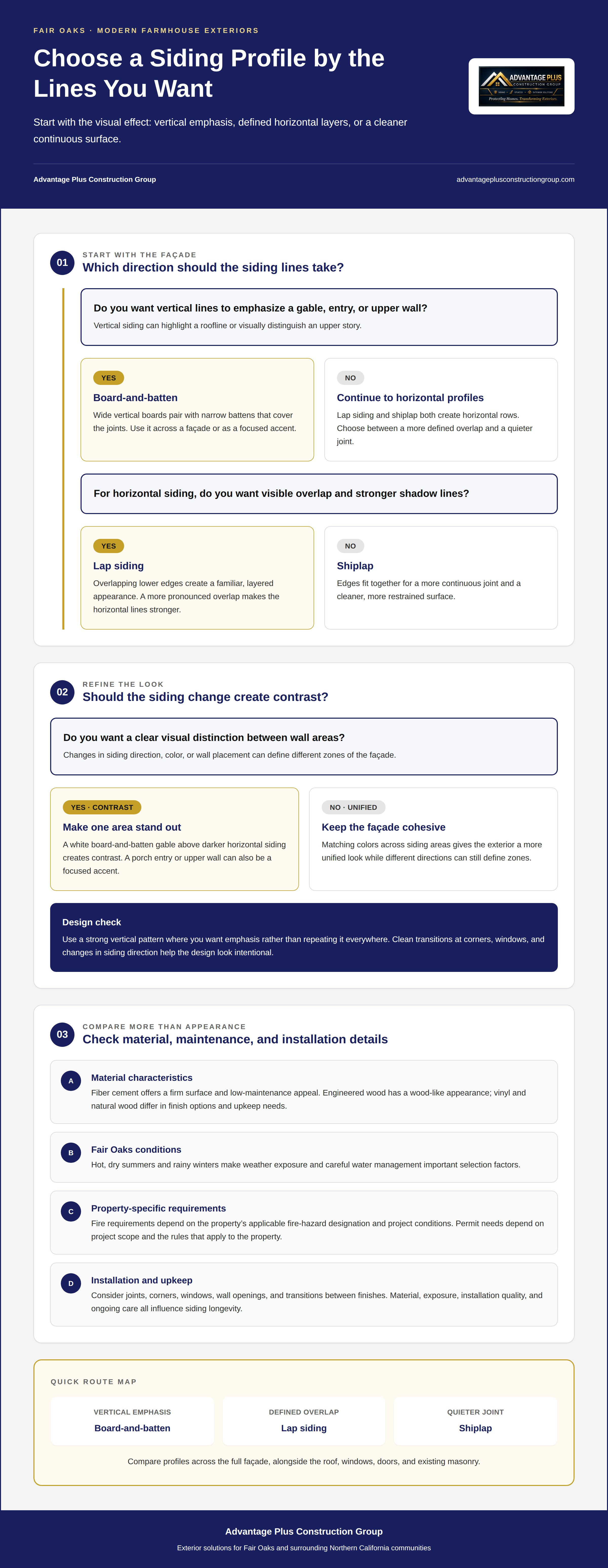
Board-and-batten siding pairs wide vertical boards with narrow battens that cover the joints. On a modern farmhouse, its strong lines add height and contrast with horizontal siding.
Use the style across a full façade or as an accent, such as a front-facing gable above lap siding. It can also pair with shiplap to combine vertical and horizontal lines. For example, vertical boards on the gable and horizontal shiplap below create distinct zones without adding another color.
Gable and Other Siding Applications
A gable is the triangular wall beneath a pitched roof, and vertical board-and-batten siding makes it stand out. Siding direction can emphasize a roofline or visually distinguish an upper story. In Fair Oaks, a white gable above darker horizontal siding creates contrast, while matching the colors gives the exterior a more unified look.
Board-and-batten can also highlight a porch entry, a single façade, or upper wall sections. These applications focus the vertical pattern rather than repeating it across every wall. Clean transitions at corners, windows, and changes in siding direction help the design look intentional.
Fiber cement, engineered wood, vinyl, and natural wood each have different characteristics. Fiber cement offers a firm surface and low-maintenance appeal; engineered wood has a wood-like appearance, while vinyl and natural wood differ in finish options and upkeep needs. Compare appearance, maintenance, fire performance, and installation details together.
When comparing siding contractors in Fair Oaks, consider their exterior experience, written scope, moisture-management approach, installation details, project oversight, and warranty terms. A useful estimate explains the proposed materials and how the project will address transitions, openings, and existing wall conditions.
Fire requirements depend on the property’s applicable fire-hazard designation and project conditions, so Fair Oaks alone does not determine a universal siding requirement. Account for the home’s location and the requirements that apply to the property when selecting materials.
Permit needs depend on the project scope and the rules that apply to the property. Replacing siding may involve different considerations from changing wall assemblies or making related exterior alterations, so include permitting in project planning.
Fair Oaks homes face hot, dry summers and rainy winters, making durable materials and careful water management important selection factors. Compare fiber cement and other siding options for weather exposure, maintenance, appearance, and installation requirements.
Climate, Maintenance, and Siding Lifespan
Siding maintenance involves keeping surfaces and joints in serviceable condition through appropriate inspection, cleaning, and repair. With board-and-batten, pay particular attention to battens, joints, corners, and areas around windows where water can affect the assembly.
Material, exposure, installation quality, and ongoing care all influence siding longevity. Fair Oaks sun and seasonal rain place different stresses on a home throughout the year, so detailing and upkeep matter alongside the finish. No single lifespan applies to every material and home.
Because vertical patterns and horizontal profiles create distinct visual effects, comparing siding options for Fair Oaks homes can help clarify the balance between farmhouse character, upkeep, and exterior protection.
Lap siding and shiplap
Lap siding uses horizontal courses whose lower edges overlap the boards beneath them. Shiplap also forms horizontal rows, but its edges fit together for a more continuous joint. Both suit modern farmhouses in Fair Oaks; compare their shadow lines, surface rhythm, and visual definition.
Classic lap siding creates a familiar, layered appearance. A pronounced overlap makes the lines stronger, while a smoother profile feels more contemporary. Board width and wall height affect the balance: broad courses can make a large façade feel calmer, while tighter rows create more repetition. Relate these proportions to the home’s windows, doors, and roofline.
Shiplap creates a cleaner, more restrained surface because its joints are less pronounced. It can suit a façade where trim, masonry, or architectural openings already add visual detail. For example, shiplap on a porch wall can complement a simple entry without competing with the front door or window surrounds.
Painted finishes also shape how each profile looks. White emphasizes farmhouse tradition, while soft gray or blue changes the mood without changing the siding pattern. Darker paint can make lap joints more noticeable through contrast and shadow. In Fair Oaks, consider how the color works with the roof, existing masonry, and light across the front of the home.
The profiles can also help organize a façade. Horizontal siding across the main walls creates a consistent visual baseline, while changes in wall depth or trim can define an entry or porch area. Rather than introducing many finishes, a carefully selected siding profile can give the exterior character while allowing windows and doors to remain focal points.
Installation quality affects appearance and exterior performance. Keep courses consistently aligned, and detail joints appropriately around windows, corners, and wall openings. At transitions to other finishes, trim can create a neat edge and clear visual boundary. These details stand out on long, uninterrupted walls, where even slight misalignment can disrupt the horizontal pattern.
Compare lap siding and shiplap as complete façade choices, not as isolated samples. Consider the home’s scale, visible trim, and whether you prefer defined shadow lines or a quieter surface. View a painted sample beside the windows and entry to see which profile best supports the farmhouse look.
The home’s roof and masonry can help you judge whether a color creates the intended balance. View the profile across a larger area too, since a small sample cannot show how repeated courses shape the façade. The Flint farmhouse in St. Augustine, Florida, combines natural stone with shiplap on a symmetrical façade. It shows how shiplap can sit beside distinctive masonry while maintaining a horizontal pattern. For a similar pairing, consider how the siding’s joint lines relate to the stone’s texture and the façade’s arrangement. Aim for a cohesive composition in which each surface has a clear role.
Mixing smooth siding with darker, textured materials
Smooth siding creates a quiet visual foundation, while darker, textured finishes draw attention to selected features. In Fair Oaks, this contrast can define an entry, porch, or gable without making every wall compete. Establish one dominant surface, then introduce texture and deeper color in planned areas.
Material contrast can be subtle or pronounced. Smooth siding beside dark wood beams adds visible grain and shadow without changing the wall color. A darker accent wall makes a stronger statement, especially where it meets a lighter surface at a clear architectural boundary. Limiting contrasting finishes helps preserve modern farmhouse design’s clean, orderly character.
Color can reinforce changes in material. Midnight blue, forest green, and charcoal gray create dramatic accents against light walls. Sage and warm gray offer a quieter combination. For example, muted sage board-and-batten can distinguish a gable, while warm gray smooth stucco grounds the main wall. Siding direction and finish contribute as much as the palette.
Brick and stone provide another textured counterpoint. Gray brick against white siding adds variation without requiring another bold color. A darker stone accent near an entry adds visual weight, while smooth siding keeps the broader façade from feeling busy. Consider scale: a narrow accent can frame an opening, while a broad area becomes a major part of the exterior composition.
Plan each material junction as part of the design. At a window, porch, or gable edge, a defined trim line can make the transition look deliberate. Changes in siding direction can also separate materials without a sharp color shift. These choices help the façade read as connected architectural zones rather than unrelated finishes.
- Set a dominant finish: Use one smooth surface across the main wall area.
- Choose a focused accent: Place darker texture on a gable, entry, or beam detail.
- Coordinate undertones: Relate sage, gray, or charcoal accents to the main wall color.
- Define edges: Plan trim and alignment where one material meets another.
Fair Oaks homeowners can adapt farmhouse materials to their home’s proportions and existing features. A restrained combination of smooth siding, one textured accent, and coordinated trim gives each element a defined role. The result can feel distinctive without obscuring the windows, rooflines, or entry that give the façade its character.
White farmhouse exteriors
White siding connects the modern farmhouse style to the traditional image of American farmhouses with clapboard walls and covered porches. A white exterior also gives the home’s architectural details a clear visual backdrop. Board-and-batten can emphasize a gable, while horizontal siding creates a quieter rhythm across the main walls. The right combination depends on rooflines, trim, and the home’s proportions.
Popular combinations include white walls with dark trim, white siding with black roofing, and cream walls with gray accents. Soft blue and gray also suit the farmhouse aesthetic. White window trim against darker siding creates a crisp frame, while dark window trim on white siding adds contemporary contrast.
The Dorado modern farmhouse in Black Diamond, Washington, pairs a clean white exterior with bold black roofing. Its contrast shows how a limited palette can emphasize rooflines and openings. On a Fair Oaks home, similar restraint can keep the exterior composed, especially when siding direction changes between the main walls and a front-facing gable.
White does not have to create a flat surface. Board-and-batten, clapboard, and lap profiles produce different shadow patterns, even in the same shade. Wide trim boards add visual depth around windows and doors. Contrast colors sharpen those edges, while matching trim to siding creates a softer, more continuous look.
The West Nyack modern farmhouse renovation used white board-and-batten siding alongside a porch addition, new windows, a roof deck addition, and metal roofing. The example shows how siding color works with other exterior elements, rather than in isolation. For a local design by Advantage Plus Construction Group, the porch, entry, roof color, and window frames all contribute to the finished look.
- For a classic look: Pair white clapboard with a covered porch and simple trim.
- For stronger contrast: Set dark window frames or roofing against white siding.
- For softer contrast: Combine cream or white siding with gray or muted blue details.
- For added depth: Use wider trim boards around windows and entry doors.
In Fair Oaks, account for the home’s existing features and any applicable HOA design rules when choosing colors. A white field can unify varied wall shapes, while a restrained accent can distinguish a gable or entry. Compare painted samples near the windows, roof, and porch to see how each relationship shapes the overall modern farmhouse composition.
The West Nyack modern farmhouse renovation transformed a 1980's contemporary home with white board-and-batten siding, a porch addition, a roof deck addition, new windows, and metal roofing to enhance its overall appearance. Modern farmhouse color palettes can use whites, creams, grays, or soft blues. The modern farmhouse with stone exterior in Chicago is described as a large, white, two-story home with mixed siding and a gable roof.
Clapboard siding
Clapboard siding consists of horizontal boards in overlapping courses, a profile associated with traditional American farmhouses and covered porches. Its repeated lines create a familiar, rustic character, while a restrained palette can make it feel contemporary. For modern farmhouse exterior siding in Fair Oaks, board proportions, trim, windows, and rooflines all shape the finished look.
Clapboard can create a continuous pattern across the main façade or provide a classic backdrop for a porch and front entry. White boards with a covered porch evoke a traditional farmhouse. Dark window frames or a contrasting front door sharpen the composition, while matching trim creates a quieter look. Each choice affects how strongly the horizontal courses stand out from the street.
For clean lines, plan how each course aligns with windows, corners, and adjoining walls. Uneven starts or abrupt transitions can disrupt the visual rhythm. A front-facing gable offers one example: clapboard across the main wall can meet vertical siding above, with trim marking the change in direction. This distinguishes the gable without changing the entire exterior palette.
Material choice affects both appearance and ongoing care. Fiber-cement siding supports a painted farmhouse look, while natural wood shows visible grain and has different maintenance needs. The right option depends on the desired finish, exposure, upkeep preferences, and project details. For modern farmhouse exterior siding in Fair Oaks, consider the wall assembly and installation details as well as the material.
Fair Oaks has hot, dry summers and rainy winters, so exterior planning should account for sun exposure and water movement. Clapboard courses create horizontal joints that need careful detailing around windows, corners, and wall intersections. These transitions help direct water away from vulnerable areas. A clean visual pattern should complement, not replace, sound exterior protection.
Use these design choices to shape a cohesive clapboard exterior:
- Choose the character: White boards and a covered porch lean traditional; darker trim gives the façade a contemporary edge.
- Coordinate the openings: Relate window frames and door color to the siding and trim.
- Define transitions: Use deliberate trim where clapboard meets vertical siding or another exterior material.
- Consider upkeep: Compare painted finishes and material maintenance needs before settling on a look.
Clapboard’s horizontal pattern can give a Fair Oaks farmhouse a classic foundation, while trim, gables, and window colors establish its individual style. Discuss a clapboard siding plan for your home to align the visual design with practical exterior considerations.
Advantage Plus Construction Group: Exterior Envelope Services
Advantage Plus Construction Group helps Fair Oaks homeowners turn farmhouse siding ideas into coordinated exterior projects. Its Exterior Envelope Services treat the exterior as a connected system, which matters when board-and-batten, clapboard, or smooth siding meets stucco or other wall finishes.
For worn siding or stucco, siding and stucco repairs may be more appropriate than a complete redesign. For a broader update, Fiber Cement Siding supports a durable, low-maintenance exterior and the clean profiles associated with modern farmhouse design. The right scope depends on the home’s condition and the look you want.
For help planning siding or exterior repairs in Fair Oaks, contact Advantage Plus Construction Group.
Shape an Exterior Plan That Fits Your Fair Oaks Home
Your exterior should look cohesive from the street and function as a protective shell. When planning modern farmhouse exterior siding in Fair Oaks, consider how the chosen profile will meet the home’s existing walls, windows, and entry. A clear design direction helps balance appearance with practical priorities such as durability and manageable upkeep.
Advantage Plus Construction Group offers Fiber Cement Siding, Stucco Systems, and Exterior Envelope Services. These services can support a refreshed siding profile, a combination of siding and stucco, or broader exterior work. The right scope starts with the home’s condition and the finish you want.
Ready to discuss how those choices could work on your property? Contact Advantage Plus Construction Group to request a free, no-obligation estimate and take the next step toward an exterior that reflects your home and protects your investment.
Frequently Asked Questions
What siding styles define a modern farmhouse exterior?
Modern farmhouse exteriors often pair vertical board-and-batten with horizontal lap siding, shiplap, or clapboard. Siding direction and profile create contrast, while white walls, dark trim, and textured accents shape the overall character. For example, a home with a prominent porch might use horizontal siding across the main walls and reserve vertical boards for an upper gable, combining traditional details with a cleaner, contemporary look.
Which siding materials work best for modern farmhouse homes in Fair Oaks, California?
The best material depends on the home’s exposure, desired appearance, and maintenance priorities. Fair Oaks homeowners can compare fiber cement, engineered wood, vinyl, and natural wood for finish, upkeep, and suitability for the existing exterior. Fiber cement is a durable, low-maintenance option; stucco can complement farmhouse siding as a contrasting finish. Advantage Plus Construction Group evaluates how materials meet around windows, entries, and other wall transitions to help homeowners choose a suitable exterior approach.
What are the pros and cons of fiber cement, engineered wood, vinyl, and natural wood siding?
Fiber cement offers a firm surface and low-maintenance appeal, while engineered wood has a wood-like appearance. Vinyl and natural wood differ in finish options and upkeep needs. Advantage Plus Construction Group recommends comparing these characteristics with your desired appearance and maintenance priorities.


