

The most expensive structural repairs often begin with a single, invisible drop of moisture trapped behind your siding. For many local residents, the "stay and improve" mindset has turned home maintenance into a high-stakes investment in long-term security. Successfully preventing water damage exterior walls Sacramento requires more than a coat of paint or a quick patch. It demands a disciplined, multi-layered defensive strategy known as the building envelope. You likely feel the weight of this responsibility. The fear of hidden dry rot or the anxiety over mounting repair costs can make every winter storm feel like a gamble with your property's integrity.
We understand that the confusion between different siding materials often leads to paralysis; however, protecting your investment shouldn't be a source of stress. This guide will teach you how to fortify your home's exterior against Sacramento's unique climate to prevent costly structural damage. We will examine the critical role of moisture barriers, the performance of premium fiber cement, and the precision required for modern stucco systems. By the end, you'll have a clear roadmap to transition from maintenance anxiety to the peace of mind that comes with professional-grade protection.
Key Takeaways
- Understand how Sacramento’s extreme temperature cycles and atmospheric rivers create unique stress points that compromise traditional exterior seals.
- Discover why a multi-layered building envelope is the only disciplined strategy for preventing water damage exterior walls Sacramento.
- Compare the moisture-resistant performance of premium fiber cement and stucco systems to determine the best defense for your home’s structural core.
- Learn to identify subtle early warning signs of water intrusion, such as bubbling paint or spongy textures, before they escalate into hidden dry rot.
- Recognize why precision installation of the Water Resistive Barrier (WRB) is the most critical factor in ensuring long-term environmental resistance.
The Sacramento Climate: A Unique Threat to Exterior Walls
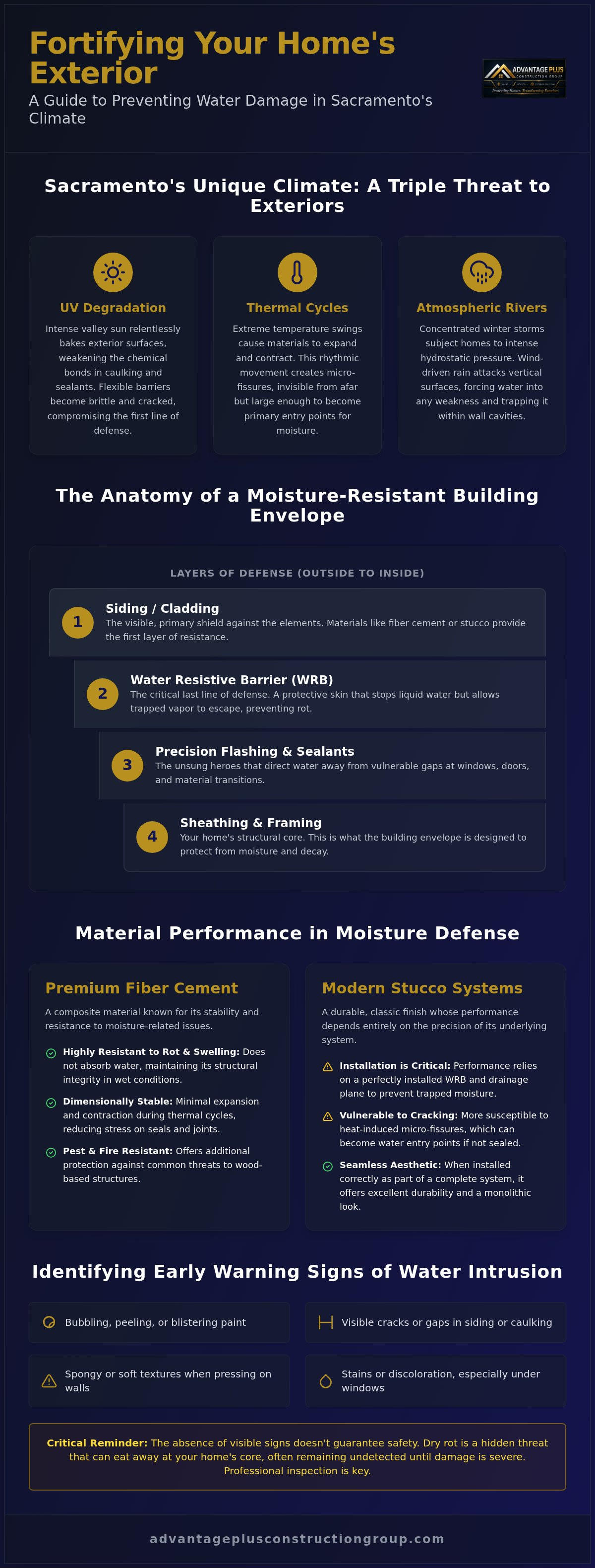
Sacramento’s environment is a study in extremes. It’s a landscape where 105-degree afternoons are followed by concentrated, tropical-strength winter storms. This environmental volatility makes preventing water damage exterior walls Sacramento a unique challenge for every property owner. While many generalists focus on simple rain protection, a specialized guardian understands that the damage begins long before the clouds gather. It starts with the sun.
UV degradation is the silent architect of structural failure. In areas like Roseville and Granite Bay, the intense valley sun relentlessly bakes the exterior of your home. This radiation weakens the chemical bonds in caulking and sealant. It turns flexible barriers into brittle, cracked shells. When your home’s primary defense is compromised by UV rays, it loses the ability to withstand the physical shifts caused by Sacramento’s thermal cycles. Precision is the only remedy for this environmental fatigue.
Heat-Induced Cracking and Moisture Entry
Materials react to temperature. Stucco, wood, and even some low-grade synthetics expand when heated and contract as they cool. This rhythmic movement creates micro-fissures. These tiny fractures are often too small to see from the sidewalk; however, they are large enough to invite disaster. They serve as the primary entry points for winter moisture. The Sacramento Heat-Rain Cycle acts as a catalyst for structural decay by opening pathways through intense thermal stress before saturating them with seasonal deluges. Once these fissures exist, the structural integrity of your siding is no longer a matter of "if" it will fail, but "when."
Atmospheric Rivers and Hydrostatic Pressure
When winter arrives, it often brings "Atmospheric Rivers." These are not typical rain showers. They are concentrated streams of moisture that subject your home to intense hydrostatic pressure. Wind-driven rain doesn't just fall. It attacks. It pushes against vertical surfaces, seeking out any weakness in your building envelope.
Moisture frequently finds its way behind poorly flashed windows and doors during these events. Without a precision-installed drainage plane, this water becomes trapped within the wall cavity. Trapped moisture is the precursor to dry rot. It’s a hidden, silent threat that eats away at the home core, often remaining undetected until the damage is structural and the repairs are expensive. Protecting your investment requires a defense built for these specific Sacramento pressures. We prioritize the long-term health of your structure over superficial upgrades.
The Anatomy of a Moisture-Resistant Building Envelope
A building envelope serves as a multi-layered shield for your home’s structural core. It isn't merely the siding you see from the street; it's a complex assembly of materials working in unison to manage heat, air, and moisture. For homeowners focused on preventing water damage exterior walls Sacramento, understanding this system is the first step toward long-term security. While many DIY discussions focus on surface-level fixes like caulking, a professional approach prioritizes the layers hidden beneath the finish. This system is your primary defense against the structural decay that often begins in the wall cavity.
The Water Resistive Barrier (WRB)
The WRB is the last line of defense for your home's framing. It acts as a protective skin that prevents liquid water from reaching the wood substrate while allowing trapped water vapor to escape. Traditional felt paper was the industry standard for decades, but modern synthetic wraps offer superior durability and tear resistance. These high-performance membranes are essential for managing the intense moisture loads seen during atmospheric rivers. However, even the most advanced material fails if it's installed incorrectly. Securing a moisture barrier siding installation from a specialist ensures that overlaps and seams are perfectly sealed to prevent bypass leaks.
Flashing and Sealants: Closing the Gaps
Precision flashing is the unsung hero of water damage prevention. These thin pieces of metal or plastic are designed to direct water away from high-risk zones where different materials meet. In modern siding systems, "Z-flashing" is particularly critical. It creates a physical ledge that forces water to shed outward rather than seeping behind the lower planks. High-risk zones that require specialized attention include:
- Window and door headers
- Roof-to-wall transitions
- Wall penetrations for vents or utilities
- Horizontal joints between siding panels
Generic hardware store caulking often fails under the relentless Sacramento sun, becoming brittle and losing its seal within a few seasons. We utilize high-grade, industrial sealants that maintain flexibility despite extreme thermal expansion. This level of detail is aligned with the Moisture Control Guidance provided by federal agencies, which emphasizes the need for continuous drainage planes and robust flashing. A drainage plane allows incidental water that gets behind your siding to escape before it causes structural harm. This path is what separates a specialized installation from a generalist's quick fix. If you're concerned about the integrity of your home’s current shield, a comprehensive envelope assessment can identify vulnerabilities before they become costly structural repairs.
Fiber Cement vs. Stucco: Performance in Moisture Defense
Choosing between fiber cement and stucco isn't just about aesthetics. It's a strategic decision for the long-term health of your home core. Both materials offer robust defense, yet they manage moisture in fundamentally different ways. For homeowners focused on preventing water damage exterior walls Sacramento, the choice depends on the desired maintenance level and the specific exposure of the property. While stucco is a traditional California staple, fiber cement has emerged as a high-performance alternative designed to withstand the valley's unique environmental pressures.
The primary difference lies in permeability. Stucco is naturally porous, meaning it's designed to absorb and then release moisture. Fiber cement, by contrast, is engineered to be a more rigid barrier. Both require a perfectly executed building envelope to function; however, the margin for error varies between the two. Your choice should prioritize the physical durability of the project alongside its visual appeal.
The Resilience of Fiber Cement Siding
Fiber cement is a composite powerhouse. By blending cellulose fibers with cement and sand, it creates a substrate that's virtually immune to the rot and swelling that plagues traditional wood. Unlike wood siding, which absorbs wind-driven rain like a sponge, fiber cement maintains its dimensional stability. This is particularly vital in Sacramento, where winter atmospheric rivers can saturate a home for days. Factory-applied finishes add another layer of defense, sealing the surface against UV degradation and water penetration. If you're looking for a low-maintenance, high-performance shield, investing in fiber cement siding installation Sacramento provides a permanent solution that stands up to the valley's harshest cycles.
Professional Stucco Systems and Drainage
Stucco remains a hallmark of local architecture, yet its integrity depends entirely on what's happening behind the finish. Modern stucco application relies on a two-layer weather barrier to protect the underlying framing. This creates a secondary drainage plane where moisture can migrate safely to a weep screed at the base of the wall. A weep screed is a specialized metal flashing that allows water to exit the system instead of pooling at the foundation. Without this precision, moisture becomes trapped, leading to the very dry rot you're trying to avoid. Consulting specialized stucco contractors in Sacramento CA is essential to ensure these drainage components are integrated correctly into your building envelope. When installed with a "do it right the first time" discipline, a stucco system provides a classic, fire-resistant barrier that can last for generations.
Identifying the Early Warning Signs of Water Intrusion
Detecting moisture intrusion requires a disciplined eye and a rejection of surface-level assumptions. For homeowners focused on preventing water damage exterior walls Sacramento, the goal is to catch failures in the building envelope before they escalate into structural crises. Water is patient. It often works in silence, migrating through micro-fissures or compromised seals long before a leak appears inside your living room. Recognizing these symptoms early is the only way to transition from reactive repairs to long-term property security.
Specific visual cues often signal that your home's defensive layers have been breached. While some signs appear cosmetic, they are frequently the "check engine light" for your exterior walls. Watch for these indicators of trapped moisture:
- Peeling or Bubbling Paint: This is rarely a simple adhesion failure. It often indicates that moisture is trapped behind the finish, pushing the paint film away from the substrate as it attempts to evaporate.
- Soft or Spongy Textures: Press firmly on siding planks and trim, especially near the base of the wall. Any "give" or localized softness suggests that the internal wood fibers have begun to break down.
- Discoloration and Staining: Dark streaks or "water runs" around window corners and door sills are evidence of flashing failure.
- Efflorescence: On stucco surfaces, white powdery deposits indicate that water is migrating through the cementitious material and carrying minerals to the surface.
Visual Inspection Checklist
A professional-grade inspection begins with a methodical walk-around of the property. Focus your attention on high-heat areas, such as south-facing walls, where the Sacramento sun causes the greatest thermal expansion. Check for "caulking separation" at every joint. If the sealant has pulled away from the material, it has created an open door for the next atmospheric river. Inspect the "drip edge" at the bottom of your siding; there should be adequate ground clearance to prevent "wicking" from soil or splash-back. Recognizing these signs you need new siding early can save tens of thousands of dollars in hidden framing repairs.
The Hidden Danger of Dry Rot
Dry rot is a specialized form of fungal decay that thrives in the dark, unventilated wall cavities of many local homes. Despite its name, it requires moisture to begin its destructive cycle. Once established, it consumes the cellulose that provides wood its strength, leaving behind a brittle, cracked skeleton. Surface repairs, such as wood filler or a fresh coat of paint, often mask deeper structural issues without addressing the source of the moisture. Dry rot can compromise structural integrity before it is visible on the exterior. If you suspect your home’s core is at risk, you should schedule a professional envelope inspection to verify the health of your substrate.
Professional Shielding: The Advantage Plus Approach
Professional oversight is the only way to move from temporary fixes to permanent security. While a generalist might focus on the visible surface, a specialized guardian looks deeper into the structural health of the building. Effectively preventing water damage exterior walls Sacramento requires a disciplined approach that respects the technical nuances of the building envelope. We believe that doing it right the first time isn't just a goal; it's a professional obligation to the homeowner. This commitment to precision ensures that your property remains a sanctuary, a secure investment, and a source of pride. It's about the transition from maintenance anxiety to the peace of mind that comes with high-quality protection.
Project Management and Precision
Every project we undertake is governed by a dedicated project manager. These specialists provide the rigorous oversight necessary to ensure every flashing detail, every seal, and every overlap is perfect. We focus on the "unseen" layers. The WRB, the drainage planes, and the integrated flashings are the true defenders of your home core. General contractors often overlook these critical components in favor of speed or cost-cutting; however, we understand that shortcuts are the primary cause of moisture failure. Our specialized expertise in premium fiber cement and stucco systems allows us to manage moisture with a level of detail that generalists simply cannot match. This disciplined process protects your home's structural core from the silent threat of dry rot, ensuring a result that is durable, reliable, and technically sound.
Securing Your Property’s Future
The transition from property anxiety to peace of mind begins with a choice. By investing in professional shielding, you are securing your property’s future and preserving its long-term value. Premium materials like fiber cement and professional stucco systems are more than just upgrades. They are durable, fire-resistant, and environmentally resilient assets that stand the test of time. We take pride in our workmanship and reject the temporary fixes that lead to structural failure. Our goal is to take the weight of responsibility off your shoulders so you can enjoy the satisfaction of ownership without fear of the next atmospheric river. You deserve a partner who understands the high stakes of structural integrity and the importance of professional standards. It’s time to stop worrying about what might be happening behind your siding. You can protect your home core with Advantage Plus and ensure your Sacramento home remains fortified, beautiful, and secure for decades to come.
Fortifying Your Home for the Next Atmospheric River
Fortifying your home against the elements is an investment in both structural integrity and personal peace of mind. We have explored how Sacramento’s unique climate, characterized by intense heat and atmospheric rivers, demands a disciplined approach to moisture management. Successfully preventing water damage exterior walls Sacramento requires a multi-layered building envelope where every flashing detail and barrier overlap is executed with precision. Whether you choose the timeless appeal of stucco or the high-performance resilience of premium James Hardie fiber cement, the quality of the installation remains the most critical factor in your home’s defense.
Our team of specialized building envelope experts is dedicated to protecting the structural core of properties throughout Sacramento, Roseville, and Granite Bay. We prioritize the unseen layers that general contractors often overlook; this ensures that your investment is shielded from the hidden threat of dry rot. You don't have to carry the weight of maintenance anxiety alone. You can secure your home’s exterior with Advantage Plus Construction Group and enjoy the satisfaction of knowing your property is built to last. Your home is your sanctuary; let's ensure it remains fortified and secure for decades to come.
Frequently Asked Questions
How does Sacramento’s weather specifically cause water damage to walls?
Sacramento’s climate creates a punishing cycle of thermal stress and intense saturation. During the summer, extreme heat causes siding and stucco to expand, often leading to micro-fissures in the material. When winter atmospheric rivers arrive, wind-driven rain is forced into these openings under high hydrostatic pressure. This trapped moisture cannot escape easily; it leads to the structural decay and dry rot that plagues many homes in Roseville and Granite Bay.
What is a building envelope and why does it matter for moisture prevention?
A building envelope is a multi-layered defensive system designed to protect your home’s structural core from environmental threats. It includes the siding, the water-resistive barrier, and integrated flashing components. This system is critical for preventing water damage exterior walls Sacramento because it manages moisture at every level. Rather than relying on a single surface, the envelope provides a drainage plane that allows incidental water to exit the wall cavity before it can cause permanent damage.
Can I prevent water damage by just repainting my house?
Paint is a surface-level finish that cannot compensate for a compromised building envelope. While high-quality paint provides a temporary moisture barrier, it won't stop water from entering through failed caulking, improper flashing, or damaged substrate. In fact, new paint often bubbles or peels when moisture is already trapped behind it. For homeowners in Orangevale and Fair Oaks, real protection requires a disciplined approach to the underlying layers, ensuring that structural integrity is secured.
Is stucco or fiber cement better at preventing dry rot in California?
Both materials are effective when installed with professional precision, but they manage moisture differently. Fiber cement is an inert composite that doesn't rot or swell, making it highly resilient against Sacramento’s atmospheric rivers. Stucco is naturally porous and relies on a secondary drainage plane to shed water. For many homeowners in Rocklin and Loomis, fiber cement offers a lower-maintenance shield that provides superior long-term defense against the fungal decay known as dry rot.
What are the first signs that water is getting behind my siding?
Early warning signs often appear cosmetic but indicate deeper failures in your home’s defense. Look for paint that is bubbling or peeling, which suggests moisture is trying to escape from the substrate. You might also notice soft, spongy textures on trim or siding planks near the ground. On stucco homes in Citrus Heights, white powdery deposits called efflorescence signal that water is migrating through the wall. Catching these signs early is vital for preventing costly structural repairs.
How often should I have my exterior envelope inspected by a professional?
We recommend a professional visual inspection of your building envelope at least once a year, preferably before the winter rain season begins. Sacramento’s intense summer heat can degrade sealants and caulking in a single season. An annual check allows you to identify micro-fissures or flashing gaps before they lead to saturation. Regular oversight is the most effective way to transition from the anxiety of maintenance to the peace of mind that comes with a secure property.
Does Advantage Plus Construction Group handle dry rot repairs during siding installation?
Yes, our specialized project managers prioritize the health of your home’s substrate during every installation. When we remove old siding or stucco, we conduct a thorough assessment of the underlying framing. If we discover dry rot or moisture damage, we address these structural issues before installing the new system. This "do it right the first time" philosophy ensures that your new fiber cement or stucco is built on a solid, secure foundation.
Why is flashing more important than the siding material itself?
Flashing is the unsung hero of moisture management because it protects the most vulnerable points of your home. Siding covers the large surfaces, but flashing directs water away from transitions like windows, doors, and rooflines. Even the most expensive siding material will fail if the flashing is missing or improperly installed. Precision flashing ensures that water sheds outward rather than seeping into the wall cavity; it's the most critical step in protecting your investment.


