

A manageable monthly payment can still add up to a costly project if the repayment terms aren’t clear. Planning Roseville siding replacement financing starts with a complete project budget based on the home’s size, siding material, and installation scope. Compare the total you’ll repay, not just the monthly payment.
It’s reasonable to want durable protection for your home without straining your household budget. A clear plan helps you understand the work involved, how financing terms affect the overall cost, and what to consider if your credit history limits your options.
This guide explains how to organize a siding budget, compare loan terms, assess financing options with bad credit, and weigh potential resale benefits against replacement costs. You’ll have a grounded way to plan the project and decide what fits your home and finances.
Key Takeaways
- Build a complete siding budget around your home’s size, chosen material, installation labor, and cleanup.
- Compare financing by total repayment, interest rate, fees, and payment schedule, not by monthly payment alone.
- If your credit is challenged, focus on eligibility requirements and whether the full repayment plan fits your budget.
- Weigh potential resale appeal against project cost, and treat return-on-investment estimates as planning context rather than a promised outcome.
- Fiber cement siding can be part of a broader exterior protection plan when durability and long-term performance matter.
Budgeting for siding installation
A useful siding budget starts with the home, not a financing offer. In Roseville, California, project scope depends on the home’s size, siding material, and installation requirements. Define those details first, then compare financing against the full project amount. A low monthly payment can hide a mismatch between the work needed and the budget available.
Start by assessing the exterior. Record which walls need replacement, note visible damage, and identify areas with different materials or finishes. These details help define the project scope. The price depends on the home’s size, selected material, and installation requirements, so use a written estimate to establish the project amount.
Next, organize the estimate by cost category. Ask for a breakdown of materials, labor, and cleanup. These categories make it easier to understand what the proposed work includes and compare estimates on the same basis. If an estimate omits cleanup or describes materials vaguely, the totals may not cover equivalent work.
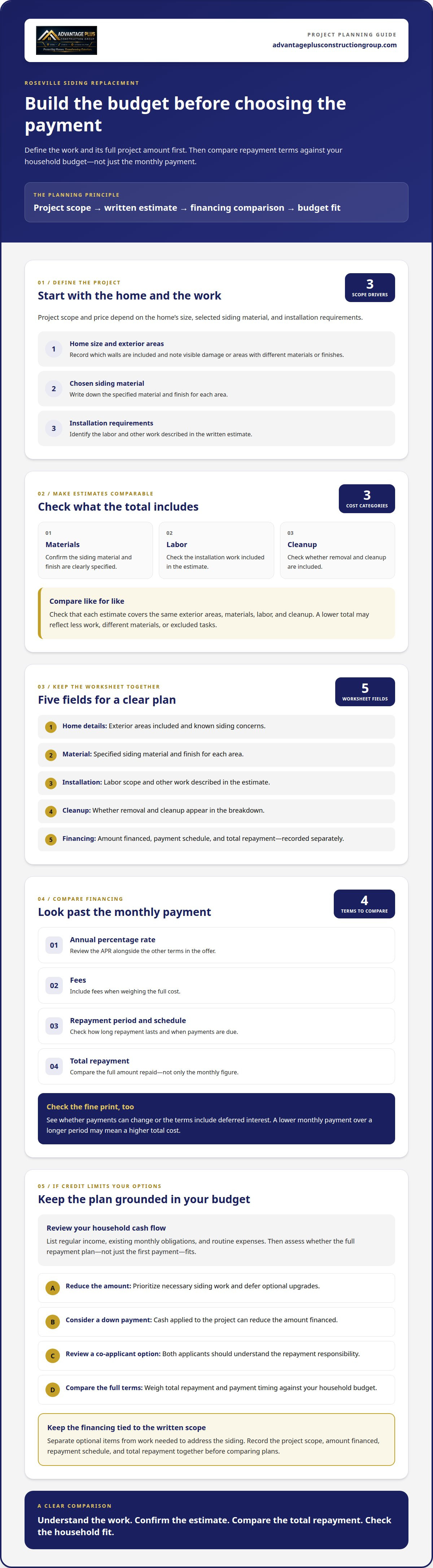
Use a simple worksheet to keep the figures and assumptions together:
- Home details: Record the exterior areas included and any known siding concerns.
- Material: Write down the specified siding material and finish for each area.
- Installation: List the labor scope and any work described in the estimate.
- Cleanup: Note whether removal and cleanup appear in the project breakdown.
- Financing: Record the amount financed, payment schedule, and total repayment separately.
Then compare each estimate line by line. Check whether each covers the same exterior areas, materials, labor, and cleanup. Clarify differences in scope before deciding which total fits your plan. A lower figure may reflect less work, different materials, or excluded tasks. A written breakdown helps show the difference without guesswork.
Keep the cash-flow plan separate from the project scope. First establish the full project amount, then compare financing terms with your household budget. This prevents a payment estimate from setting the scope before you understand the work. For Roseville siding replacement financing, start with a defined project and a documented repayment plan, not a monthly figure alone.
Leave room in your plan for choices that can change the estimate. The selected material, areas included, and installation requirements all affect project cost. Review these factors alongside the financing terms before committing. A complete estimate gives you a firmer basis for deciding whether to proceed, adjust the scope, or revisit the repayment plan.
Financing with bad credit
A low credit score can narrow financing choices, but it doesn’t define the project budget. Start by separating essential siding work from upgrades. For example, prioritize damaged exterior areas before considering optional finish changes. A smaller, clearly defined scope can reduce the amount you need to finance.
Before comparing offers, review your finances. List regular income, existing monthly obligations, and the payment your household can manage. Include routine expenses, not just housing costs. This helps distinguish a sustainable payment from one that leaves too little for everyday needs.
Credit decisions can consider more than a score. Lenders may assess income, existing debt, payment history, and the amount requested. Prepare accurate information on these points before applying. If your finances have changed, use current records rather than outdated estimates.
Look beyond the advertised payment when comparing financing offers. Read the annual percentage rate, fees, repayment period, and total repayment amount. Check whether payments can change and whether the terms include deferred interest. A lower payment over a longer period may mean paying more overall.
Use this checklist to compare potential paths:
- Reduce the amount: Limit the scope to necessary siding work and defer optional upgrades.
- Consider a down payment: Applying cash toward the project can reduce the amount financed.
- Review a co-applicant option: A second applicant may affect an application, but both parties should understand the repayment responsibility.
- Compare repayment terms: Evaluate the full cost and schedule, not just the first payment.
For example, compare two offers with different repayment periods. The offer with the lower monthly payment may extend repayment and increase the total cost. Weigh both total repayment and payment timing against your household budget to see whether the lower monthly amount comes with a longer commitment.
Avoid borrowing more just because an offer allows it. Match the financing amount to the written project scope. If optional items increase the total, separate them from work needed to address the siding. This keeps the financing decision tied to your home’s priorities.
Keep copies of the estimates and financing terms together. Note the project scope, amount financed, repayment schedule, and total repayment in one comparison. Clear records make differences easier to spot before you commit. A carefully defined replacement plan can support that process; review siding replacement planning alongside your budget.
Frequently asked questions
Does Roseville require permits for siding replacement, and what are the permit fees and rules? Permit requirements and fees depend on the project scope and applicable local rules. Straightforward material replacement may be treated differently from work that changes exterior details, so include permitting in your planning rather than assuming one rule or fee applies to every home.
Are there government or utility rebates, grants, or energy-efficiency incentives for new siding in Roseville? Treat incentives as possible savings, not guaranteed funding. Eligibility depends on an active program’s requirements and whether the siding work qualifies. Don’t subtract a rebate from your project budget until you understand the program terms, qualifying improvements, and award conditions.
What risks, hidden costs, or contractor financing red flags should Roseville homeowners watch for? Look for estimates that omit removal, disposal, or repairs to concealed exterior damage. Scrutinize financing, too: review fees, rates, promotional periods, payment changes, and total repayment. Be cautious if an offer highlights only a low starting payment or pressures you to sign before you understand the written terms.
What should a siding estimate clarify? It should identify the work areas, selected material, labor, and cleanup. For example, check whether two estimates cover the same walls and removal tasks. If one uses broad wording such as “complete replacement,” ask for a written scope explaining what it includes. Clear descriptions make later changes easier to spot.
How can I keep financing manageable? Separate essential replacement work from optional upgrades, then compare each offer’s total repayment and payment schedule with your household budget. For example, a longer repayment period can lower each payment while extending the commitment. Keep the signed scope and financing terms together so you can match the amount borrowed to the planned work.
Should I finance the entire project? Base your decision on available funds, required work, and repayment capacity. Financing less can reduce the balance you repay, while using cash may leave less available for other household needs. Compare both approaches using the same project scope. A written estimate and full review of the financing terms provide a practical basis for choosing.
Siding financing plans and terms
Compare the financing structure, approval criteria, and project estimate together. Each shapes how a Roseville homeowner can plan repayment.
Credit and Income Requirements
What credit score and income requirements apply to siding replacement financing? There’s no single score or income threshold for every financing offer. Lenders assess credit history, documented income, existing obligations, and the amount requested.
Review these factors before applying. Gather current income records and list recurring debt payments. Then compare the requested amount with your budget. For example, a household with steady income but substantial monthly obligations may receive a different assessment from one with fewer debts. The lender’s eligibility criteria and offered terms determine what the application qualifies for.
A credit score is one part of the review, not a complete budget plan. Read the decision terms carefully, including the interest rate, fees, repayment period, and total amount payable. If the offer includes a promotional period, find out what happens when it ends. The initial payment may change afterward, so use the full schedule to assess affordability.
Quotes and Financing Preapproval
How can homeowners get siding replacement quotes and financing preapproval in Roseville? Document the home’s siding needs and request a written quote that defines the work areas and materials. Separately, apply for preapproval through the lender’s application process and provide the requested financial documents.
Keep the quote and preapproval distinct. The quote defines the project scope; preapproval indicates potential borrowing terms based on your application. Compare the approved amount with the written estimate, then review the final financing agreement before accepting it. Preapproval alone doesn’t define the completed project or final repayment obligations.
Compare each offer across three areas: interest and fees, payment schedule, and total repayment. Check whether payments stay consistent, whether fees are included in the borrowed amount, and when the first payment is due. Compare equivalent project scopes, too. An offer for a smaller work area can seem more affordable without covering the same replacement.
Before signing, match the lender’s paperwork to the contractor’s written scope. Confirm that the amount borrowed corresponds to the project, and keep copies of both documents. If the scope changes, review the revised estimate and financing impact before proceeding. This helps prevent optional work or changed materials from silently increasing the amount financed.
For Roseville homeowners, a sound plan connects the estimate, approval terms, and household repayment capacity. Treat each document as part of one decision, not separate paperwork. A clear comparison helps identify a financing structure that fits the project without treating preapproval as a commitment to borrow.
Siding replacement benefits and return on investment
New siding can refresh curb appeal and strengthen a home’s exterior protection. For Roseville homeowners, those benefits matter alongside the financing cost. A return-on-investment estimate can help you consider resale value, but it shouldn’t replace a full assessment of the home, project scope, and repayment terms.
Reported estimates put vinyl siding’s return on investment at 82%, and fiber cement siding’s at 86%. These percentages describe potential resale value recovered relative to project cost. They aren’t cash rebates or a promise that a specific home will sell for more. Actual results depend on the property, local market, buyer priorities, and completed work.
Curb appeal also shapes a buyer’s first impression. Reported real estate agent figures say 99% agree curb appeal is vital for attracting potential buyers, while 94% recommend siding improvements before listing. These figures support considering the exterior before a sale, but they don’t establish how much a Roseville home’s value will change.
To assess value for your home, separate immediate condition benefits from resale possibilities:
- Exterior condition: Identify damaged or worn siding and the areas replacement would address.
- Appearance: Consider how consistent materials and finishes may affect the home’s overall presentation.
- Ownership timeline: Compare the time you expect to remain in the home with the financing period.
- Repayment cost: Include interest and fees when weighing potential resale value against total borrowing.
For example, a homeowner planning to stay long term may value protection and a refreshed appearance, even without an immediate sale. Someone preparing to list may focus more on visible condition and buyer appeal. In either case, account for the full repayment obligation, not just the expected market response.
Material choice also shapes the comparison. Vinyl and fiber cement have different reported ROI estimates, but the percentage alone doesn’t determine the right fit. Consider the home’s condition, desired exterior appearance, and planned ownership timeline. A material suited to the project’s purpose makes for a more relevant comparison than choosing solely by an ROI figure.
Keep the analysis grounded: list the project’s intended benefits, calculate the full financing commitment, and compare those items with your plans for the home. Then review the scope and material choices with an exterior professional. To discuss how a siding replacement plan can support your home’s protection and appearance, request a project discussion.
Advantage Plus Construction Group: Fiber Cement Siding
Advantage Plus Construction Group helps homeowners planning siding replacement with professional fiber cement siding installation. If your home needs a durable exterior update, this is a practical next step after defining the project scope and reviewing your financing plan. Project managers oversee each job, with attention to schedule and budget.
Fiber cement siding can support an exterior upgrade focused on protection, lasting performance, and appearance. Start by understanding your home’s needs and defining the work clearly, so you can weigh the next steps against your household budget.
Move forward with a plan that protects your home
A deliberate approach to Roseville siding replacement financing starts with a decision that serves your home beyond the immediate project. Identify the exterior priorities you don’t want to compromise, then align the work with a repayment commitment your household can sustain. Keep the focus on lasting protection, not simply getting the work underway.
Before moving forward, bring your questions about scope and material choices into one clear conversation. A well-defined plan connects your home’s needs with the right exterior solution and gives you a steadier basis for deciding what comes next. Advantage Plus Construction Group provides stucco systems and exterior envelope services for homeowners planning exterior improvements.
Take the next step at a pace that feels considered and practical. Contact Advantage Plus Construction Group to discuss your home’s exterior project and plan a path forward with confidence.
Frequently Asked Questions
How do you budget for siding?
Define the replacement scope before choosing payment options. For a Roseville home, note which elevations need work, whether existing siding removal is included, and which material you’re considering. Separate required work from appearance upgrades. For example, replacing damaged sections has a different scope from updating every exterior wall. Use a written estimate to plan project funding, and track financing charges separately.
Should you finance your siding project?
Financing can make sense when preserving cash matters and the repayment fits your household budget. Paying from savings may avoid borrowing charges but can reduce funds available for other priorities. Compare both approaches against your home’s needs and expected ownership timeline. For example, a homeowner planning to move soon may weigh the repayment period differently from someone planning to stay. Choose based on the total commitment, not payment size alone.
What siding replacement financing options are available in Roseville?
Roseville homeowners may consider personal loans, home equity borrowing, credit cards, or financing arranged through a contractor. Each option has different approval criteria, fees, repayment structures, and consequences for missed payments. Compare the written terms with the project amount and your cash flow. For example, depending on the offer, a fixed payment schedule may be easier to plan around than a variable balance.
Do Roseville siding contractors offer financing, and what are their terms?
Some contractors arrange financing, while others focus on installation and leave borrowing separate. The financing agreement, not the siding work itself, determines the terms. Review who provides the credit, the repayment schedule, applicable fees, and whether the approved amount matches the written project scope. For a Roseville project, keep the contractor’s estimate and financing agreement as separate documents so each obligation stays clear.
What are typical APRs, loan terms, monthly payments, and fees for siding financing?
There isn’t one typical APR, term, payment, or fee for every Roseville homeowner. The amount borrowed, credit profile, lender, and repayment period affect the offer. Compare the annual percentage rate, total repayment, fees, payment timing, and any promotional-period conditions. For example, a lower monthly payment may extend repayment. Use the full schedule to understand the commitment rather than estimating cost from the first payment.
Can homeowners use home equity loans, HELOCs, or personal loans to finance siding replacement?
Yes, these are common borrowing categories to compare for a siding project. A home equity loan generally provides a set borrowing amount, while a HELOC allows access to credit within an approved limit. A personal loan depends on lender approval rather than home equity. Each has distinct terms and risks. Review the agreement’s rate structure, payment rules, fees, and consequences before choosing.
How do siding replacement financing offers compare with paying cash or using a credit card?
Cash avoids a loan balance but uses available savings; financing spreads payments while adding borrowing costs. A credit card may be convenient, but its rate, fees, and repayment rules determine whether it suits a larger project. Compare the total cost and payoff schedule for each option. For example, don’t treat a promotional card period as the full repayment plan unless you can clear the balance in time.


