

The best siding for Craftsman homes in Fair Oaks balances architectural character with the protection and upkeep you want from an exterior. Horizontal lap siding, board-and-batten, and shingle accents can all suit the style when their profiles and colors complement the roof, porch, and trim.
Choosing the best siding for Craftsman homes in Fair Oaks means comparing materials as well as appearance. Consider each option’s texture, maintenance needs, and fit with your home before settling on a design.
This guide compares five Craftsman-inspired siding ideas, from traditional clapboard and wood shingles to fiber cement and mixed-material accents. Use these comparisons to plan an exterior that feels cohesive and true to your home.
Key Takeaways
- Coordinate siding colors with the roof, trim, porch, and other exterior details to create a cohesive Craftsman look.
- Use contrasting shades and carefully placed board-and-batten or shake accents to add depth without making the facade feel busy.
- Compare siding materials by their appearance, upkeep needs, and protective performance before choosing a direction.
- Consider stone or masonry accents at the foundation or porch to give the home visual weight and natural texture.
- Choose clapboard or wood-shingle details for a traditional finish, keeping their ongoing maintenance needs in mind.
1. Matching siding colors with roofs and exterior details
Start with the roof and fixed details, then choose siding colors that support them. Traditional palettes draw on nature: warm taupe, muted sage green, chocolate brown, and soft off-white. Beige, gray, and white also pair easily with many roof colors and exterior elements. For example, muted sage siding can complement a dark roof, while cream trim keeps the windows and porch distinct.
Classic combinations use contrast with restraint. Bright white window casings, fascia, and porch railings stand out against mid-tone or dark siding. A warm cream body with a slightly darker gable adds depth without introducing another color family. Red, blue, or navy can make a stronger statement; barn red works especially well with autumnal tones such as orange and brown. Repeating one trim color across the home connects the porch, windows, and roof edge.
Modern Craftsman colors can be more dramatic. Deep blue, muted slate, and bright white create crisp contrast, while gray, blue, or muted green siding can pair with deep slate, charcoal, or graphite trim. Compare colors beside the roof, masonry, and porch materials rather than judging a paint chip alone. Light, neutral siding can also make vertical lines and board-and-batten texture more visible.
Craftsman homes often feature low-pitched gable or hip roofs, exposed rafters, decorative brackets, and welcoming porches. These details give color choices a clear structure: use the main siding color across the largest wall areas, then reserve a second shade for gables or an accent surface. Consistent trim widths can unify different siding textures. Cedar or fiber-cement lap siding suits most Craftsman-style houses, according to the U.S. Environmental Protection Agency.
Do Fair Oaks or Sacramento County require permits to replace or install siding? Permit needs depend on the project’s scope and the authority with jurisdiction. Distinguish a cladding change from work that alters the underlying structure before proceeding. Are there HOA or historic-district rules for exterior siding in Fair Oaks? An HOA may set exterior standards, while historic review applies to properties within designated districts. Review the rules that govern your home.
Which siding profiles and colors suit Craftsman homes in Fair Oaks? Horizontal lap siding, vertical board-and-batten, and restrained gable accents fit the style. Pair them with earth tones, soft neutrals, or deliberate blue-and-white contrast. When choosing a contractor, look for documented Fair Oaks projects that show Craftsman details such as porch trim, gable accents, and coordinated siding profiles.
2. Fiber cement siding appearance and performance
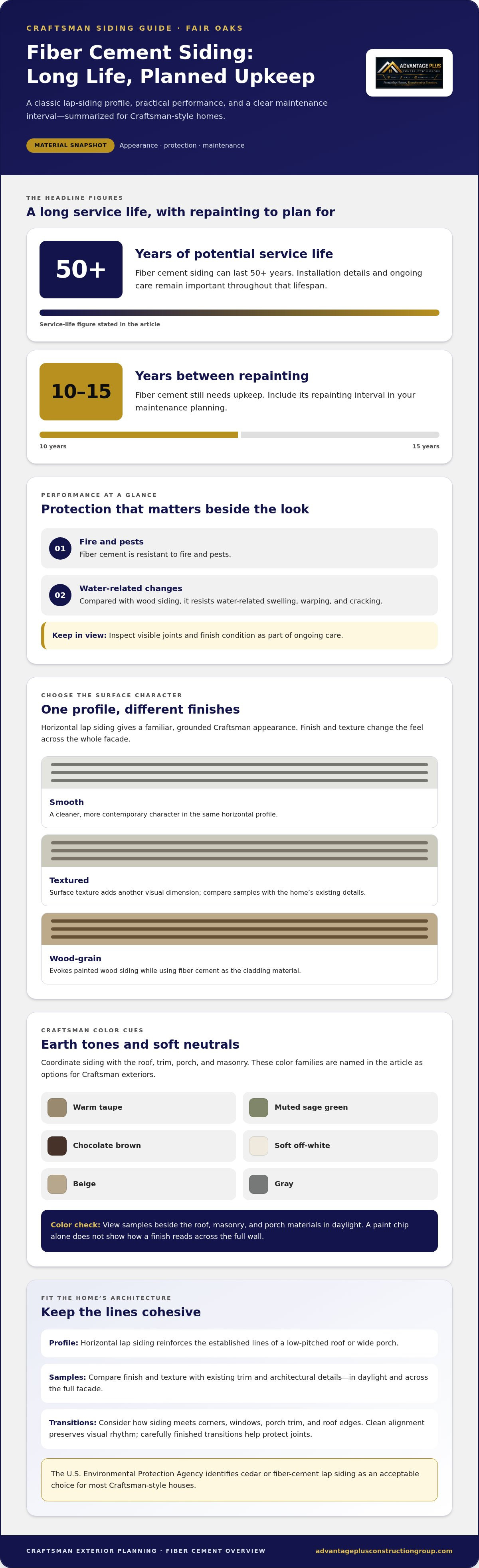
Fiber cement can give a Craftsman home the crisp lines of lap siding without relying on wood. Its horizontal courses create a familiar, grounded appearance, while smooth or textured finishes shape the exterior’s look. Cedar or fiber-cement lap siding is an acceptable choice for most Craftsman-style houses, according to the U.S. Environmental Protection Agency. Lap profiles are worth considering when preserving a classic look matters.
Fiber cement lets homeowners retain a traditional aesthetic while choosing a different cladding material. Horizontal lap siding can reinforce the proportions of a low-pitched roof or wide porch. A wood-grain finish evokes painted wood siding, while a smooth surface gives the same profile a more contemporary character. Compare samples with existing trim and architectural details, since texture and finish affect how siding looks across a full wall.
Performance matters alongside appearance. Fiber cement is resistant to fire and pests, and resists water-related swelling, warping, and cracking compared with wood siding. Those properties make it a practical choice for homeowners balancing exterior protection with a classic Craftsman look. Fiber cement still requires upkeep: siding should be repainted every 10-15 years. Include that repainting interval in your maintenance planning alongside inspections of visible joints and finish condition.
Fiber cement siding can last 50+ years. That long service life makes installation details and ongoing care important parts of the decision. Consider how siding meets corners, windows, porch trim, and roof edges. Clean alignment preserves the visual rhythm, while carefully finished transitions help protect joints. A Craftsman facade depends on these connections as much as it depends on the broad siding profile or color.
James Hardie fiber cement siding is a named option, and HardiePlank is a lap-siding profile identified for Craftsman homes. Its horizontal form can suit the style’s established lines. The product name alone doesn’t determine the right look for a Fair Oaks home. Compare the profile, finish, and color with the roof, trim, porch, and surrounding details to see whether it supports the home’s character.
For a practical comparison, view samples against the home in daylight, then assess texture from both the street and porch. Check whether the profile works with existing windows and wall proportions. Also consider how the chosen finish will look across the entire facade, not only on a small sample. If fiber cement fits your design priorities, explore fiber cement siding options as part of planning a Craftsman exterior with lasting protection.
3. Material combinations and exterior design
A Craftsman-style home gains character when each siding material has a clear role. Horizontal lap siding establishes a steady visual base, while vertical board-and-batten adds height to upper walls or gables. For a modern Craftsman exterior, use lap siding across the main body and reserve shake or board-and-batten for one gable. This defined contrast adds texture without crowding the facade.
Board-and-batten uses vertical panels with raised strips, often called battens. The strips may be 1×3 or 1×4, creating distinct shadow lines across the wall. Consistent spacing matters: align the battens with windows or other architectural features where possible. This makes the pattern feel intentional and helps the siding support, rather than compete with, the home’s trim.
Material selection also involves different maintenance demands and lifespans. Fiber cement siding should be repainted every 10-15 years, and it can last 50+ years. Vinyl siding has an estimated lifespan of 20-40 years. Engineered wood can last 30+ years, while metal siding can last 50+ years. Brick siding can last 100+ years, though its mortar should be repointed every 25-50 years. These figures help compare upkeep alongside visual style.
Installed material costs vary. Treat these as material comparisons, not a project quote. A home’s layout, preparation needs, and selected details affect the final project cost. Fiber cement is excluded from this price comparison.
For a balanced design, map materials to the home before choosing finishes. Use the most durable or visually dominant profile on broad wall areas, then add accents where the architecture draws attention, such as gables. Repeat trim widths across different textures to connect the surfaces. For example, lap siding below and board-and-batten above can look cohesive when both profiles share one trim treatment.
Maintenance should guide placement as well as material choice. A detailed accent on a prominent gable may draw the eye, but it also becomes a visible part of the home’s upkeep plan. Compare texture, durability, repainting or repair intervals, and lifespan together. This practical review helps you preserve Craftsman character while accounting for the work needed to maintain the exterior.
4. Mixed siding with stone accents
Mixed materials can give a Craftsman home a grounded base and a more detailed upper profile. Pair horizontal siding on the main walls with shake accents on a front gable, then use masonry near the foundation or porch. Each material has a distinct role: siding establishes the field, shakes add texture, and stone or brick adds visual weight. Keeping the combination focused preserves a timeless Craftsman character.
Shake siding works well as an accent rather than a competing wall treatment. Composite or vinyl shakes on upper gables and dormers provide the look of cedar shakes without constant staining or sealing. For example, a Craftsman home with lap siding across its main facade can use shakes above the windows or within one gable. Repeat the accent elsewhere only when it helps balance the exterior.
Brick brings a distinct texture. Craftsman-style homes may use it around porch columns or along the base of the structure, where its color and pattern anchor the walls. A brick base beneath light siding creates contrast, while brick and siding in similar tones make a quieter transition. Keep the brick area deliberate, such as around porch piers, rather than scattering small patches across the facade.
Stone accents also suit Craftsman architecture, especially at the foundation or column piers. Masonry in these areas adds organic texture and visual weight. In a modern Craftsman design, stone piers can pair with aluminum-wrapped porch columns. The stone remains prominent while the column finish provides a cleaner surface beside handcrafted porch elements.
Plan transitions before selecting colors. First, identify areas that naturally divide the home, such as the foundation line, porch supports, and gables. Next, assign one primary siding material and reserve other finishes for those architectural breaks. Finally, compare samples together in daylight. A gray shake, warm brick, and cream siding may each look appealing alone, but their undertones should work as a coordinated palette.
Windows and vertical details need room to remain visible. Avoid placing a strong stone pattern directly beside busy shake texture around every opening. Instead, let window trim separate materials or use one accent surface to frame a gable. Consistent trim widths can connect different siding textures and help the facade read as one design, not a collection of unrelated treatments.
For a Fair Oaks Craftsman exterior, assess the full composition from the street and porch. Check how the stone base meets the siding, whether shake accents align with the roofline, and whether brick supports complement the porch. A restrained mix of materials can emphasize the home’s handcrafted character; too many competing surfaces can obscure its vertical and horizontal forms.
5. Traditional clapboard and wood shingle siding
Clapboard and wood shingles connect Craftsman homes to traditional exterior styles. Many classic examples use clapboard across most walls, then add wood shingles around the front porch. This arrangement gives the main facade clean horizontal lines while adding natural texture near the entry. On a bungalow or cottage, a smaller-scale shingle accent can suit the home’s proportions.
Clapboard siding uses overlapping horizontal boards, creating a steady rhythm across the exterior. Wood shingles create a different effect: their smaller pieces add texture that can soften a broad gable or porch wall. For a Craftsman design, consider clapboard on the main body and shingles on one gable or around the porch. This keeps the handcrafted detail legible instead of spreading competing patterns across every wall.
Placement matters. Consider the roofline, porch columns, windows, and existing trim before choosing an accent area. Shingles beneath a front gable can highlight its shape; shingles around a porch can draw attention to the entry. Align transitions with architectural breaks, such as a corner or trim board. Clear boundaries help each siding style and the full exterior read as one composition.
Wood’s natural appearance comes with a defined maintenance schedule. Wood shingle siding should be repainted and stained every 5-10 years. Its estimated lifespan is 20-40 years. Those figures make upkeep part of the design decision, especially for shingles placed prominently around a porch or near windows. Inspect finish condition and exposed edges as part of routine exterior care, and address worn areas before they undermine the intended appearance.
For a historic look, keep the palette and pattern restrained. A Craftsman home with clapboard walls, wood-shingle gables, and simple porch columns can preserve its traditional character without adding extra siding styles. Choose a body color that complements the roof, then use the shingles as texture rather than a competing focal point. Homes built in the early 20th century often make these established details feel particularly at home.
Wood isn’t the only way to achieve a Craftsman profile. HardiePlank is a fiber-cement lap siding option, while wood shingles provide a natural, smaller-scale texture. Compare the visual effect with the maintenance commitment: clapboard emphasizes horizontal lines, shingles add surface detail, and fiber cement offers another material route. If you’re weighing that alternative for your exterior, explore fiber cement siding options alongside traditional wood styles.
Advantage Plus Construction Group: Fiber Cement Siding
Advantage Plus Construction Group helps Fair Oaks homeowners translate Craftsman siding plans into durable exterior work through Fiber Cement Siding. Turn to the team when you’re ready to move from comparing lap profiles, colors, and accent combinations to planning the home’s exterior envelope. The right design depends on how siding meets windows, trim, gables, and porch details, as well as the protection the exterior needs. Advantage Plus Construction Group also offers Stucco Systems and Exterior Envelope Services for projects where those solutions fit the home’s design. A clear plan can align appearance, material choices, and exterior performance before work begins. For help planning your Craftsman home’s siding project, contact Advantage Plus Construction Group.
Make Your Craftsman Exterior Plan a Reality
Before choosing a final direction, write down what matters most for your home: preserving its traditional character, simplifying upkeep, or creating a more contemporary exterior. Then compare your preferred colors and siding profiles with the roof, porch, windows, and trim as one composition. This gives each decision a purpose and helps keep attractive details from competing.
Finding the best siding for Craftsman homes in Fair Oaks means choosing an exterior that reflects your priorities and the home’s architecture. A clear plan makes it easier to discuss material choices, design details, and the protection your property needs. Advantage Plus Construction Group installs premium fiber cement siding and expert stucco systems, with project management to keep the work on track.
Take the next step with a focused conversation about your home’s exterior. Contact Advantage Plus Construction Group to discuss your Craftsman siding project and move toward an exterior you’ll be proud to call your own.
Frequently Asked Questions
What siding materials best match Craftsman-style homes?
Horizontal lap siding, wood shingles, and board-and-batten profiles suit Craftsman architecture because they complement its strong lines and handcrafted details. For a Fair Oaks bungalow, consider lap siding across the main walls and shingle accents on a porch or gable. Fiber cement can provide the look of lap siding, while natural wood offers authentic grain and texture. Choose profiles that fit the home’s scale and preserve its trim and porch details.
Which siding options are most durable in Fair Oaks, California's climate?
Fiber cement is a durable option to compare for a Fair Oaks home because it resists fire and pests, and resists water-related swelling, warping, and cracking compared with wood siding. It can last 50+ years. Material choice alone doesn’t determine exterior performance: installation, joint detailing, and maintenance also matter. Consider how each option handles the home’s exposure and how readily you can maintain its finish over time.
What are typical siding installation costs in Fair Oaks, CA, by material?
These are broad material comparisons, not a project quote. Total cost depends on wall area, existing siding removal, surface preparation, and design details such as gable accents or masonry transitions.
How do fiber cement, wood, engineered wood, and vinyl siding compare for Craftsman homes?
Fiber cement offers Craftsman-friendly lap profiles and resists fire, pests, and several water-related problems associated with wood. Wood gives a natural grain and traditional shingle or clapboard character, with more frequent finish upkeep. Engineered wood and vinyl provide additional profile choices; vinyl’s estimated lifespan is 20-40 years, while engineered wood can last 30+ years. Compare appearance, maintenance, and expected service life together.
What siding maintenance and lifespan can homeowners expect in Fair Oaks?
Maintenance depends on material and finish. Fiber cement can last 50+ years and should be repainted every 10-15 years. Wood shingle siding has an estimated lifespan of 20-40 years and should be repainted and stained every 5-10 years. Plan inspections around visible signs such as peeling finish, loose boards, or damaged joints. Addressing small issues early helps preserve the siding and the layers behind it.
What insulation, moisture, and fire-resistance considerations matter when choosing siding in Fair Oaks?
Assess the full wall assembly, not just the siding surface: insulation, air sealing, drainage, and flashing each affect exterior performance. Fiber cement is described as resistant to fire and pests, and as resisting water-related swelling, warping, and cracking compared with wood. Siding does not replace insulation or sound moisture detailing. Pay particular attention to joints around windows, doors, and roof edges, where careful integration supports a durable exterior.
Which local siding contractors serve Fair Oaks and have Craftsman-home experience?
When choosing a Fair Oaks siding contractor, look for documented Craftsman projects that show details such as porch trim, gable accents, and coordinated siding profiles.


