

Hiring a licensed siding contractor in Carmichael matters for qualifying home improvement projects: in California, work valued at $1,000 or more requires a licensed contractor. Carmichael siding permits are handled through Sacramento County, and approval usually takes 3 to 7 business days. The right choice should protect both the home’s exterior and the quality of the work behind it.
Comparing bids for a licensed siding contractor in Carmichael can feel difficult when each contractor scopes the project differently. A clear estimate should explain the work, materials, and site conditions that shape the proposal, so you can compare more than the bottom line. This guide covers how to assess contractors, what can affect a siding replacement estimate, how permits fit into the process, and which replacement and upgrade options may suit a Carmichael home. You’ll have a practical framework for making an informed decision about your home’s protection and appearance.
Key Takeaways
- In California, home improvement projects valued at $1,000 or more require a licensed contractor; use that threshold as a starting point when comparing bids.
- Carmichael siding permits go through Sacramento County, and approval usually takes 3 to 7 business days. Build the permit process into your project timeline.
- Compare written bids by examining the work scope, material choices, and how the estimate accounts for existing exterior conditions, not just the bottom line.
- Local heat and the age of a home can shape siding decisions. Consider how each replacement or upgrade option supports lasting protection and appearance.
- Learn how fiber cement siding, stucco systems, and exterior envelope work can address different home protection needs before choosing a project direction.
Building permits and code requirements
Permit planning for exterior work starts with the project scope and the authority reviewing it. In Carmichael, confirm how the replacement work, materials, and inspections fit into the county process before work begins.
Siding Permits in Sacramento County
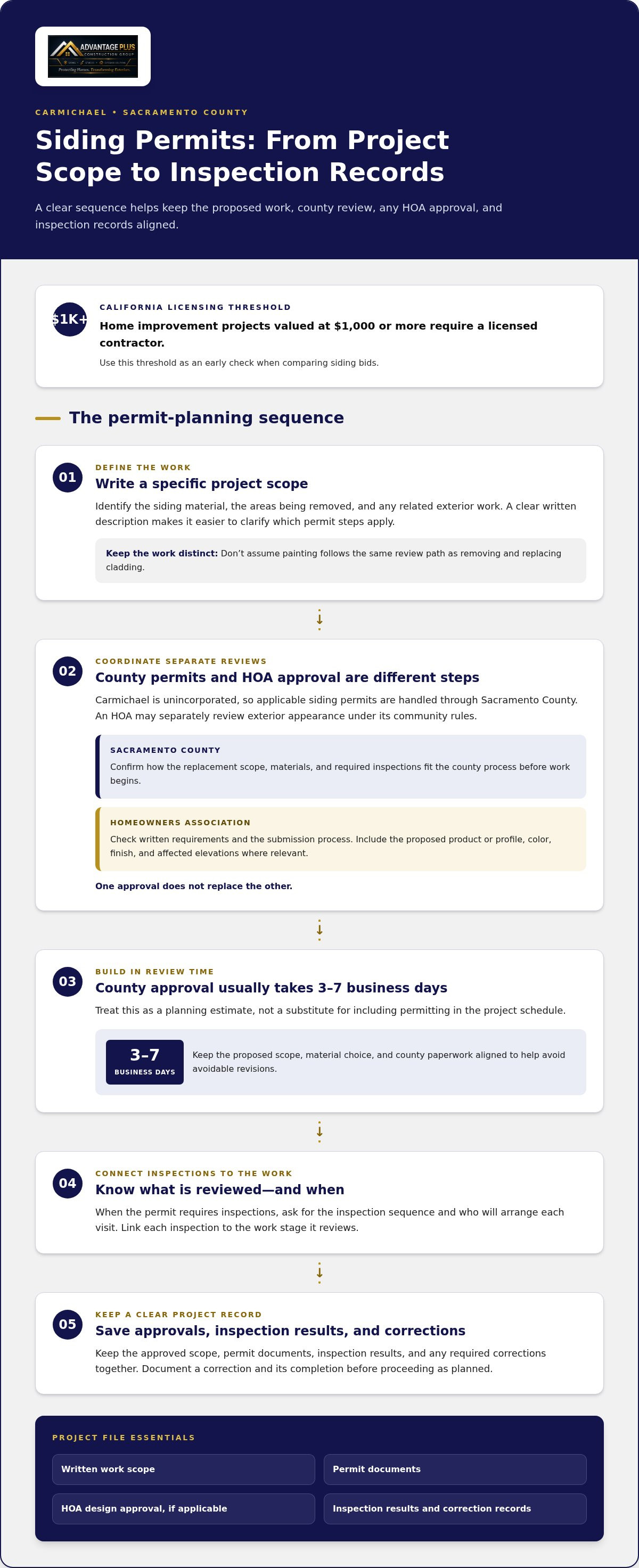
Carmichael is unincorporated, so siding permits are handled through Sacramento County’s permitting office. Approval usually takes 3 to 7 business days. Treat that as a planning estimate, not a substitute for including the permit process in your schedule. Keep the proposed scope, material choice, and county paperwork aligned so revisions don’t create avoidable delays.
Permits for Siding Replacement
For replacement, define exactly what the project changes: the siding material, the areas being removed, and any related exterior work. Permit requirements depend on scope, so don’t assume that a surface change such as painting follows the same review path as removing and replacing cladding. Put the work description in writing and use it to clarify which permit steps apply.
A licensed siding contractor in Carmichael should make the permit process understandable by identifying the proposed work and relevant code considerations. Compare estimates for a clear scope, not just a broad phrase such as “new siding.” A detailed description makes it easier to track the work, including fiber cement installation, and distinguish it from painting or other exterior changes.
Permits and HOA Approvals
County permits and homeowners association approvals are separate steps. Sacramento County handles applicable permits, while an HOA may review exterior appearance under its own community rules. Before choosing colors or materials, read the HOA’s written requirements and submission process. Keep any design approval with the project records, since it doesn’t replace county permit review.
For example, a proposed fiber cement profile or finish may need HOA approval before installation. Include the product description, color, and affected elevations in the submission so the review addresses the actual replacement plan. Coordinate that private review with county permitting, since one approval does not replace the other.
Permits and Inspections
When permits require inspections, connect each inspection to the work stage it reviews. Ask for the inspection sequence and who will arrange each visit, then keep approvals and related records with the project documents. This creates a clear record of what was reviewed before exterior work moves to the next stage.
Keep a simple written record of the approved scope, permit documents, inspection results, and any required corrections. If an inspector identifies an issue, document the correction and its completion before proceeding as planned. This record helps you compare the finished replacement with the permitted scope and understand how code requirements were addressed.
What Carmichael-specific factors change a siding replacement estimate?
Carmichael’s climate and code requirements influence material selection, installation details, and estimate scope. Long stretches above 100°F make heat exposure relevant, while the proposed exterior assembly must suit applicable building requirements.
That local context matters alongside product documentation. Compare each estimate’s material, finish, installation scope, and warranty terms, rather than treating a manufacturer name as proof of suitability. The details affect both the work planned and the protection you can expect from the completed exterior.
James Hardie ColorPlus finishes include a 15-year finish warranty and a 30-year warranty against fading. Those are distinct coverage statements: one concerns the finish warranty, while the other addresses fading. Include the specific finish in the estimate and keep the warranty terms with your project documents. That makes it easier to understand what applies to the selected product.
Manufacturer coverage and installer workmanship coverage serve different purposes. Product warranties describe coverage for the material under their stated terms. Workmanship coverage concerns installation, so review its written scope, exclusions, and claim process separately. Ask for both documents alongside the estimate. Clear paperwork reflects professionalism and helps you understand which party handles a particular issue.
LP SmartSide also requires careful review of the complete wall assembly. It is CAL FIRE-listed for California wildland-urban interface areas when installed as part of a qualifying fire-rated wall assembly. The product name alone does not establish that a project uses that assembly. Compare the proposed components and installation scope with the relevant requirements.
For any LP SmartSide project, keep the product warranty separate from installer workmanship terms. Record the selected product, installation details, applicable exclusions, and claims procedure in your project file. This makes warranty records useful later, whether the work is part of a full replacement or broader remodeling.
Registration is another practical step. Save the invoice, product identification, installation records, and warranty documents together. Follow the manufacturer’s stated registration process and keep any confirmation with your home records. Complete documentation gives you a clear reference if you need to understand coverage after the work is finished.
For a sound estimate, compare how each proposal addresses Carmichael heat, applicable code details, finish selection, and warranty responsibilities. Explore fiber cement siding options as you assess durable materials and their project requirements.
James Hardie fiber cement siding has a Class A fire rating on its own. ABD Team says factory-applied color on fiber cement siding handles west-facing afternoon sun better than repainted board.
How do I choose Exterior and Siding Contractors in Carmichael, CA near me?
Choose based on documented qualifications, a clear scope, and a process suited to your home. In California, home improvement projects valued at $1,000 or more require a licensed contractor.
Installation, Replacement, and Repair Services
Start by matching the proposed work to your exterior’s condition. A localized repair addresses limited damage, while siding replacement renews broader cladding. New installation may involve a different scope. Look for a written description of the affected walls, materials, trim, and areas around windows.
Material knowledge matters. James Hardie siding has been installed on more than 5.5 million homes and is stated to last 30 to 50 years. Treat product lifespan as one comparison point, not a substitute for understanding the installation plan and applicable warranty.
Review the sequence: site preparation, removal, inspection of exposed areas, installation, and cleanup. For a repair, the estimate should identify the damaged section and how it connects to the surrounding siding. For replacement, it should define the included elevations and exterior details.
Estimates and Quote Comparisons
Compare estimates line by line. Check whether each one names the material, removal and disposal, trim, window details, preparation, installation, and cleanup. A lower total can reflect a narrower scope, so compare equivalent work before judging bids.
Review warranties separately. Product coverage applies to the material under its terms; workmanship coverage addresses installation. Read the duration, exclusions, claims steps, and responsible party in each document. Confirm that the estimate identifies the selected product and explains how written warranties relate to the proposed work.
Also compare the schedule and project sequence. Ask how exposed walls will be protected between removal and installation, and how changes will be documented. A written scope, permit responsibilities, and payment milestones make proposals easier to assess. Keep the estimate and warranty documents together.
Installation Risks and Scam Warning Signs
Common installation risks include unclear removal limits, poor coordination around windows, and inadequate protection for exposed areas. Look for an estimate that specifies these details rather than promising a broad result without defining the tasks.
Warning signs include pressure to sign immediately, refusal to provide a written agreement, or unexplained scope changes. Before work begins, make sure the contract identifies materials, responsibilities, schedule, and payment terms. Keep signed documents and written change approvals with your project records.
Before signing, match the contractor’s name and license details to the agreement, then review permits, schedule, product, and warranty terms. Keep copies of signed documents and payment records. These steps help homeowners compare proposals based on accountable work, not assurances alone.
Siding replacement and upgrades in Carmichael
Many Carmichael homes were built between the 1940s and 1960s, so aging cladding can shape replacement decisions. Compare repair needs, moisture conditions, and material choices before settling on a project scope.
Replacement Costs and Resale Value
Replacement pricing depends on wall area, material, tear-off, trim, and the condition of the surface beneath the siding. A project-specific price follows a quote request. Compare estimates that describe the same work, including preparation and disposal, so differences reflect scope rather than omissions.
For resale context, the supplied figures report that fiber cement siding replacement returns about 114% of its cost at resale, compared with about 97% for vinyl siding. These percentages offer one comparison point, not a promise for an individual Carmichael home. Consider the existing exterior and planned improvements alongside resale estimates.
Tear-Off During Replacement
Removing existing cladding exposes the surface beneath it. This gives the installation team an opportunity to inspect for visible moisture damage or deteriorated sheathing before covering the wall again. A written scope should state whether tear-off is included and how concealed damage will be handled if removal reveals additional work.
For a Carmichael home with older hardboard, document the condition of the existing boards and sheathing during removal. Separate necessary substrate repairs from finish upgrades in the project plan. This helps homeowners understand which work protects the exterior and which changes its appearance.
Repair or Replacement
A localized repair may suit damage limited to a small, clearly defined area. Broad deterioration, recurring moisture concerns, or cladding nearing the end of its useful service life may call for a wider assessment. Compare the affected sections with the surrounding siding before choosing between a patch and full replacement.
For example, if damage appears below a window, inspect the adjoining trim and wall area rather than pricing only the visible board. Repairs should address the affected assembly, not conceal a continuing moisture path. Record the locations and proposed work so the estimate matches the actual condition.
The Replacement Process
A controlled replacement process moves from documenting the scope to removing old cladding, inspecting exposed surfaces, completing approved repairs, and installing new siding. Keep material selections, permit documents, and scope changes together. This sequence helps Carmichael homeowners follow what happens at each stage.
Before work starts, confirm which elevations are included and how windows, corners, and trim will be treated. During installation, compare completed areas with the written scope and raise questions promptly. Search placement alone cannot show whether an estimate covers these details; the written plan is the practical basis for comparison.
Finding siding contractors serving Carmichael
For Carmichael homeowners, finding a contractor begins with confirming the project fits the contractor’s work and qualifications. In California, home improvement projects valued at $1,000 or more require a licensed contractor. Use that rule as an initial screen, then assess the proposed material, construction scope, and communication before comparing bids.
Local search results can show who advertises near Carmichael, but a listing alone says little about the work plan. Shortlist contractors whose stated services match siding installation or replacement, then compare written scopes. A useful scope identifies the home’s elevations, removal requirements, trim details, and how the team will handle exposed areas during construction.
Check licensing details against the name on the written proposal and agreement. Also review insurance documentation, including the named insured and coverage dates, before work begins. These records connect the people responsible for the project with the paperwork governing it. Keep copies with the estimate, permits, and approved changes.
Material experience should be specific. If a proposal names James Hardie, compare the listed product and installation method with the project description. A recognizable manufacturer name does not explain which boards, finishes, trim, or wall details are included. Look for those details in writing, along with the product warranty and separate workmanship terms.
Use the same comparison checklist for each Carmichael bid:
- Scope: Match siding areas, removal, preparation, window details, trim, and cleanup.
- Material: Record the product name, finish, and installation approach.
- Project controls: Identify who handles permits, inspection coordination, and written change approvals.
- Documentation: Keep the license details, insurance paperwork, agreement, and warranty records together.
Then compare how each proposal explains the sequence from preparation through final inspection. A contractor who describes what happens after old siding comes off gives you a clearer basis for understanding the work. That detail matters on older Carmichael homes, where exposed sheathing may affect the project scope.
Choose the proposal that connects material, workmanship, schedule, and documentation in a way you can follow. If fiber cement is part of your plan, discuss your siding project options and the exterior protection your home needs.
Advantage Plus Construction Group: Fiber Cement Siding
Advantage Plus Construction Group helps homeowners planning exterior upgrades with fiber cement siding, stucco systems, and exterior envelope services. Turn to the team when weighing replacement materials or looking to strengthen your home’s exterior protection while maintaining its appearance.
For fiber cement siding projects, project managers oversee the work and keep it on track for timely completion and budget compliance. The team focuses on durable, low-maintenance exterior solutions, with project details shaped around the home and selected materials. A clear discussion of your goals helps establish the right direction for the work.
Contact Advantage Plus Construction Group to discuss your siding project, or visit the company website.
Make Your Next Exterior Decision With Confidence
The next step is to turn your priorities into a defined project scope. Decide what matters most for your home’s exterior, such as a refreshed appearance, durable cladding, or broader envelope improvements. Use those priorities to guide a focused discussion with a licensed siding contractor in Carmichael.
Advantage Plus Construction Group offers fiber cement siding, stucco systems, and exterior envelope services. These options support different exterior goals, from updating cladding to improving the home’s protective envelope. A conversation about your property and plans can help clarify the right direction for the work you’re considering.
When you’re ready to discuss your exterior project, contact Advantage Plus Construction Group. A clear plan is a strong place to begin, and thoughtful choices can help you protect the home you’re proud of.
Frequently Asked Questions
How do I verify a siding contractor's California license and insurance?
Ask for the contractor’s license number and legal business name, then compare them with California’s official contractor licensing records. Confirm that the listed status matches the business named on your proposal. For insurance, request current documentation showing the insured business and coverage dates. If details differ among the license, insurance documents, and contract, resolve the discrepancy before signing. This gives you a consistent record of who is responsible for the work.
Which licensed siding contractors serve Carmichael, California?
Advantage Plus Construction Group serves Carmichael with fiber cement siding, stucco systems, and exterior envelope services. It’s a local option for homeowners planning an exterior project, not a directory of every contractor in the area. Compare the company’s stated services with your project needs, such as replacing cladding or improving exterior protection. Confirm the proposal names the business you intend to hire.
What siding services do Carmichael contractors offer?
Services vary by contractor and project, but may include new siding installation, replacement, repairs, and related exterior work. Advantage Plus Construction Group offers fiber cement siding, stucco systems, and exterior envelope services. A homeowner planning new cladding, for example, may focus on siding installation, while broader exterior concerns may call for envelope work. Read each written scope carefully to distinguish the included work from adjacent improvements.
What is the average cost to replace siding in Carmichael, CA?
There isn’t one average price that reliably describes every Carmichael home. The cost depends on measured wall area, material, removal, trim, access, and the condition of the surface beneath existing siding. A project-specific price follows a quote request. For a meaningful comparison, use the same project scope for each estimate, including removal, preparation, installation, and disposal. This helps reveal whether proposals cover equivalent work.
Do I need a permit to replace siding in Carmichael or Sacramento County?
Permit review for Carmichael siding work goes through Sacramento County because Carmichael is unincorporated. Whether a particular replacement requires approval depends on the project scope, so distinguish surface changes from removal and replacement when describing the work. Siding permit approval usually takes 3 to 7 business days. Include that review in your planning, and keep county documents with the project agreement and inspection records.
What questions should I ask before hiring a siding contractor?
Ask what the written scope includes, which material and finish the contractor proposes, and how the work will address trim, windows, and exposed wall areas. Clarify who handles permit steps and inspection coordination, and request separate product and workmanship warranty documents. Also ask how scope changes will be recorded and how the installation sequence will be communicated. Clear answers help you compare proposals and understand responsibilities before signing.


