

The most durable siding on paper may not be the best siding for Sacramento climate on your home. A south-facing wall gets prolonged sun, while a shaded wall may dry more slowly after winter rain. Fire exposure adds another consideration, so the right choice depends on your property, not just a material’s reputation.
A well-planned exterior should protect the wall beneath it and suit the home’s appearance and maintenance needs through hot, dry summers and mild, wet winters. This guide compares fiber cement and stucco with vinyl, metal, and wood options, focusing on sun and heat, moisture management, upkeep, and fire considerations.
Before planning a project, assess wall exposure, existing conditions, and your parcel’s fire-hazard designation. California’s updated building standards took effect January 1, 2026, making applicable fire-zone requirements an important part of permit planning. Advantage Plus Construction Group specializes in fiber cement siding, stucco systems, and exterior-envelope protection, with project planning shaped around each home’s conditions. The goal is an informed choice that supports lasting protection and curb appeal.
Key Takeaways
- Choosing the best siding for Sacramento climate means weighing sun exposure, seasonal moisture, and property-specific fire context together.
- Compare fiber cement, stucco, vinyl, and wood or engineered options for climate fit, upkeep, design flexibility, and moisture-management needs.
- Assess wall condition, drainage paths, trim interfaces, and existing finishes before selecting a siding system.
- Check your property’s fire-hazard designation and applicable requirements. Siding alone can’t guarantee fire safety or complete moisture protection.
- Advantage Plus Construction Group plans fiber cement, stucco, and exterior-envelope projects around each home’s conditions.
What Sacramento’s Climate Demands from Exterior Siding
Start with Sacramento’s seasonal weather, then consider how it affects each side of your home. Sacramento has a hot-summer Mediterranean climate: summers are typically hot and dry, while winters are milder and bring most of the region’s rain. The Mediterranean climate characteristics help explain why siding here must contend with sustained summer sun as well as seasonal moisture.
Regional climate is only a starting point. Orientation, nearby trees, roof overhangs, neighboring structures, and wind-driven rain can create different conditions on different walls. A shaded north-facing elevation may stay cooler and dry more slowly than a sun-exposed west-facing wall. The best siding for Sacramento climate is therefore the system that suits the home’s actual exposure, wall condition, and applicable fire requirements.
How heat and sun exposure affect Sacramento homes
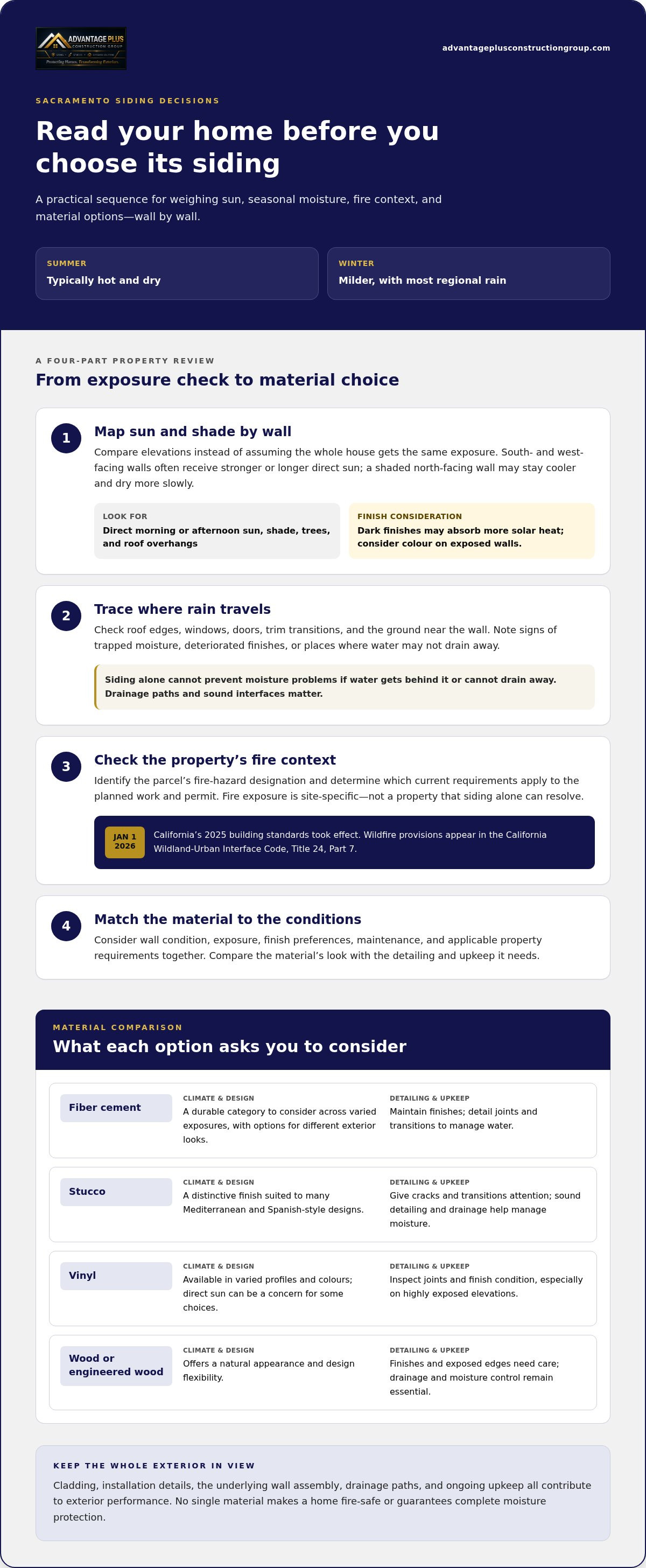
Prolonged sun can fade exterior colours and place repeated heat stress on siding and its finish. South- and west-facing walls often receive stronger or longer direct sun than sheltered elevations. Dark finishes may absorb more solar heat, so consider colour and the material’s installation requirements on exposed walls. Trees and overhangs can reduce direct sun, but shade may also slow drying after rain.
Compare the elevations instead of assuming the whole house experiences the same conditions. Note where finishes look faded, joints show movement, or afternoon sun falls directly on the wall. These observations can guide material and colour decisions without assuming that a particular product will fail on a set timeline.
Why seasonal moisture and fire context matter
Winter rain makes water management central to siding performance. Look beyond the cladding: roof edges, windows, doors, trim transitions, and the ground near the wall all affect where water travels. Planned drainage and sound interfaces help protect the exterior wall assembly. Siding alone cannot prevent moisture problems if water gets behind it or cannot drain away.
Fire exposure is a separate, property-specific consideration. Applicable requirements depend on the parcel’s hazard designation and current building rules. California’s 2025 building standards took effect January 1, 2026, and wildfire provisions now appear in the California Wildland-Urban Interface Code, Title 24, Part 7. For a project, use current official maps to identify the property’s designation and determine which requirements apply to the site and permit.
Before selecting siding, assess how much sun each wall receives, where rain drains, the condition of the exterior assembly, and the property’s fire designation. A practical first review can include:
- Record which elevations get direct morning or afternoon sun and where shade or overhangs offer protection.
- Observe how rain moves around windows, doors, trim, and the base of the wall. Note signs of trapped moisture or deteriorated finishes.
- Identify the parcel’s fire-hazard designation and the current requirements relevant to the planned work.
No single material makes a home fire-safe or guarantees complete moisture protection. A reliable decision considers the whole exterior: exposure, drainage, wall condition, and site-specific requirements.
How Fiber Cement, Stucco, and Other Siding Materials Differ
The finish alone doesn’t determine how well an exterior protects a home. The cladding, installation details, underlying wall assembly, drainage paths, and ongoing upkeep all matter. Use this comparison to narrow your options, then assess how each material fits your home’s exposure and existing wall conditions.
| Material | Climate fit and design | Upkeep and moisture considerations |
|---|---|---|
| Fiber cement | A durable category to consider for Sacramento’s varied exposures, with options for different exterior looks. | Maintain finishes and ensure joints and transitions are detailed to manage water. |
| Stucco | A distinctive finish suited to many Mediterranean and Spanish-style designs. | Cracks and transitions need attention; sound detailing and drainage help manage moisture. |
| Vinyl | Available in varied profiles and colours; direct sun can be a concern for some choices. | Inspect joints and finish condition, especially on highly exposed elevations. |
| Wood or engineered wood | Offers a natural appearance and design flexibility. | Finishes and exposed edges need care, while drainage and moisture control remain essential. |
When fiber cement may suit a Sacramento home
Fiber cement may suit homeowners looking for a durable siding category with flexibility in exterior appearance. It can be considered across different exposures, but the choice should account for wall condition, finish preferences, and applicable property requirements. The completed system involves more than the boards: preparation, fastening, joint treatment, and transitions around windows and trim all matter. A fiber cement siding installation guide offers a closer look at those project considerations.
When stucco or another material may deserve consideration
Stucco creates a continuous-looking exterior finish and can complement regional architectural styles, but crack management and interfaces need attention. Vinyl and wood-based materials may appeal for their appearance or profile options, yet each still requires suitable detailing and maintenance. No material replaces a well-planned wall assembly: openings, trim, and drainage paths must work together to limit water intrusion and support drying.
Material performance and installation quality go hand in hand. A suitable siding choice can still be undermined by poor preparation or neglected maintenance. A considered design aligns the finish with the wall’s condition and exposure. For property-specific planning, explore Advantage Plus exterior-envelope services alongside its fiber cement and stucco expertise.
Which Siding Fits Your Home’s Exposure, Moisture, and Fire Context?
No single siding choice suits every Sacramento home. Weigh the existing walls, preferred appearance, maintenance needs, and requirements tied to the property. Use this matrix to identify priorities before comparing specific systems.
| Decision factor | What to assess | How it can shape the choice |
|---|---|---|
| Sun and exposure | Which walls receive prolonged direct sun? Which are shaded or sheltered? | Consider finish and material needs by elevation instead of assuming every wall faces the same conditions. |
| Existing wall condition | Are there damaged areas, signs of moisture, or details that need repair? | Address the wall assembly and underlying conditions as part of the siding plan. |
| Appearance | Do you prefer a distinct stucco finish, siding profiles, or a wood-like appearance? | Compare how each material can complement the home’s architecture and desired finish. |
| Maintenance | How much ongoing finish care and inspection are you prepared to manage? | Balance upkeep preferences with the attention required at joints, transitions, and finished surfaces. |
| Fire context | What hazard designation and current requirements apply to this parcel? | Use property-specific official information to guide eligible material and project decisions. |
Match material priorities to the home
A west-facing wall exposed to afternoon sun may call for different finish considerations than a sheltered elevation. If low upkeep is a priority, weigh it against the look you want and the maintenance needs of the finish and details. Fiber cement and stucco offer distinct design possibilities, but neither eliminates the need to assess existing walls, openings, and drainage before replacement. The best siding for Sacramento climate is a property-fit decision, not a universal ranking.
Look for evidence on the existing exterior: peeling finish, damaged joints, staining, or recurring damp areas can signal conditions to address before installing new cladding. A new surface won’t correct an unresolved wall or drainage issue by itself. Include the wall assembly in the selection process.
Treat fire-zone requirements as property-specific
Regional wildfire awareness doesn’t establish the requirements for an individual address. Hazard maps and applicable rules depend on the parcel and project. Review current CAL FIRE hazard-zone information and relevant California and local building requirements, then incorporate them into project planning. Don’t assume an approval outcome based on a material label or a neighbour’s project.
No siding material alone guarantees a fire-safe home or complete moisture protection. System performance also depends on detailing, installation, drainage, maintenance, and the surrounding property. The best fit depends on material, detailing, exposure, and the wall assembly.
Advantage Plus Construction Group brings fiber cement siding, stucco systems, and exterior-envelope planning together around a home’s specific conditions. Explore exterior-envelope services as you consider your project.
A Practical Sacramento Siding Decision Checklist
A useful siding plan starts with what the house experiences, not with a material name. Walk around the exterior and record what you observe before comparing options. This gives you a clearer basis for defining the project scope, including visible repairs, finish preferences, and details that affect wall protection.
Assess the property before comparing materials
Look at each elevation separately. Note sun, shade, wind and rain exposure, then document visible cracks, peeling finishes, damaged trim, and areas that stay damp. Record the appearance you want, how much routine finish care you’re comfortable with, and any known fire-zone concerns. These observations help focus the comparison on your home.
- Map exposure. Mark sunny, shaded, sheltered, wind-exposed, and rain-exposed elevations. Note where overhangs, trees, or nearby structures change conditions.
- Inspect the wall surface. Photograph cracks, peeling or discoloured finishes, loose or damaged siding, and areas that appear to retain moisture. Record where each issue occurs.
- Trace drainage paths. Observe how water moves near windows, doors, wall corners, and the base of the exterior. Note where runoff collects or could reach vulnerable transitions.
- Review trim interfaces. Look at edges around windows and doors, corners, and connections between materials. Record gaps, deterioration, or details that may need attention.
- Identify the existing finish. Note the current siding or stucco type, its visible condition, and areas that have needed repeated attention. Existing conditions can affect project preparation and scope.
- Set priorities. Write down preferred appearance, maintenance tolerance, and known parcel-specific fire-zone concerns. Keep desired features distinct from issues requiring repair.
- Document the material decision. Record the selected material, the property conditions it addresses, finish and maintenance expectations, and the scope assumptions behind the choice.
Turn the assessment into a durable project scope
Separate routine upkeep from work that depends on what the existing walls reveal. General maintenance expectations help compare materials; repairs, preparation, and interface details belong in the project scope. Keeping these distinct makes the decision more grounded and the planned work easier to understand.
Advantage Plus Construction Group’s project managers oversee material procurement, site preparation, and installation, with attention to schedules and budgets. Documented wall conditions help shape and coordinate the work without assuming every home needs the same scope. Because drainage, openings, and transitions are part of the exterior envelope, the exterior-envelope protection guide can add context to your assessment.
Before planning a renovation, document each elevation’s exposure, wall condition, drainage, trim interfaces, existing finish, maintenance priorities, and fire-zone concerns. Then record why the chosen material fits.
Use your walkthrough to guide a climate-aware siding or stucco project with Advantage Plus Construction Group.
How Advantage Plus Plans Climate-Aware Siding and Stucco Projects
Once you’ve compared materials and recorded your home’s conditions, translate those observations into a coordinated project plan. Advantage Plus Construction Group specializes in premium fiber cement siding, professional stucco systems, and exterior-envelope services for Sacramento-area homes. The plan is shaped around the building, its exposures, and your priorities, rather than prescribing one finish for every property.
Plan a siding or stucco system around the property
Your notes about sun, shade, wind, rain, and visible wall conditions can inform project planning. A heavily exposed elevation, worn finish, or vulnerable trim interface may call for different preparation and detailing than a sheltered, sound area. Those observations help guide material selection and the work needed before installation.
Material, preparation, and application work as a system. The chosen siding or stucco should suit the home’s design and conditions, while the installation plan accounts for existing surfaces and transitions. Advantage Plus project managers oversee material procurement, site preparation, and installation, organizing the project with attention to schedules and budgets. The scope is specific to the property, not a one-size-fits-all answer to the question of the best siding for Sacramento climate.
Useful records to bring to a project discussion include:
- Photos or notes showing the elevations and areas that need attention.
- Your preferred exterior appearance and expectations for ongoing upkeep.
- Known concerns about moisture, existing finishes, trim, or property-specific fire requirements.
Bring Sacramento-area exterior planning together
Advantage Plus serves homeowners across the Sacramento region, including Roseville, Granite Bay, New Castle, Rocklin, Penryn, Loomis, Citrus Heights, Orangevale, Fair Oaks, Carmichael, and Antelope. Across these communities, planning should stay grounded in the individual home: align the material with the property, define the preparation work, and coordinate installation details as part of the exterior envelope.
Project-manager oversight brings procurement, site preparation, and installation into a planned sequence, with attention to the work, schedule, and budget. Since conditions vary from one property to another, a homeowner’s observations are a useful starting point for discussing the project scope.
Gather your exterior notes and decide which priorities matter most, whether appearance, upkeep, or addressing existing wall conditions. Then start a siding or stucco project discussion with Advantage Plus Construction Group.
Make Your Next Siding Decision Property-Specific
The next step isn’t to find a universal winner. Turn what you’ve learned about your home into a project brief that reflects your priorities, the exterior’s condition, and the look you want to preserve or create. That gives the material discussion a practical starting point and ties the decision to the long-term care of your home.
If you’re weighing fiber cement against stucco, focus on how each option fits the property and the work ahead. Advantage Plus Construction Group specializes in premium fiber cement siding and professional stucco installations, with project managers overseeing procurement, site preparation, schedules, and budget considerations. The right plan should account for your home, not force it into a standard answer.
Bring your priorities to a project discussion and take the next step with a clear plan. Plan your Sacramento-area siding or stucco project with Advantage Plus Construction Group.
Frequently Asked Questions
Is fiber cement or stucco better for Sacramento’s climate?
Neither is automatically better. The right choice depends on your home’s design, existing exterior, and priorities. A homeowner seeking a stucco appearance may favour that finish, while someone comparing siding profiles may prefer fiber cement. Consider how the proposed system will meet existing windows, corners, and wall surfaces. The best siding for Sacramento climate is the option that suits those conditions and the project scope.
Does Sacramento’s summer heat damage siding?
Heat and prolonged sun can contribute to fading or stress on exterior finishes, especially where a wall receives strong direct sunlight. That doesn’t mean every siding material will be damaged or that failure is inevitable. Check sun-facing elevations for changes such as fading, loose joints, or deteriorated finish, then compare them with more sheltered walls. Differences around the home can help identify where closer assessment may be useful.
Is fiber cement siding fireproof?
No siding should be described as making a home fireproof. Fiber cement is generally regarded as a noncombustible siding material, but a home’s fire performance involves more than its cladding. Openings, joints, nearby combustible materials, and the property’s setting also matter. If fire exposure is a concern, consider the complete exterior assembly and the requirements for your specific property rather than relying on a material label alone.
How can I find out whether my Sacramento-area home is in a fire hazard zone?
Search your property using CAL FIRE’s current Fire Hazard Severity Zone maps, then consult the relevant local building department about project requirements. A city or neighbourhood’s general risk doesn’t establish an individual parcel’s designation. Keep the property address and map results together as you plan, since the designation and applicable rules can affect material choices and project review.
Can new siding be installed over existing siding?
Sometimes, but it depends on the existing siding, the wall beneath it, and the installation requirements for the proposed system. A second layer can conceal deterioration or moisture concerns, so assess the current surface and details before considering that approach. Check for soft, damaged, or uneven areas and account for how added thickness may affect windows, doors, and trim. The project scope should reflect what the inspection reveals.
How often should Sacramento homeowners inspect their siding?
A yearly visual inspection is a practical routine, with another look after severe weather or an event that may have affected the exterior. Check corners, joints, trim, and areas near windows and doors for visible gaps, cracks, staining, or peeling finish. Also look for changes compared with previous photos. A record of where and when a change appears can help distinguish an isolated finish issue from a condition that needs closer assessment.


