

Cracks, chips, and storm damage in fiber cement siding can often be repaired in the affected area, while more extensive damage may require replacing sections. Fiber cement siding repair in Rocklin starts with identifying the damage and how far it extends. The right repair should restore the siding’s appearance and help protect the home’s exterior.
A patch that only hides visible damage may not address the underlying problem. The approach differs for a small chip, a split board, or siding affected by water or severe weather. With James Hardie siding, the board profile and finish also matter. Understanding the cause and extent of damage helps determine what the work needs to address.
This article covers common repairs for cracks, chips, and storm damage, considerations for James Hardie siding, and how siding repair is approached in Rocklin and nearby communities. You’ll learn when a localized repair may be suitable and when broader siding or exterior envelope work may be needed to protect the home.
Key Takeaways
- Learn how the board profile and siding exposure can inform a James Hardie repair that blends with the existing exterior.
- See why storm-damage repairs should address water entry and any underlying deterioration, not just visible damage.
- Understand when a crack or chip may call for a localized repair and when damage may extend beyond the surface.
- Find out which Rocklin ZIP codes are included in the service area and how nearby coverage is addressed.
- Explore how siding repairs, replacement, and exterior envelope work can help restore protection as well as appearance.
James Hardie fiber cement siding repairs
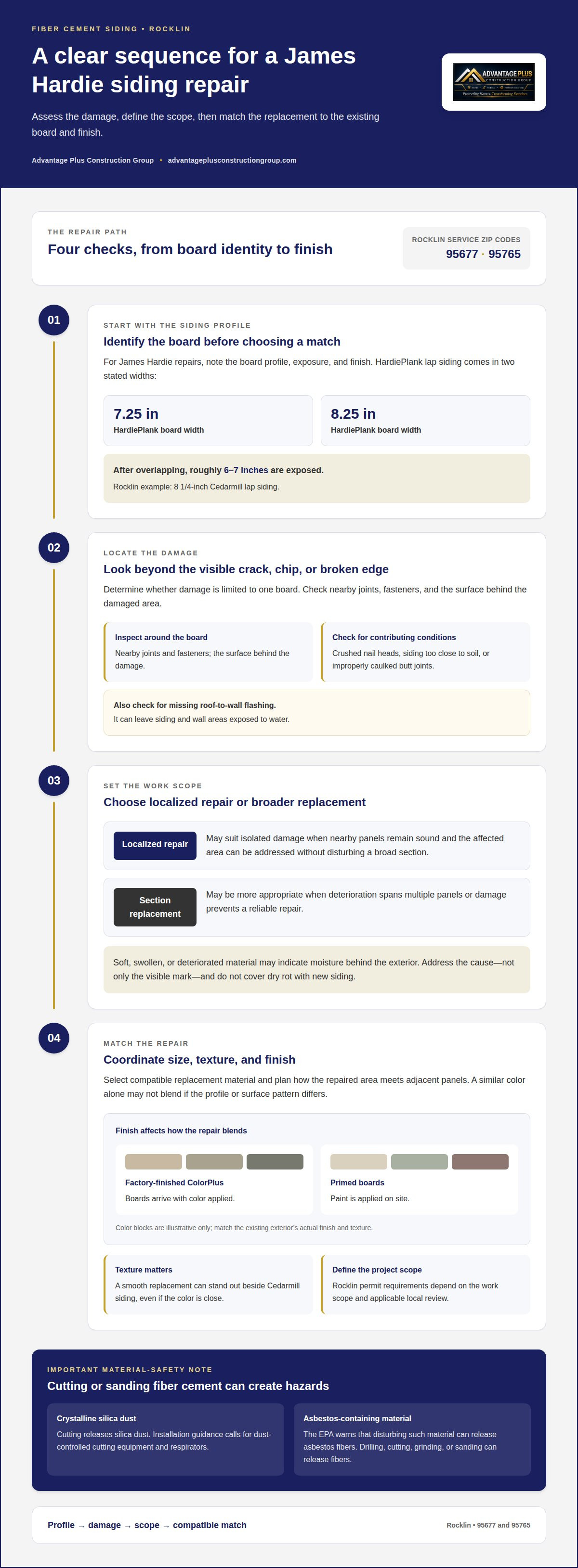
James Hardie repairs begin by matching the damaged board’s profile, exposure, and finish. HardiePlank lap siding comes in 7.25-inch or 8.25-inch board widths, with roughly 6 to 7 inches exposed after overlapping. In a Rocklin project, the siding used was 8 1/4-inch Cedarmill lap siding. These details help distinguish a compatible replacement from a board that only looks similar.
For a crack, chip, or broken edge, first determine whether the damage is limited to one board. An assessment should include nearby joints, fasteners, and the surface behind the damaged area. Crushed nail heads, siding installed too close to the soil, and improperly caulked butt joints can contribute to failure. Missing roof-to-wall flashing can also expose siding and wall areas to water.
Hardie board styles and finishes affect how a repair blends with the exterior. HardiePlank is a lap-siding option, and the Rocklin example used a Cedarmill texture. Factory-finished ColorPlus boards arrive with color applied, while primed boards are painted on site. Matching the existing finish and texture is especially important when replacing one visible board rather than a larger wall section.
For siding repair permits in Rocklin, California, requirements depend on the scope of work and applicable local review. A small board repair and a broader siding project may be treated differently, so define the project scope before work begins.
Fiber cement siding warranty and insurance coverage depend on the applicable policy and written warranty terms. Product coverage and contractor workmanship coverage are separate. The work agreement and cause of damage determine which terms apply.
Cutting or sanding fiber cement can create dust and material hazards. Cutting releases crystalline silica dust, so installation guidance calls for dust-controlled cutting equipment and respirators. The U.S. Environmental Protection Agency warns that disturbing asbestos-containing material can release asbestos fibers. Fibers in asbestos cement are usually bound while the material remains in good condition, but drilling, cutting, grinding, or sanding can release them.
A repair assessment can follow a clear sequence: identify the siding profile, locate the damage, and inspect nearby joints and wall areas. Then determine whether the board can be repaired or needs replacement, and select a compatible size, texture, and finish. For James Hardie siding, this approach addresses the visible defect without overlooking installation issues that may have contributed to it.
Siding repair and replacement service areas
For Rocklin, the listed service ZIP codes are 95677 and 95765. A home’s location helps establish whether siding work falls within the targeted area, while the damage determines the project scope. A contractor can assess the affected exterior, identify the siding material, and distinguish isolated panel damage from deterioration across a larger wall. Clear scope matters before repair or replacement begins.
Look for cracked panels, loose edges, open seams, or sections that have shifted out of alignment. Soft, swollen, or deteriorated material may indicate moisture behind the exterior rather than a surface-only defect. For example, damage along a panel’s lower edge calls for checking where water may be entering or collecting. A sound repair addresses the cause, not just the visible mark.
Repair usually suits localized damage when nearby panels remain sound and the affected area can be addressed without disturbing a broad section. Replacement may be more appropriate when deterioration spans multiple panels or damage prevents a reliable repair. The assessment should identify the affected area and explain how the proposed scope addresses both visible damage and contributing conditions.
Matching fiber cement siding starts with identifying the panel profile, surface pattern, and finish. James Hardie siding, for example, may have a Cedarmill texture, so a smooth replacement board can stand out even if its color is close. Consider the material and finish together, then select compatible replacement material and plan how the repaired area will meet adjacent panels.
Vinyl replacement has its own color-matching challenges: an older exterior may differ from current replacement panels, even when the original color is known. Compare the existing siding with available material and consider whether a small repair or broader replacement will create a more consistent appearance. The decision depends on the damaged area, surrounding condition, and visibility of the transition.
Quotes should itemize the proposed work, materials, and affected areas so repair and replacement scopes are clear. Dry rot should be addressed rather than covered with new siding; otherwise, the underlying problem remains behind the exterior. For a home in ZIP code 95677 or 95765, a documented assessment can clarify whether the work concerns a few panels or a broader section.
Once the scope is clear, the next step is matching the repair method to the siding material and the condition behind it. For localized siding damage or a broader exterior concern, siding and stucco repairs can help restore the exterior while addressing the affected area.
Fiber cement siding service in Rocklin and nearby areas
For homeowners in Rocklin, the listed service ZIP codes are 95677 and 95765. Those codes give a practical starting point for understanding coverage, while an address and project scope clarify the specific location. A siding repair at a Rocklin home may involve one damaged area; a siding installation may cover a larger portion of the exterior. Defining the property location and work area keeps the discussion specific.
Rocklin is in Placer County, but county boundaries alone don’t describe every service area. The stated coverage centers on Rocklin and nearby areas, with ZIP codes 95677 and 95765 identified for Rocklin. Homeowners in surrounding areas should distinguish a nearby location from an included service address. Clear coverage language helps prevent assumptions based only on a county name or regional label.
Start by describing the home’s siding and the work it needs. Specify whether the project involves fiber cement repair, Hardie siding replacement, or new siding installation. Material matters because fiber cement and vinyl use different panels and repair approaches. Pairing the location with a concise description helps define the project before assessing its scope.
The home’s exterior needs help define the scope of siding work. A small area of damaged fiber cement may call for a focused repair, while broader deterioration can involve replacement planning. The condition of adjacent panels, the finish, and the extent of damage all shape the work. For homeowners in Rocklin and nearby communities, these details are more useful than assuming every project is the same.
Search results and reviews can offer context, but ratings should be read carefully. Rocklin siding service pros have an average homeowner rating of 4.6 stars. That market-wide figure isn’t a rating for any particular contractor. For a meaningful assessment, homeowners can consider whether reviews discuss relevant work, such as fiber cement repairs, installation quality, communication, and how the finished exterior looks.
When assessing a siding project, look for a clear description of the material, affected area, and proposed scope. The assessment should distinguish repair from replacement and explain how the selected work addresses the panels’ condition. A cracked fiber cement board and widespread exterior deterioration, for example, require different approaches. The same applies to Hardie or vinyl siding, where material and finish influence the work.
Rocklin’s ZIP codes can help identify a project’s location, while the home’s exterior needs shape the work. Start by noting the address, siding type, and visible issue. These details create a clear basis for discussing repair or installation in Rocklin and nearby communities, including Roseville, Granite Bay, and Sacramento.
Siding repair and storm-damage work
Storm-related siding work starts by tracing visible damage to its source. In California, wind, hail, and water exposure can affect exterior boards and materials behind them.
Signs of Siding Damage
Look for cracked or chipped fiber cement, loose boards, open seams, and changes in paint or finish. Also examine panel edges and nearby siding for signs that water has traveled beyond the visible damage. For example, damage along a wood siding panel’s lower edge may point to repeated water contact. Finding the pattern helps determine whether repair can remain localized.
Wind and Hail Damage
Wind can loosen siding or expose gaps at joints, while hail and flying debris may leave impact marks, chips, or cracks. Damage may affect one wall or several exposed sections, so assess both the affected boards and surrounding areas. A repair plan identifies damaged panels, checks nearby seams, and determines whether isolated work or broader replacement addresses the storm damage. Protecting exterior walls also means managing surrounding landscape hazards; for instance, homeowners in Australia facing storm risks from overhanging branches often turn to professional tree lopping Sydney to prevent physical impacts before severe weather strikes.
After a storm, document visible conditions and map where the exterior has been affected. Distinguish direct impact damage from openings that may let water in. A shifted panel, for instance, can leave a seam exposed even if the board appears intact. This assessment helps define the scope before damaged siding is removed or repaired.
Water damage restoration must address the moisture path, not only the visible siding. T-11 plywood panels can rot along their bottom edges when splash water soaks into the material, causing delamination. Open seams between T-11 panels can also admit water and lead to rot behind them. A repair may involve cutting away rotted sections or replacing whole panels, depending on how far deterioration has spread.
Once affected sections are identified, the work can proceed from the exterior inward. The contractor removes or repairs damaged boards, examines the exposed area, and addresses deterioration before covering it. Where T-11 joints are open, resealing them and adding flashing where needed may help limit further water entry. New siding should not conceal dry rot; the underlying damage needs attention first.
Wind or hail can expose weaknesses that existed before the storm. A cracked board near an improperly sealed joint, for example, calls for assessing both conditions. Fiber cement and wood siding require material-appropriate repairs, while the extent of damage helps determine whether repair or replacement is more suitable. The goal is a sound exterior, with nearby panels and potential water-entry points considered as part of the work.
Crack and chip repairs
A crack or chip in fiber cement siding needs more than a cosmetic patch. The repair decision depends on the damage, nearby boards, and whether moisture has reached the wall behind them.
Repair or Replacement Decisions
Cracked fiber cement siding can sometimes be repaired; replacement is needed when damage is extensive or the board cannot be restored reliably. Assess the crack, board stability, nearby joints, and signs of moisture. A small chip on one board differs from a split that crosses its face or reaches an edge. The right scope protects the exterior without replacing sound panels unnecessarily.
Finish is part of the repair, not an afterthought. James Hardie siding may have a factory-applied ColorPlus finish or a primed surface painted on site. Color, texture, and board profile all affect how a repair looks beside existing panels. Shingle-style details elsewhere on the home can make transitions more visible, so consider the siding pattern across the full wall.
Weather exposure can influence how a crack develops and what the repair needs to address. A chip near an open joint, for example, calls for inspecting the joint and adjacent siding, not just filling the surface. In the Sacramento region, matching an older exterior can also mean accounting for differences between existing and replacement finishes. The material and damage guide the method.
Safe Repair Steps
Safe repair begins with identifying the siding material and examining the damaged board before disturbing it. Determine whether the work requires cutting, sanding, or board removal. Cutting fiber cement releases crystalline silica dust; installation guidance calls for dust-controlled cutting equipment and respirators. These precautions matter because disturbing the material can create airborne dust.
Older siding needs particular care. According to the U.S. Environmental Protection Agency, repairing or remodeling asbestos-containing material may release asbestos fibers. Fibers in asbestos cement are usually bound while the material remains in good condition, but drilling, cutting, grinding, or sanding can release them. Avoid disturbing suspect material until its condition and composition have been addressed appropriately.
After assessing the damaged area, address the board and any related moisture path. A surface patch alone will not resolve deterioration behind the siding. Check adjacent seams, choose a compatible finish, and complete the work so the repaired section fits the existing exterior. Consider warranty questions alongside the applicable product and workmanship terms.
For a cracked or chipped exterior, discuss fiber cement siding repair and the damage affecting your home.
Advantage Plus Construction Group: Fiber Cement Siding
Advantage Plus Construction Group provides fiber cement siding and siding and stucco repairs for homeowners dealing with cracked boards, chips, or storm damage. Turn to the team when visible damage needs assessment or the affected area may require broader exterior envelope work. The right scope depends on the siding’s condition and the area behind it, not just the size of the surface defect.
For repair or replacement, careful attention to the existing exterior helps match the home’s material, finish, and protective needs. Advantage Plus Construction Group also provides Stucco Systems and Exterior Envelope Services for related exterior concerns.
Contact Advantage Plus Construction Group to discuss your siding repair or fiber cement project.
Choose a Clear Next Step for Your Exterior
A siding concern is easier to address when the next step begins with the home’s condition, not assumptions about the repair. Note where the damage appears, whether it has changed, and what you’ve observed nearby. These details can help frame a focused conversation about the exterior and the work it may need.
For fiber cement siding repair in Rocklin, the goal is to protect the home while respecting its existing appearance. A professional assessment can clarify the repair scope and practical next steps, whether the concern is a localized defect or part of a broader exterior issue.
Advantage Plus Construction Group is ready to discuss your siding concerns and the work your home needs. Contact Advantage Plus Construction Group to take the next step toward a well-considered repair plan and a stronger, more cohesive exterior.
Frequently Asked Questions
Need a pro for your siding service project in Rocklin, CA?
Yes. Advantage Plus Construction Group provides Fiber Cement Siding and siding and stucco repairs for local homeowners. Its service area includes Rocklin, Roseville, Granite Bay, New Castle, Penryn, Loomis, Citrus Heights, Orangevale, Fair Oaks, Carmichael, Antelope, Sacramento, Auburn, Folsom, and El Dorado Hills. To start a useful project discussion, describe the siding material, affected part of the home, and repair or replacement you’re considering.
What fiber cement siding repair services are available in Rocklin, CA?
Advantage Plus Construction Group offers Fiber Cement Siding and siding and stucco repairs in the Rocklin area. This work can help when a home has damaged fiber cement boards or needs a broader exterior solution. Describe whether the concern involves one section or several areas, and whether the project also involves stucco. That context helps clarify the work needed.
How can I identify damaged fiber cement siding?
Look for visible cracks, chips, loose boards, open joints, or changes in the siding’s surface. Compare the affected area with nearby boards, noting whether damage follows a seam or appears around an edge. Also note whether the condition changes after wet weather or whether interior areas near the exterior show signs of moisture. These observations help distinguish a surface blemish from a concern that may extend behind the siding.
How do repair and replacement compare for cost and durability?
Repair is generally suited to localized damage when the surrounding section remains sound; replacement may be appropriate when deterioration affects more siding or the board cannot be restored reliably. The price depends on the case and is provided after a quote request; the affected area, material, and extent of underlying damage shape the scope. Durability depends on addressing the cause and completing a compatible repair, not simply covering the visible defect.
Best fiber cement siding contractors near Rocklin CA reviews
Rocklin siding service pros have an average homeowner rating of 4.6 stars, but that figure does not rate any particular contractor. Compare reviews that discuss fiber cement repairs, installation quality, communication, and the finished exterior.


