

A fresh coat of stucco can improve curb appeal, but it will not fix damage beneath the surface. Stucco refinishing cost in Orangevale depends on whether the project needs isolated patching or broader resurfacing, as well as the finish and texture matching involved. Sound stucco with localized flaws may need a targeted repair; widespread deterioration or moisture damage can require more extensive work.
It is reasonable to want a clear estimate before choosing between a patch and a new finish. Orangevale’s hot summers and occasional heavy rain can affect exterior surfaces, while wildfire seasons and insurance considerations can shape broader home-protection decisions. The right approach starts with assessing the stucco and checking whether moisture is affecting the wall assembly.
Advantage Plus Construction Group specializes in stucco systems and repairs, helping homeowners address exterior condition as well as appearance. The company serves Sacramento County, Placer County, El Dorado County, and surrounding Northern California communities, including Orangevale, Roseville, Rocklin, Folsom, Carmichael, and Fair Oaks. This guide explains what affects an estimate, when patching makes sense, and how resurfacing and texture matching shape the work.
Key Takeaways
- Use the condition of the stucco, not appearance alone, to decide whether a localized repair or broader resurfacing makes sense.
- Look beyond visible cracks: moisture, loose sections, and damage beneath the finish can change the scope of work.
- Texture and color matching depend on the existing finish and the materials used, so those choices should be part of the project plan.
- A clear estimate should explain the repair approach, surface preparation, finish work, and factors that affect the project timeline.
- Learn how Orangevale’s housing context and ongoing exposure to heat and rain can inform stucco maintenance decisions.
Stucco repair estimates and pricing factors
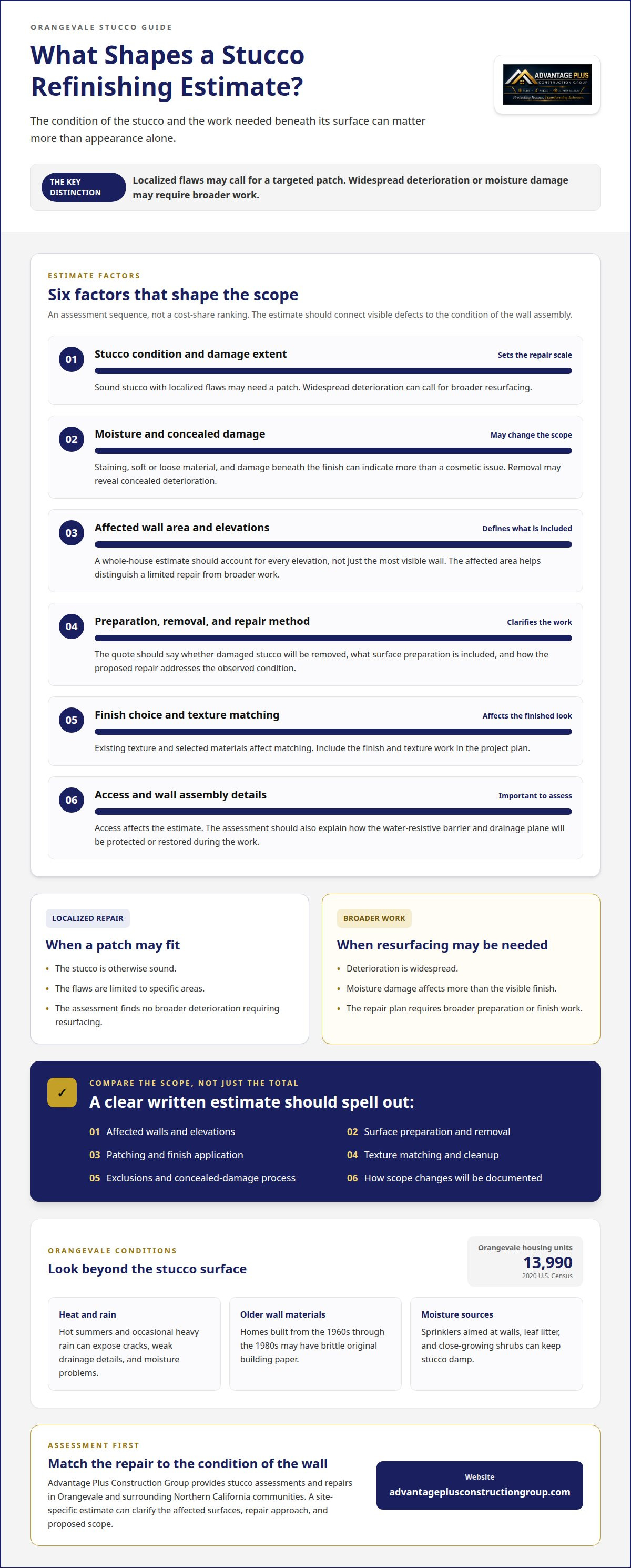
A stucco repair estimate should connect visible defects with the condition of the wall assembly. In Orangevale, the scope can range from a localized patch to coordinated work across the entire house.
Fixed-Price Estimate Details
An on-site fixed-price estimate should identify the affected elevations, repair areas, and work included in the agreed scope. It should distinguish patching from resurfacing and explain whether damaged stucco will be removed before new material is applied. For a whole-house estimate, the inspection should account for wall area, access, finish selection, and any concealed damage found during assessment.
Orangevale’s hot summers and occasional heavy rain can expose weaknesses in stucco and drainage details. Homes built from the 1960s through the 1980s may have brittle original building paper, so careful removal and repair help protect the drainage plane. Sprinklers aimed at walls, leaf litter, and close-growing shrubs can also keep stucco damp; repairs may involve patching cracks, correcting damaged areas, or addressing moisture-related deterioration.
Ask for the scope, preparation, materials, finish, cleanup, and exclusions in writing. The price depends on the damage, access, affected wall area, and repair method; your quote provides the specific figure.
Comparing Contractor Quotes
To compare stucco refinishing quotes from Orangevale contractors, compare the scope rather than totals alone. Check whether each estimate describes the same walls, surface preparation, removal, patching, finish coat, and texture matching. A quote that omits an affected area or moisture investigation may cover less work, not a more efficient repair.
Look for a clear distinction between cosmetic cracks and damage that extends behind the stucco. Each estimate should explain how the proposed repair addresses the observed condition, what work is included, and how scope changes will be handled. Written details make differences clear before work begins.
Orangevale had 35,569 residents and 13,990 housing units in the 2020 census, according to the U.S. Census Bureau. That varied housing stock makes an on-site assessment more useful than relying on a broad whole-house assumption. A free consultation and on-site estimate can document the affected surfaces, discuss patching versus broader refinishing, and clarify the proposed scope before a decision.
For a whole-house estimate, the assessment should cover every elevation, not just the most visible wall. Note cracking, soft or loose sections, water staining, and areas where stucco separates from the wall. These observations help distinguish a limited repair from a project needing broader preparation. A thorough estimate gives homeowners a practical basis for comparing the work, protecting the exterior, and prioritizing repairs. Detailed physical assessments are just as important for commercial real estate due diligence; for example, entrepreneurs exploring opportunities to buy a restaurant in San Francisco often evaluate building exteriors and facility conditions before making an acquisition.
Hiring a professional stucco contractor
A stucco contractor should assess more than the visible surface. In Orangevale, hot, dry summers and occasional heavy rain can reveal cracks, failed sealant, or areas where water reaches the wall assembly. The contractor’s inspection should connect each visible symptom with an appropriate repair method, rather than cover defects with a new finish.
Use a consistent review process to understand the proposed work:
- Walk the exterior. Identify cracks, loose or hollow-sounding areas, staining, and transitions around windows, doors, and trim.
- Trace moisture paths. Look at roof edges, sprinklers, soil, and nearby shrubs for sources that can keep stucco wet.
- Define the repair boundary. Separate isolated surface damage from areas that may require removal and inspection behind the finish.
- Document the assembly. Note how the water-resistive barrier and drainage plane will be protected or restored during the work.
That sequence matters because stucco is not completely waterproof. A crack may be cosmetic, but staining or soft material can signal a deeper moisture issue. A repair plan should explain how the contractor will distinguish between those conditions and what findings could change the work area.
Ask for a written scope naming the affected elevations, surface preparation, removal, patching, finish application, and cleanup. It should also explain how the repair will match the existing texture and what happens if concealed deterioration appears after removal. Specific wording makes the proposed process easier to understand and compare.
Discuss barrier and drainage details before work begins. The water-resistive barrier helps limit moisture intrusion, while the drainage plane allows water that gets behind the stucco to move outward. Older Orangevale homes may have delicate existing materials, so removal near these layers calls for careful workmanship. The contractor should explain how the assembly will be handled, not just how the outer coat will look.
Clarify how the work area will be protected, how debris will be managed, and how changes to the agreed scope will be documented. For example, a small patch near a window may reveal damaged material once opened. A clear change process keeps repair decisions tied to observed conditions rather than assumptions.
For a project-specific review, use the stucco assessment and repair process to understand how surface condition and moisture details shape the work.
Use the written scope to compare bids rather than treating the lowest total as the clearest choice. Ask contractors to distinguish specified repairs from work that depends on what removal reveals, and explain how they will seek approval before changing the plan. Confirm estimates describe the same affected areas, preparation, barrier handling, finish matching, and cleanup. This makes differences easier to evaluate and ties the decision to the conditions observed at your home. Before hiring, make sure the contractor can explain the proposed method in plain language and put the agreed details in writing.
Matching stucco texture and color
A repair can protect a wall yet remain visible if its texture or color differs from the surrounding stucco. Matching requires attention to the existing finish, patch material, and how Orangevale sunlight changes the wall’s appearance throughout the day.
Texture describes the surface pattern created by the finish and application method. A sand finish looks different from a dash finish, while a smooth finish makes small variations easier to notice. Before applying new material, identify the existing pattern, including its scale, depth, and direction. A patch that looks close from across the yard may stand out beside a window or entry.
Matching is a process, not just a material choice:
- Identify the finish. Compare the repair area with nearby wall sections, including corners and less weathered surfaces.
- Select compatible material. Choose a finish coat suited to the existing stucco and the desired appearance.
- Reproduce the application. Match the pattern, pressure, and tool movement used to create the surrounding texture.
- Review the result. Look at the sample against the wall in different light before completing the visible repair.
Color matching can be more difficult than texture matching. Existing stucco may have faded, collected dust, or weathered unevenly, so a new finish mixed to match an unexposed sample may look different on the wall. A sample viewed in direct sun can also look unlike the same sample in shade. Compare the finish near the repair in both conditions to reveal contrast before full application.
Acrylic finish coats are flexible, hold color well, and resist hairline cracking. They are one option to consider when selecting finish material, but the coat still needs to suit the wall and intended texture. Choose the color and material after assessing the existing surface, not as a substitute for preparing or repairing damaged stucco.
For a small patch, extending the texture into the surrounding area can soften a visible edge. A larger resurfaced section may create a more consistent appearance across one wall, but transitions at corners, trim, and windows still need careful planning. The area covered, chosen finish, and degree of matching all affect the project scope and estimate.
Before work begins, settle on the finish pattern and color approach, then review a sample in place. This helps align expectations and gives the applicator a clear reference for the finished surface. Thoughtful matching preserves the home’s character while making the repair less noticeable.
Re-dash and stucco resurfacing
Re-dash and stucco resurfacing renew the visible finish without automatically rebuilding every wall layer. These methods suit existing stucco only when the underlying surface is sound, firmly attached, and free of unresolved moisture damage.
A re-dash applies a fresh textured finish over prepared stucco. Resurfacing can mean broader finish renewal, with the precise scope depending on the wall’s condition and chosen material. Neither approach replaces repairs to loose sections, failed drainage details, or damage behind the cement-based coating. Covering those problems can leave their causes in place.
Before choosing resurfacing, assess the wall in distinct areas. Cracks, bulges, soft spots, staining, or sections pulling away indicate that surface renewal alone may not address the damage. A limited, firmly bonded area with a worn appearance is a different case. The repair method should follow the stucco’s condition, not simply the desire for a uniform color.
A careful resurfacing sequence typically includes these steps:
- Inspect the existing coat. Locate loose material, cracks, and signs of moisture around windows, doors, and wall bases.
- Prepare the surface. Remove unsound stucco and address defects that would affect adhesion or drainage.
- Apply compatible finish material. Match the selected texture and prepare transitions at trim, corners, and adjoining walls.
- Review the completed surface. Assess the finish across the elevation, including areas exposed to direct sun and shade.
Orangevale’s hot summers and occasional heavy rain make moisture management important for finish work. Sprinklers directed toward stucco, shrubs close to the wall, and leaf litter at the base can keep surfaces damp. Correcting these conditions helps the wall dry; a new finish alone does not redirect irrigation or improve drainage.
Resurfacing scope depends on the area covered, preparation required, access, selected finish, and whether removal exposes additional damage. Your quote from Advantage Plus Construction Group gives the price for your home based on those project conditions. Resurfacing a whole elevation may create a more consistent appearance than isolated patches, but it also means assessing more surface and transitions.
Choose re-dash when the existing coat can support a new finish and the goal is to renew its texture or appearance. Choose targeted repair or deeper reconstruction when the stucco is loose, moisture-damaged, or separating from the wall. This distinction helps protect the wall assembly and avoids using a finish-only solution for a deeper problem.
Understanding the total stucco refinishing cost in Orangevale involves evaluating the entire wall. That range applies to the specified sound-stucco condition; it does not establish a price for repairs, removal, or work where the underlying wall is damaged. The project quote reflects the particular scope and conditions.
How long does stucco refinishing take, and how often should stucco be refinished?
Stucco refinishing timelines depend on the work area, surface condition, access, and finish system. A small, accessible patch involves less preparation than resurfacing several elevations or removing damaged stucco. Each additional step, including repairs behind the finish and drying between coats, affects the schedule.
Project planning follows the wall’s condition, not just its appearance. Before work begins, the scope should identify affected surfaces, preparation, repairs, finish application, and cleanup. Orangevale’s hot summers can affect how exposed surfaces dry, while rain can interrupt exterior work. A clear sequence accounts for weather and the materials’ required drying and curing intervals.
Typical stages include:
- Preparation: Protect nearby windows, doors, plants, and walkways before work starts.
- Surface work: Remove unsound stucco, prepare edges, and address identified damage.
- Application: Apply repair material and finish coats in the planned sequence.
- Finishing: Match texture, complete transitions, and remove protective coverings after the work is ready.
These stages explain why a repair cannot be scheduled by patch size alone. For example, a small crack beside a window may need careful detailing around the opening. A broad wall with loose material may require removal and additional preparation. Access matters too: high or obstructed areas need more setup than an open, ground-level surface.
There is no single calendar interval that suits every stucco home. Refinishing should respond to visible wear and the wall’s condition, not an automatic schedule. Fading or a worn finish may call for surface renewal; cracks, soft spots, staining, or separation require addressing the cause before applying a new coat.
Regular visual checks can help identify changes early. Inspect corners, window and door edges, wall bases, and areas near sprinklers. Look for new cracks, loose sections, persistent dampness, or staining after rain. Directing irrigation away from the wall and clearing leaf litter at its base can help surfaces dry between inspections.
Plan the project around the scope, weather, and finish requirements, not an assumed completion date. A written schedule should show preparation, repair, finish application, and any drying periods. Arrange a stucco refinishing assessment to establish the work sequence for your home’s surfaces and condition.
Advantage Plus Construction Group
Advantage Plus Construction Group helps Orangevale homeowners understand the right scope for stucco concerns, from localized damage to broader refinishing. If you’re weighing patching against resurfacing, arrange a free, no-obligation on-site estimate to discuss your home’s condition and project needs.
An assessment can clarify the work required and the finish options suited to your exterior. Advantage Plus Construction Group provides Stucco Systems, Fiber Cement Siding, and Exterior Envelope Services for homeowners considering broader exterior improvements.
Ready to take the next step? Contact Advantage Plus Construction Group to request your free estimate and discuss your Orangevale home.
Make a Clear Plan for Your Orangevale Home
Turn what you have learned about stucco refinishing cost in Orangevale into a practical next step: request a free, no-obligation on-site estimate to discuss the work your home needs.
Advantage Plus Construction Group can assess your exterior and prepare a detailed written estimate. Call (916) 259-9913 or request your free on-site estimate.
With a clear plan, you can move forward more confidently with your home’s exterior.
Frequently Asked Questions
When should I re-stucco instead of patching?
Re-stucco when damage is widespread, sections are pulling away, or moisture has affected the wall beneath the finish. A patch is better suited to an isolated defect on otherwise stable stucco. For example, several loose areas across different elevations may call for broader removal and rebuilding, while one small, stable damaged spot may need a localized repair. The deciding factor is the extent and depth of deterioration.
How much does stucco refinishing cost per square foot in the Sacramento area?
There is no single per-square-foot figure that accurately describes every Sacramento-area refinishing project. Scope depends on wall area, the condition of the existing stucco, surface preparation, removal requirements, access, and selected finish. A quote for a sound wall receiving a new texture differs from one requiring damaged material removal or moisture-related repairs. A project-specific written estimate should describe the work and finish included.
What factors affect the cost of stucco refinishing, such as home size, damage, and finish type?
Home size affects how much wall surface needs work, while damage determines the preparation and repairs needed before refinishing. Finish type also matters because smooth surfaces and textured finishes require different application and matching work. Access, wall transitions, and old coating removal can add to the scope. For example, a home with scattered damaged areas and several finish transitions needs a different plan from one continuous, sound wall.
How much does stucco repair or crack patching cost in Orangevale?
Stucco refinishing cost in Orangevale depends on the repair area and what inspection reveals beneath the visible crack. A surface-level crack on stable stucco differs from cracking accompanied by staining, soft material, or loose sections. Those signs can change the repair scope. A written estimate for your home should identify the affected areas, preparation, proposed repair, and finish work, rather than rely on a generic patching figure.
Do Orangevale stucco contractors charge extra for scaffolding, surface preparation, or removing old coatings?
Scaffolding, surface preparation, and coating removal may be included in the project scope or listed separately. Their treatment depends on the height and access of the work area, the existing finish’s condition, and what needs removal. Review the written estimate for each item, including disposal and preparation. That detail helps you see whether proposals cover the same work before comparing totals.


