
With 43% of structures in the Sacramento area facing significant wildfire risk, your choice of exterior is no longer just a matter of curb appeal; it's a matter of structural survival. As the 2026 California Wildland-Urban Interface Code (CWUIC) takes full effect, the comparison of fiber cement vs vinyl siding Sacramento residents rely on has shifted from simple aesthetics to critical defense. You want a home that reflects your pride of ownership while standing firm against the relentless Central Valley sun and the increasing threat of fire.
We understand the anxiety that comes with watching a major investment face the elements. It's frustrating to worry about warping panels, dry rot, or whether your siding meets the latest safety mandates. This guide provides the clarity you need to choose a material that survives the heat, resists wildfire risks, and delivers the highest ROI for your exterior. We will examine the technical performance of these materials under the new 2026 regulations, compare their thermal resistance, and reveal how the right choice can secure your peace of mind for the next 30 years.
Key Takeaways
- Identify how Sacramento's extreme summer heat impacts material integrity and which options prevent unsightly warping or melting on south-facing walls.
- Understand the critical role of non-combustible materials in meeting the 2026 California Wildland-Urban Interface Code for homes in high-risk fire zones.
- Evaluate the core differences of fiber cement vs vinyl siding Sacramento homeowners face to make an informed investment that enhances both safety and curb appeal.
- Discover why a professional exterior envelope system is the true hero of home protection, ensuring your siding is supported by a robust water-resistive barrier.
- Compare the long-term maintenance requirements of each material to see how a disciplined choice today eliminates the anxiety of future repairs and dry rot.
Why Your Siding Choice Matters in the Sacramento Climate
The Sacramento Valley doesn't just test your patience; it tests your home's structural integrity. Here, the exterior isn't just decoration. It's a defensive barrier against 100-degree summer afternoons and the driving rains of January. Choosing between fiber cement vs vinyl siding Sacramento homeowners often weigh immediate cost against long-term performance. A poor decision now leads to warped panels, faded colors, and the constant anxiety of future repairs.
Vinyl siding is a plastic-based material made primarily from PVC resin. It's affordable and installs quickly. In contrast, Fiber cement siding is a composite material made from cement, sand, and cellulose fibers. It's engineered to mimic the look of traditional wood while providing the durability of masonry. In neighborhoods like Roseville and Citrus Heights, "standard" builder-grade siding often fails because it was never intended to handle the specific thermal cycles of our region. This failure isn't just cosmetic. It impacts your indoor comfort and the health of your home's framing.
The Central Valley Heat Factor
The sun in our region is relentless. Constant UV exposure breaks down chemical bonds in lower-quality materials, leading to fading and brittleness within just a few years. Thermal expansion is the physical tendency of materials to increase in volume or length as they absorb heat from the sun. For vinyl, this expansion is significant. When temperatures soar, panels can buckle or "oil-can" if they aren't installed with enough room to move. This creates unsightly gaps and compromises the home's aesthetic appeal, leaving your exterior looking tired and neglected.
Moisture and the Sacramento Winter
While heat is the visible enemy, moisture is the silent one. Our rainy season provides the perfect environment for localized dry rot if the siding fails to shed water effectively. Poor material choice or improper installation allows water to seep behind the panels during heavy storms. This moisture becomes trapped against the wooden frame, inviting rot and termites into your home's core. Protecting the home core requires a disciplined focus on craftsmanship and material science.
True protection requires more than just a pretty board. It requires a comprehensive approach to the home's exterior. We operate as a specialized exterior envelope contractor Sacramento residents trust to look beyond the surface. We focus on the entire system, including water-resistive barriers and proper flashing, to ensure your home stays dry and secure for decades. This philosophy prioritizes long-term security over quick, superficial fixes.
Fiber Cement Siding: The Defensive Shield for California Homes
Fiber cement is essentially a masonry product engineered to perform like wood while maintaining the resilience of stone. By combining Portland cement, ground sand, and cellulose fibers, manufacturers create a dense, "permanent" board that resists the common pitfalls of organic materials. This specialized composition ensures the siding does not rot, buckle, or succumb to the relentless UV radiation common in the Central Valley. It represents a commitment to defense, longevity, and craftsmanship that standard materials simply cannot match.
Homeowners in neighborhoods like Granite Bay and Rocklin face unique challenges from pests and local wildlife. Termites and carpenter ants find no sustenance in cement, sand, and fiber. Similarly, the woodpeckers that often plague older homes in wooded areas find the material impenetrable. You gain the aesthetic appeal of deep wood grains and crisp shadow lines without inviting the structural vulnerabilities associated with natural timber. It is a disciplined choice for those who value both visual excellence and structural integrity.
Fire Safety and WUI Compliance
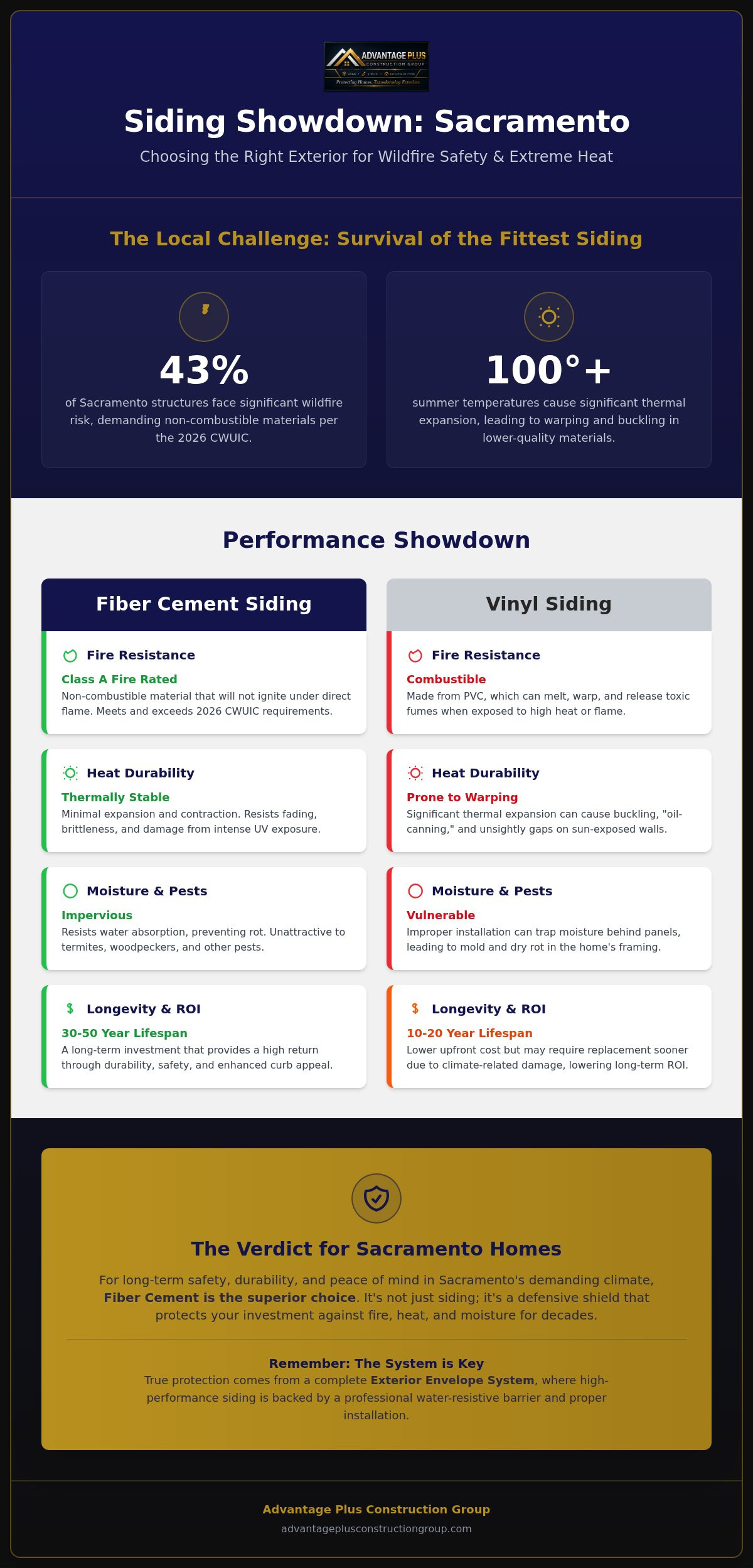
In the Sacramento region, fire resistance is a necessity rather than an upgrade. As of January 1, 2026, the California Wildland-Urban Interface Code (CWUIC) mandates non-combustible or ignition-resistant siding for properties in Very High Fire Hazard Severity Zones. Fiber cement carries a Class A fire rating, meaning it will not ignite even when exposed to direct flame or intense heat. This protection is vital for preventing ember intrusion, which is the leading cause of home loss during wildfires. Insurance providers often recognize this proactive stance, sometimes offering premium reductions of 15-25% for homes that meet these rigorous safety standards. Our role as a specialized guardian is to ensure your family remains protected from external fire threats through high-quality material selection.
Long-Term Durability and ROI
When evaluating fiber cement vs vinyl siding Sacramento residents must consider the total lifecycle of the investment. While vinyl may require a full replacement after 15 to 20 years due to heat-related failure, fiber cement is designed to last 30 to 50 years. A professional fiber cement siding installation Sacramento project significantly boosts property resale value because buyers recognize the permanence of the upgrade. You may need to refresh the paint every 15 years, but the substrate itself remains stable and secure. This long-term performance shifts the focus from temporary fixes to permanent peace of mind. If you are planning for the next three decades of homeownership, a consultation with an exterior specialist can help you map out a strategy for maximum protection and ROI.
Evaluating Vinyl Siding: Value, Versatility, and Local Vulnerabilities
Vinyl siding remains a popular choice for many homeowners due to its immediate accessibility. It offers a low upfront cost. It allows for rapid installation. It provides a wide array of design options, ranging from traditional lap siding to modern board and batten styles. For those looking for a quick cosmetic refresh, the appeal is obvious. However, as a specialized guardian of your home's exterior, we must look beyond the initial price tag. The reality of PVC in the California sun is often far different from the brochure's promises.
The "maintenance-free" label is one of the most common myths in the industry. While you don't need to paint vinyl, this is actually a limitation rather than a benefit. Once the Central Valley sun begins to bake the color out of the panels, there is no way to restore the original luster. You cannot sand it. You cannot easily repaint it. If a panel cracks or punctures, the entire section often requires replacement to maintain a uniform look. Indestructible is not a word we use for plastic.
The Vulnerability of Plastic
Sacramento temperatures frequently hit triple digits. When the mercury rises above 100 degrees, vinyl siding faces a significant physical challenge. PVC is a thermoplastic, which means it softens when heated. In extreme cases, we see panels buckle, warp, or even melt. A particularly modern danger is the "melting" risk caused by reflective heat from a neighbor's energy-efficient, Low-E windows. These windows act like magnifying glasses, focusing intense beams of sunlight onto your siding and causing irreversible distortion.
UV radiation is another constant enemy. Over time, the sun's rays leach the plasticizers from the vinyl. This process makes the panels brittle and prone to cracking under the slightest impact. A stray baseball or a heavy hailstone can shatter a sun-weakened panel that would have remained flexible years prior. For a home in the Sacramento Valley, this degradation isn't a possibility; it's a timeline.
Cost vs. Security
When choosing between fiber cement vs vinyl siding Sacramento homeowners must weigh the cost of siding installation Sacramento against the total cost of ownership. A lower initial price tag is attractive, but it often leads to higher long-term repair expenses. When you choose vinyl, you're often opting for a temporary fix rather than a permanent solution. Every few years, you may find yourself dealing with loose panels, faded sections, or heat-related warping.
We believe in doing it right the first time. Our disciplined approach prioritizes materials that offer long-term security and structural health. While vinyl serves a purpose for some budgets, it rarely matches the rigorous standards of a specialized exterior envelope system. Investing in a more resilient material ensures your home stays protected, beautiful, and valuable for decades to come.
Performance Showdown: Fire Safety, Heat, and Maintenance
When the Sacramento weather turns volatile, the physical resilience of your home's exterior is put to the ultimate test. Direct impact from windblown debris or rare but damaging hailstorms can leave vinyl siding shattered or punctured. Fiber cement, with its dense masonry composition, offers superior impact resistance that protects your home's structural core. This difference in performance isn't just about cosmetic damage; it's about preventing breaches that lead to moisture intrusion and energy loss.
Energy efficiency is another critical factor in our hot climate. While neither material has a high R-value on its own, both can be paired with rigid foam insulation to create a thermal break. However, fiber cement's stability allows it to remain tight against the home's envelope, whereas vinyl's thermal expansion often creates gaps where heat can escape or enter. The "Guardian" verdict is clear: if your priority is long-term security and minimal anxiety, fiber cement is the superior choice for the Central Valley.
The Maintenance Reality Check
Maintaining your home shouldn't be a source of constant stress. Vinyl requires regular power washing to prevent mold and mildew buildup in its seams, yet even with cleaning, it cannot be "renewed" once it fades. Fiber cement demands a different approach, primarily focusing on inspecting the caulking around windows and doors to ensure a watertight seal. Spotting early signs of failure is easier with fiber cement; look for hairline cracks or chalking paint, which are simple to remedy. While vinyl requires frequent cleaning and eventual panel replacement, fiber cement typically demands only minor caulk inspections and a single repaint over a decade, resulting in a lower total cost of ownership.
Choosing for Your Specific Neighborhood
Your specific location in the Sacramento area should dictate your material choice. In Granite Bay, where the landscape is often wooded and hilly, the high fire risk makes non-combustible siding a non-negotiable safety feature. In established suburbs like Citrus Heights, homeowners are increasingly turning to fiber cement to match modern residential exterior renovation Sacramento CA trends that favor high-end, wood-like textures. Local HOAs also play a role; many associations in the Roseville area now mandate fiber cement or stucco to maintain property values and community standards. Selecting the right material ensures your home remains a source of pride while adhering to local safety and aesthetic requirements. To determine the best fit for your specific property, request a professional assessment of your exterior envelope from our specialized team.
Beyond the Material: Why the Exterior Envelope System Wins
Most homeowners focus exclusively on the surface. They spend weeks debating the merits of fiber cement vs vinyl siding Sacramento offers, yet the board itself is only the first line of defense. A premium plank cannot protect a home if the moisture management system beneath it is compromised. We view your home as a complete exterior envelope. This means every layer, from the sheathing to the final coat of paint, must work in harmony to prevent structural decay and ensure long-term security.
The Water Resistive Barrier (WRB) is the true hero of your wall assembly. In the Sacramento Valley, where winter rains can be driving and persistent, a poorly installed barrier leads to trapped moisture. This moisture is the primary catalyst for dry rot and termite infestations in older Central Valley homes. We utilize advanced sealants and integrated flashing at every penetration point, including windows, doors, and vents. Our "Specialized Guardian" approach ensures that even if water manages to get behind the siding, it has a clear path to drain away without ever touching your home's wooden frame. This discipline in detail is what separates a permanent solution from a temporary fix.
Technical excellence requires more than just skilled labor. It requires rigorous oversight. Our siding installation project management process ensures that no detail is overlooked during the transition from old to new. We don't just "install siding." We manage a complex structural protection project designed to defend your property for generations. This methodical flow builds confidence and removes the weight of responsibility from your shoulders.
The Anatomy of a Protected Wall
A truly protected wall begins with a clean, stable sheathing layer. We then apply a high-performance moisture barrier, ensuring all seams are taped and integrated with specialized window flashing. Only after these defensive layers are verified do we install the final plank. General contractors often treat siding as a simple cosmetic finish, missing the technical nuances of flashing that lead to expensive rot issues years later. Our commitment to structural integrity means we reject shortcuts and prioritize the health of the structure above all else.
Next Steps for Your Sacramento Home
Transitioning from property maintenance anxiety to peace of mind begins with a professional evaluation. We offer a specialized consultation to assess the health of your current exterior envelope and identify potential vulnerabilities before they become structural failures. You'll receive a clear, disciplined plan to secure your home's future and increase its resale value. Don't leave your property's safety to chance or superficial upgrades. Connect with the best siding contractors Sacramento CA has to offer and ensure your investment remains protected for the next 30 years.
Secure Your Home's Future Today
Deciding between fiber cement vs vinyl siding Sacramento homeowners often find that the choice comes down to long-term security versus temporary savings. While vinyl offers immediate affordability, fiber cement provides the non-combustible protection and thermal stability required by the 2026 California Wildland-Urban Interface Code. True protection requires more than just a surface upgrade. It demands a disciplined approach to the entire exterior envelope, where moisture barriers and flashing are installed with precision. As local Roseville and Granite Bay experts, our exterior envelope specialists provide professional project oversight to ensure your home remains a dry, rot-free sanctuary for decades.
You don't have to settle for superficial upgrades that fail in the Central Valley heat. Your home deserves a guardian that prioritizes structural health and premium craftsmanship. Request Your Specialized Exterior Evaluation today to take the weight of responsibility off your shoulders and secure your property's value for the next 30 years. We look forward to helping you protect what matters most.
Frequently Asked Questions
Is fiber cement siding more expensive than vinyl in Sacramento?
Fiber cement requires a higher initial investment than vinyl due to its weight and the specialized tools needed for installation. You are paying for a material that offers structural permanence rather than a temporary cosmetic fix. While vinyl is cheaper upfront, the total cost of ownership often levels out as fiber cement lasts twice as long. This durability makes it the preferred choice for homeowners who prioritize long-term security over low entry costs.
Does fiber cement siding help with home insurance in California fire zones?
Many insurance providers recognize the non-combustible nature of fiber cement and may offer premium reductions for homes in high-risk zones. Since it carries a Class A fire rating, it meets the strict 2026 California Wildland-Urban Interface requirements. Using ignition-resistant materials reduces the likelihood of structural loss during a wildfire. You should consult with your agent to see how upgrading your exterior envelope can specifically impact your annual policy costs.
How long does vinyl siding last in the Sacramento heat?
In our region, vinyl siding typically lasts between 15 and 20 years before the intense UV radiation causes significant degradation. The Central Valley sun leaches plasticizers from the PVC, making the panels brittle and prone to cracking. You may notice fading or warping much sooner on south-facing walls. When comparing fiber cement vs vinyl siding Sacramento residents often find that fiber cement’s 30 to 50 year lifespan provides much better value.
Can I install fiber cement siding over my existing wood siding?
We strongly advise against "lay-over" installations because they trap moisture and hide existing structural issues. Our specialized guardian approach requires removing the old material to inspect the sheathing for dry rot or termite damage. Installing new planks over failing wood compromises the integrity of your moisture barrier. A full tear-off ensures that your new exterior envelope is sealed correctly and will protect your home's core for the next three decades.
What is the best siding for preventing dry rot in Roseville?
A professionally installed fiber cement system is the most effective defense against dry rot in Roseville's climate. The material itself does not rot, but the real protection comes from the water-resistive barrier and integrated flashing installed behind it. By managing moisture flow and ensuring proper drainage, we eliminate the damp conditions that allow fungi to thrive. This disciplined installation process protects your framing from the costly damage often found in older suburban homes.
Does fiber cement siding increase my home value more than vinyl?
Fiber cement consistently delivers a higher return on investment because it is viewed as a premium, permanent upgrade by appraisers and buyers. It enhances curb appeal with deep textures that mimic natural wood without the associated maintenance headaches. Prospective buyers in the Sacramento market value the fire resistance and durability that fiber cement provides. Choosing this material signals that the property has been maintained to professional standards, which often leads to a faster sale.
What maintenance does James Hardie siding require in the Central Valley?
Maintenance for fiber cement is minimal but essential for preserving your warranty and home health. You should inspect the caulking around windows and joints every few years to ensure the seal remains watertight. A simple low-pressure wash with a garden hose will remove dust and debris from the surface. Unlike vinyl, which cannot be refreshed, fiber cement can be repainted every 15 years to keep your home looking vibrant and new.
Which siding is better for energy efficiency in hot climates?
Fiber cement is the superior choice for energy efficiency because its thermal stability prevents the gaps that often form with vinyl. When vinyl expands and contracts in the heat, it can create air leaks that force your AC to work harder. When we pair fiber cement with high-quality rigid insulation, it creates a robust thermal break. This system keeps your interior cooler during triple-digit afternoons and helps lower your monthly utility bills through better resistance.


