

A siding installation warranty in Rocklin usually involves two distinct protections: a material warranty for covered product defects and a workmanship warranty for installation-related problems. The written terms define what each covers, how long coverage lasts, and whether it transfers to a new owner. Installation must also follow the manufacturer’s specifications to preserve the conditions attached to its warranty.
A durable-looking exterior is only part of the picture. You also want to know what happens if siding cracks, fades, or develops an installation-related problem, and whether any protection carries forward if you sell your home.
This guide explains how material and installation warranties differ, what to review in the coverage terms, and how warranty transfers typically work. It also explains why careful installation matters, helping you understand your siding protections and make a more confident decision for your home.
Key Takeaways
- Separate material coverage from workmanship coverage so you know which warranty applies to a siding problem.
- Read the warranty’s exclusions, claim steps, and required maintenance before relying on its protection.
- Review transfer terms before selling your home; coverage may depend on the warranty’s rules and timely paperwork.
- Identify whether cracking or fading stems from a covered product issue or from installation, maintenance, or other conditions.
- Following manufacturer specifications and keeping installation records can help preserve warranty eligibility.
Warranty coverage for installation, parts, labor, and materials
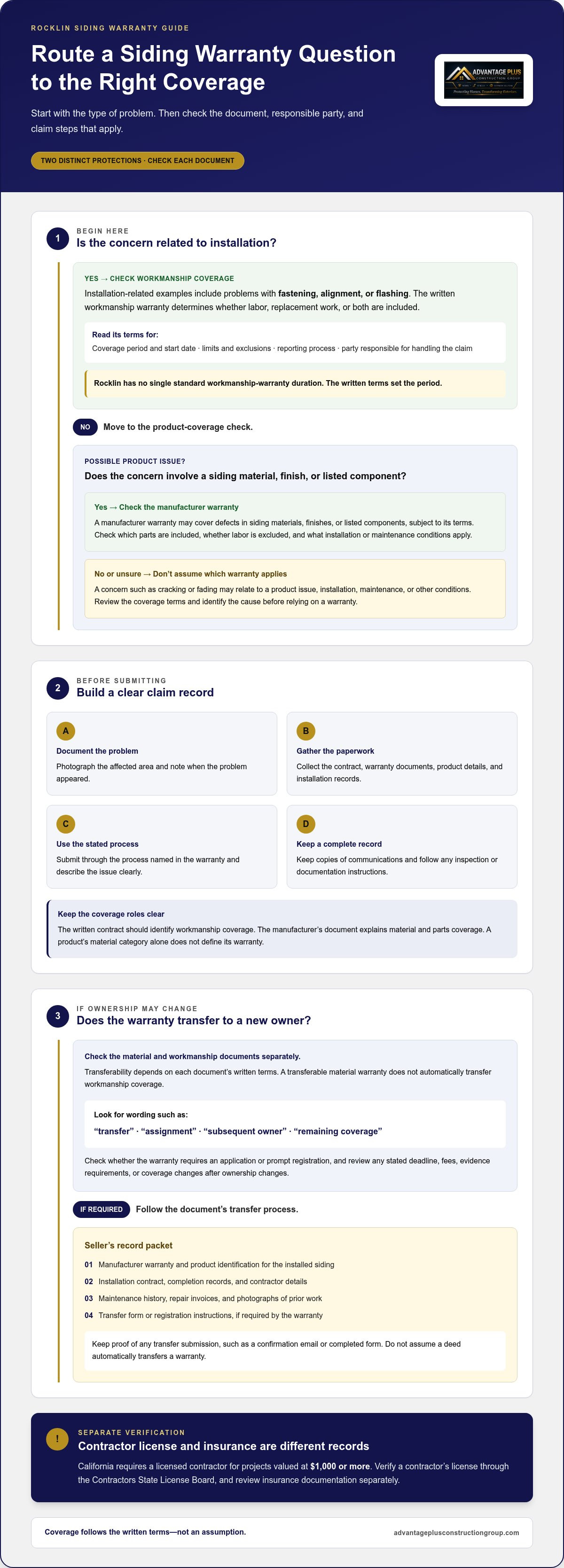
A siding installation warranty in Rocklin can involve two separate protections: workmanship and manufacturer coverage. Review each document for covered defects, exclusions, claim steps, and the party responsible for handling a claim.
Installation Workmanship Coverage
A workmanship warranty addresses installation-related problems, such as issues with fastening, alignment, or flashing. Its written terms determine whether labor, replacement work, or both are included. Rocklin has no single standard workmanship-warranty duration, so the written terms set the period. Review the start date, coverage limits, exclusions, and process for reporting a defect.
Siding Material and Parts Coverage
A manufacturer warranty may cover defects in siding materials, finishes, or listed components, subject to its terms. Check which parts are included, whether labor is excluded, and what maintenance or installation conditions apply. James Hardie fiber cement is made from sand, cement, and wood fiber. The product warranty, rather than the material category alone, defines coverage.
Comparing Siding Warranty Terms
Warranties for fiber cement, vinyl siding, and engineered wood differ by manufacturer, product, finish, exclusions, and claim requirements. Compare the written terms instead of assuming one material always offers more protection. Vinyl siding costs compared with other materials depend on product selection, removal, surface preparation, trim, and labor. Compare estimates with the same project scope, not material cost alone.
Rocklin’s summer temperatures exceed 100 degrees Fahrenheit, making material selection and installation details relevant to exterior performance. James Hardie is one named fiber-cement brand; lap siding and board-and-batten are examples of styles. A Rocklin home’s design, existing wall condition, and desired appearance help determine which material and profile suit the project.
Filing a Siding Warranty Claim
First, identify whether the concern involves installation or a product defect. Photograph the affected area, note when the problem appeared, and gather the contract, warranty documents, product details, and installation records. Submit the claim through the stated process, describe the issue clearly, and keep copies of communications. Follow any inspection or documentation instructions in the warranty.
California requires a licensed contractor for projects valued at $1,000 or more. Verify a contractor’s license through the Contractors State License Board, and review insurance documentation separately because a license and insurance are different records. Confirm that the written contract identifies workmanship coverage, while the manufacturer’s document explains material and parts coverage.
Budget and upkeep can also inform a warranty review. Keep the estimate and agreement with the warranty paperwork to clarify which work and materials were part of the installation.
Maintenance instructions deserve attention as well. The Rocklin vinyl siding guidance recommends washing vinyl siding annually with mild soap and water. The company says siding installation can help lower energy bills by improving insulation. Treat these points as separate from the warranty’s stated promises: follow applicable care instructions, and rely on the written coverage for any defect or claim. Keeping maintenance records with installation documents can help when describing how the siding has been cared for to the responsible party.
Warranty transfer to the next homeowner
A siding warranty can add useful context to a Rocklin home sale, but transferability depends on the written terms. The material manufacturer and installation contractor may set separate rules. One warranty might let a new owner receive the remaining coverage, while another may limit transfers or require prompt registration. Review each document independently: a transferable material warranty does not automatically transfer workmanship coverage.
Start with the original warranty documents, not a summary in the home listing. Look for “transfer,” “assignment,” “subsequent owner,” and “remaining coverage.” These terms explain whether coverage follows the siding, stays with the first purchaser, or requires an application. The document should also state any transfer deadline, fees, evidence requirements, and changes to coverage after ownership changes.
Before closing, the seller can assemble a practical record packet for the buyer:
- Manufacturer warranty and product identification for the installed siding.
- Installation contract, completion records, and contractor details.
- Maintenance history, repair invoices, and photographs of prior work.
- Transfer form or registration instructions, if the warranty requires them.
These records connect the specific siding to its coverage terms. A buyer can compare product labels and installation paperwork with the warranty, then follow the stated transfer process. If the paperwork names a first owner, follow its instructions for updating ownership rather than assuming a deed automatically transfers the warranty.
For example, a seller might have a manufacturer warranty for fiber cement and a separate workmanship document from the installer. The buyer should identify each issuing party, confirm the remaining term stated in each document, and submit any required ownership information. Keep proof of submission, such as a confirmation email or completed form. This creates a clear record if a future claim involves fading, cracking, or installation work.
Rocklin homeowners should also review maintenance and alteration conditions before closing. A warranty may define approved cleaning, repairs, and installation specifications; changes that do not follow those terms can affect coverage. Ask the seller to describe completed repairs and provide the corresponding invoices. Even a siding system designed for resistance needs care that follows the manufacturer’s instructions.
For buyers, warranty transfer is one part of evaluating exterior condition and long-term appeal. Inspect visible siding, note damaged areas, and compare those observations with existing claim records. Then keep the warranty, transfer confirmation, and care instructions with the home’s other ownership documents. This makes the next claim process easier to follow.
For planned exterior upgrades, fiber cement siding project planning can account for product documentation and installation records alongside appearance and protection.
Covered siding problems, including cracking and fading
A visible siding defect does not reveal its cause by itself. A crack in fiber cement, a faded finish, and moisture behind an exterior panel raise different warranty questions. Coverage depends on whether the written terms address a product defect, finish performance, or installation workmanship. Record the location and appearance before repairs change the evidence.
James Hardie ColorPlus Technology finishes carry a 15-year finish warranty. That term relates to the finish, not every siding problem or all installation labor. Read the specific warranty for covered finish concerns, exclusions, claim requirements, and any remedy. Keep the product identification and purchase or installation records with the document.
Cracks call for careful assessment. Photograph the crack, note whether it appears near a joint or fastener, and record any related movement or water staining. Its pattern may help identify a material defect, installation detail, impact, or building movement. The warranty language determines which causes qualify for coverage.
Fading also needs context. Compare affected panels with less-exposed areas and photograph the siding in consistent lighting. The warranty’s finish provisions explain whether a particular color change is covered and how it is evaluated. Document the area before painting, since a new coating can obscure the original condition and affect the claim review.
Moisture damage or improper maintenance is not automatically covered as a siding defect. Warranty terms may exclude damage caused by water intrusion, neglected care, or work that conflicts with manufacturer instructions. For example, document staining near a joint alongside nearby flashing and sealant, rather than describing it only as a panel failure. The source of the moisture matters to the claim.
Use a simple evidence sequence before submitting a claim:
- Photograph the full wall, then take close images of each crack, stain, or faded section.
- Record when the issue appeared and any repairs or maintenance already completed.
- Find the material warranty and installation paperwork, then match the affected area to product details.
- Describe the observed condition without guessing at its cause, and follow the warranty’s stated claim process.
For fiber cement siding, keep care records and note any painting, cleaning, or repairs. These details help distinguish finish concerns from substrate damage and installation issues. Good craftsmanship and correct installation support exterior performance, but they do not replace the manufacturer’s written coverage. A documented defect, clear photographs, and the applicable warranty terms give a claim a precise starting point.
Limited lifetime siding warranty
“Limited lifetime” may sound straightforward, but the written warranty defines what the phrase means. It may describe the coverage period for specified siding components, while exclusions, claim conditions, and available remedies still apply. Read the definition of “lifetime,” identify the covered product, and note whether materials, finish, or labor are addressed separately.
Do not treat a lifetime label as protection for every exterior problem. The document may distinguish a manufacturing defect from damage caused by installation, impact, moisture, or maintenance. For example, a siding panel defect and water staining near a window are different conditions. The first may involve product coverage; the second requires identifying how moisture entered and which warranty applies.
Compare the warranty’s practical terms, not just its title. Check whether coverage changes over time, whether the remedy is repair or replacement, and whether labor or removal costs are included. These details determine what a homeowner can claim. A warranty may cover siding material while excluding related work, so note each limit in writing.
James Hardie fiber-cement siding is described as lasting 30 to 50 years. That product-life estimate is not the same as a warranty term. For a hardie fiber cement installation, match the exact product identification to its warranty document. Then compare the stated term with the covered components and conditions, rather than assuming the product’s expected service life sets the coverage period.
Appearance also matters when considering replacement. A warranty’s color provisions may treat finish performance differently from the siding substrate. If color changes appear across sun-facing walls, document the affected areas and compare them with shaded sections. Before painting, review the warranty’s maintenance instructions, since adding a coating can alter the surface and complicate evaluation.
Windows, trim, and siding joints also deserve attention during a coverage review. A stain beside a window, for instance, may point to a sealant or flashing issue rather than a panel defect. Record the location, take clear photographs, and keep maintenance records. These steps help distinguish the siding from nearby components and clarify which warranty document is relevant.
Before relying on a limited lifetime warranty, make a simple coverage checklist:
- Confirm the product name and covered components.
- Identify the coverage period and any changes over time.
- Separate material, finish, and workmanship protections.
- Review exclusions, claim instructions, and replacement remedies.
- Keep the warranty with installation and care records.
A well-documented warranty supports both exterior planning and curb appeal decisions. For wood siding or fiber cement, compare finish requirements, maintenance language, and replacement provisions before choosing a product. Make the comparison specific: review the exact product, written coverage, and installation conditions together.
Review the home improvement contract alongside the siding warranty. California limits the initial down payment for home improvement contracts, so check the contract’s payment terms as well as the warranty’s coverage and remedy. These are separate parts of the project paperwork: the payment limit does not define which siding components are covered, how long coverage lasts, or whether labor is included. Keep both documents with the project records.
Siding installation and manufacturer specifications
Manufacturer specifications connect installation quality to product performance and warranty eligibility. For a Rocklin siding project, the selected product’s instructions guide preparation, fastening, clearances, joints, and finishing. A missed step can lead to damage or moisture concerns, while clear records help show whether the work followed the applicable requirements.
James Hardie fiber cement illustrates why product-specific instructions matter. Installation details can differ by siding type, profile, accessory, and wall condition. Do not treat one product’s instructions as universal. Keep the manufacturer’s documentation for the exact siding installed, along with the contract, product identification, and completion records.
A professional installation in the company’s process is estimated at 5 to 14 days. That timeframe is not a substitute for the manufacturer’s specifications. Weather, preparation needs, building details, and project scope affect the work sequence. The crew should protect exposed areas and address conditions that could affect the siding before covering them.
Does Rocklin require permits or inspections for siding replacement? A siding replacement permit in Rocklin usually takes 3-7 business days for approval when a permit applies. That timing doesn’t mean every replacement requires a permit; the project scope and local requirements determine whether permitting or inspection applies.
Before installation begins, homeowners can organize a specification-based review:
- Match the product name and profile to the manufacturer’s current installation instructions.
- Review wall preparation, flashing, clearances, fastening, and accessory requirements.
- Record concealed conditions, such as repairs to the substrate, before siding covers them.
- Keep product labels, invoices, photographs, and inspection records with the warranty documents.
These records can help explain whether later damage relates to the product, installation, or another building condition. For example, compare water staining near a window with the flashing details and surrounding materials. Weather exposure may affect the investigation, but the claim still depends on the observed condition and warranty terms.
Following specifications also supports a clear handoff when work ends. Keep final photographs of joints, trim, and transitions, along with any permit or inspection records issued for the project. If repairs become necessary, document the affected area and the work performed. Follow the manufacturer’s maintenance instructions, since unrecorded alterations can complicate a later warranty review.
For a specification-led exterior project, plan your siding installation around product requirements, careful documentation, and durable workmanship.
Advantage Plus Construction Group: Fiber Cement Siding
Advantage Plus Construction Group helps Rocklin homeowners plan fiber cement siding projects, with careful attention to durable exterior protection and installation details. Project managers oversee each job to keep timelines and budgets on track, while the work focuses on sound preparation and a well-finished exterior.
Consider this next step when planning a siding replacement, comparing material options, or aligning installation details with manufacturer requirements. The company also provides stucco systems and exterior envelope services for broader exterior needs.
To discuss a project shaped around your home’s exterior, contact Advantage Plus Construction Group.
Make your next exterior decision with confidence
Before approving an exterior project, make the warranty part of the planning conversation. Decide which records you will keep, how product and workmanship coverage will be documented, and who will handle each step if an issue appears. That clarity helps protect your investment and gives future owners a useful record.
For Rocklin homeowners, understanding a siding installation warranty means looking beyond the document’s title and connecting its written terms to the planned work. Advantage Plus Construction Group offers fiber cement siding, stucco systems, and exterior envelope services for homeowners considering exterior improvements.
Discuss your project and its exterior protection needs with Advantage Plus Construction Group. A thoughtful next step can help you move forward with greater confidence and pride in your home.
Frequently Asked Questions
Why Contact Local Siding Contractors?
Local siding contractors can assess your home’s exterior, discuss project details on-site, and coordinate work around the property. For homeowners in Rocklin, Roseville, Granite Bay, New Castle, Penryn, Loomis, Citrus Heights, Orangevale, Fair Oaks, Carmichael, and Antelope, a nearby contractor can make project communication more direct. Local presence alone doesn’t establish workmanship quality, so compare the proposed scope, documentation, and installation approach.
What siding installation warranties do contractors in Rocklin, CA offer?
A siding installation warranty in Rocklin may include separate written coverage for workmanship and siding materials, but the terms vary by contractor and manufacturer. The workmanship document should identify the installation defects it addresses and how to report them. The manufacturer’s document defines product and finish coverage. Keep both with your contract, product identification, and project records so you can identify which coverage applies to a concern.


