

Dense fiber cement is a strong choice for woodpecker-proof siding in Roseville because its hard surface resists pecking and does not provide the soft nesting material found in wood. But even durable siding may not stop repeat visits if birds are drawn by insects, nesting opportunities, or sounds that resemble prey. A patch alone may not address the cause.
It is understandable to expect a repair to prevent further damage. Yet if the attraction remains, woodpeckers may start pecking nearby, while openings can leave the exterior vulnerable to moisture and animal entry. The material matters, but so does understanding the behavior behind the damage.
This article explains which siding materials can deter pecking, why patching and repainting may fall short, and how food, insects, nesting, and territorial behavior can bring woodpeckers to a home. It also covers how existing siding damage and the surrounding landscape fit into a more durable plan for protecting your exterior.
Key Takeaways
- Compare siding materials by how well they resist pecking, moisture, and pest-related damage.
- Understand why a surface patch may hide damage without removing what attracted the birds.
- Recognize how insect activity, nesting, territory, and sound can influence woodpecker behavior.
- Consider how nearby food sources and the condition of existing siding may affect repeat visits.
- Explore practical deterrents and learn when a more durable exterior solution may be worth considering.
What is the best siding to deter woodpeckers?
Fiber cement is a strong choice for deterring woodpeckers because its dense, hard surface resists pecking and does not provide soft nesting material. James Hardie fiber cement siding also resists moisture-related problems, including rot and warping, while its composition offers less appeal to insects than wood.
When comparing woodpecker-proof siding in Roseville, consider both the surface birds encounter and how the material performs over time. Durable siding can reduce vulnerability, but it cannot remove every reason a bird might approach a home.
Fiber cement combines cement, sand, and cellulose fibers to create a dense exterior surface, unlike softer cedar, which woodpeckers can peck into for nesting. It also resists moisture problems such as rot and warping, as well as insects. These qualities matter together: damaged or insect-affected siding can create openings and attract further attention.
James Hardie fiber cement siding is a recognizable example of this category. Its profiles and finishes can suit traditional architectural styles, and its paint and color hold longer than wood siding. That helps preserve the exterior finish while the underlying material provides a tougher barrier than wood.
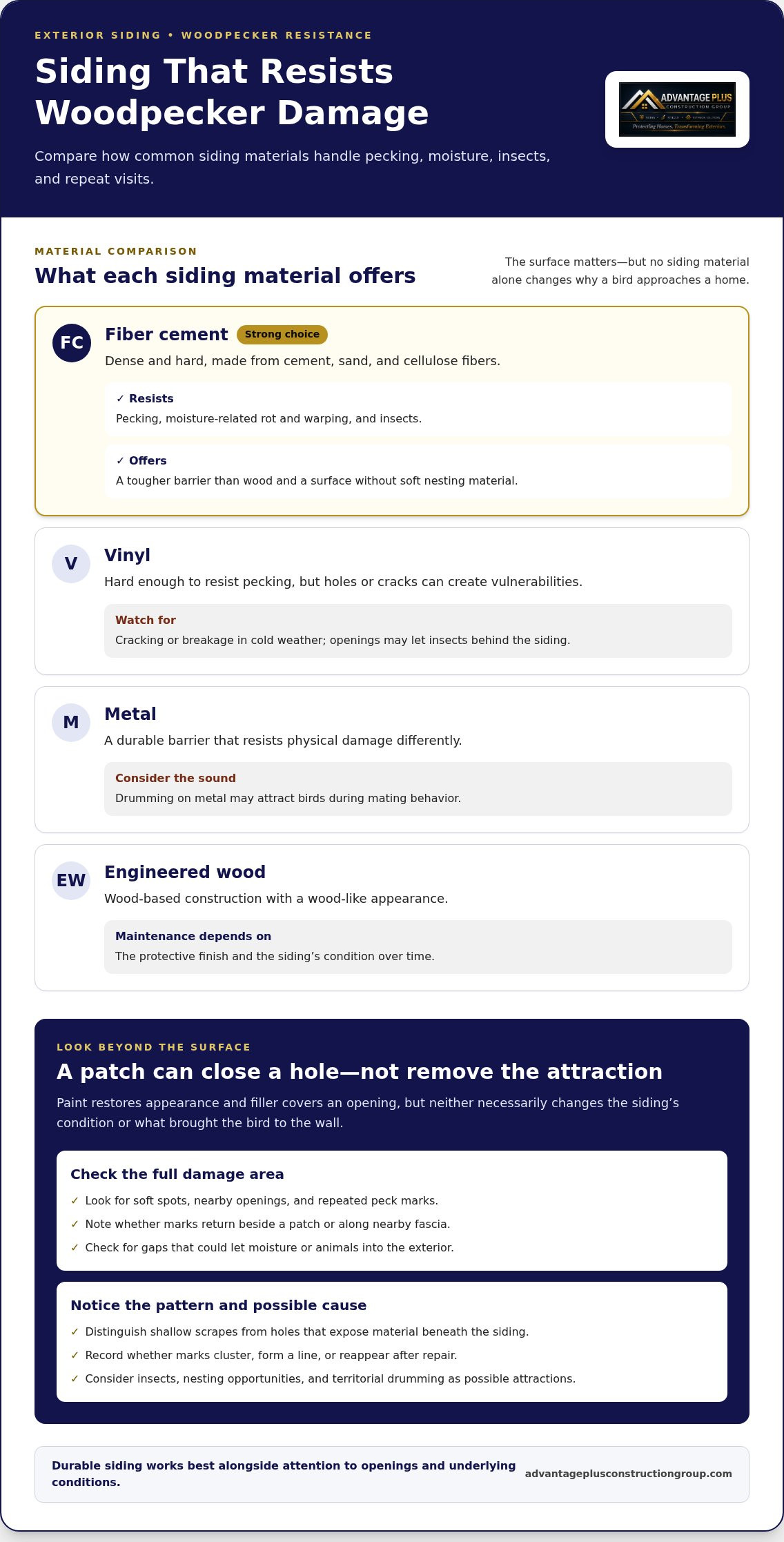
Vinyl siding is hard enough to resist pecking, but it can develop holes and may crack or break in cold weather. Openings can allow insects behind the siding. Metal siding resists physical damage differently, yet the sound it makes may attract birds that drum on it during mating behavior. Engineered wood is wood-based, so it lacks fiber cement’s dense, cement-rich surface; its durability and maintenance needs depend on its protective finish and condition.
In practical terms, fiber cement combines peck resistance with resistance to moisture, rot, warping, and insects. Vinyl has a hard surface but can crack or develop holes. Metal is durable, yet may produce sounds that attract drumming. Engineered wood offers a wood-like appearance, but its surface and finish need ongoing care.
- Fiber cement: Dense and hard, with resistance to moisture-related rot, warping, and insects.
- Vinyl: Hard enough to deter pecking, though cracks or holes can expose areas behind the siding.
- Metal: A durable barrier, but drumming sounds can encourage pecking behavior.
- Engineered wood: Wood-based construction means its protective finish and condition are central to maintenance.
No siding material changes a bird’s behavior by itself. If insects, nesting opportunities, or territorial drumming are the attraction, birds may keep visiting after a surface is repaired. Material selection works best as part of a broader exterior assessment: choose siding that resists damage and address any openings or underlying conditions.
Why patching and repainting may not prevent repeat damage
A patch can close a visible opening, but it does not remove the conditions that drew a woodpecker to the wall. The damage pattern, siding condition, and any moisture entry all matter.
Assessing Siding Damage
Assess siding damage beyond the visible hole. Look for soft spots, nearby openings, and repeated peck marks. A shallow scrape differs from a hole that exposes material behind the siding. Check whether damage reappears beside an earlier patch or along nearby fascia. These details help show whether the repair addressed only the surface or whether the vulnerable area extends farther.
Why Woodpeckers Damage Wood Siding
Woodpeckers damage wood siding because its softer surface can be pecked for insects, nesting cavities, or drumming. Cedar is particularly soft, and wood siding may resemble the trees birds use for these behaviors. If a bird returns to the same wall after repainting, it may be responding to the material or a continuing attraction, not the siding’s color. Understanding the likely cause helps explain why a cosmetic repair may not stop repeat damage.
Paint restores appearance, while filler covers an opening; neither necessarily changes the siding’s underlying condition. If birds are responding to insects, a nesting opportunity, or a drumming surface, the wall may remain attractive after its marks disappear. Pecking may also resume nearby if a repair covers one spot but leaves the surrounding siding unchanged.
Openings need attention because they can let moisture and other animals into the exterior. Moisture reaching vulnerable material can contribute to mold, wood rot, or mildew. A patch may conceal the entry point without correcting damage behind it. Look for holes, gaps, and soft areas around the affected spot, not just discoloration on the painted surface.
Pecking can also damage fascia at roof edges or transitions between exterior materials. That damage may leave gaps where water or animals can enter. Examine adjoining siding and fascia together: a repaired board beside an open hole still leaves a route into the exterior. A repeat mark near the first repair can indicate that the wider area needs assessment.
Woodpecker damage is not always a clean, round hole. Scrapes and shallow depressions can break the surface, while deeper holes expose the layers beneath. Note whether marks cluster in one location, appear in a line, or return after repair. This record helps distinguish an isolated blemish from recurring activity.
Effective repair starts with the cause and extent of the damage, not paint alone. If siding is repeatedly pecked, assess its material, nearby openings, and signs of insect or moisture problems. Closing the visible hole matters, but lasting exterior protection also depends on addressing what remains beneath or around the patch.
Insects and nesting as reasons for pecking
Woodpeckers peck siding for several reasons. They search for insects, excavate nesting cavities, drum to mark territory, and make sounds that can attract a mate. If you see fresh marks near a window or trim, consider the behavior behind them, not just the damaged surface. The likely cause affects which parts of the exterior deserve attention.
Insect hunting can make a wall seem like a food source. Woodpeckers eat insects, berries, nuts, and seeds, and may investigate siding when they detect insects within or behind it. Wood siding can be especially vulnerable if its surface or gaps provide insect access. Pecking near a seam, damaged board, or opening may point to a condition worth inspecting, rather than a random choice of location.
Pay attention to patterns. Repeated pecking around a board, window edge, or trim joint may draw attention to that specific area. Look for openings and damaged or soft material around the marks. Inspecting the nearby exterior can help distinguish surface damage from an area that may provide access to insects or shelter. Do not assume every hole indicates an insect problem; nesting and territorial behavior can cause similar signs.
Nesting creates a different reason to drill. A woodpecker may excavate a cavity in siding when the material is suitable, especially if dead trees are unavailable. Cedar is soft enough to attract nesting, so damage in a cedar-clad wall may reflect the material as well as the bird’s behavior. Repainting a cavity can cover the marks without changing the siding’s suitability as a nesting place.
Sound can also prompt investigation. A dripping water pipe inside a wall may sound like insect activity to a woodpecker, leading it to drill at the apparent source. If pecking continues in one location despite surface repairs, consider whether a recurring sound inside the wall could be contributing. The marks’ position, repetition, and proximity to windows or trim can help identify where to focus an exterior assessment.
- Pecking near seams: Inspect the adjoining siding and trim for openings or damaged material.
- A cavity in soft wood: Consider nesting as well as insect hunting.
- Repeated strikes in one spot: Note the location and whether an interior dripping sound may be present.
Identifying the cause matters because insect access, nesting material, and repeated sounds call for different responses. A stronger exterior surface can reduce opportunities for drilling, while addressing accessible openings or an interior sound may remove another attraction. Observe where and how the woodpecker pecks before treating the marks as an isolated siding defect.
Reasons woodpeckers peck at homes
A woodpecker at a house may be seeking food, creating a nest, storing food, or communicating. These behaviors can produce similar marks, but the location and sound of pecking offer clues. A bird drilling into cedar, for example, may be responding to a different feature than one drumming against metal.
Drumming is a communication behavior. A woodpecker strikes a surface to make a sound that can mark territory or attract a mate. Siding, fascia, and other exterior materials can become sounding boards. Repeated, rhythmic strikes without a deep hole may point to drumming rather than an attempt to excavate a nesting cavity.
Nesting and food storage involve a different kind of drilling. Woodpeckers may use cavities in siding when dead trees are unavailable, and they may store food there. A hole in a wood surface can become more than a cosmetic problem: the bird may keep returning to a place that serves a purpose.
The material and appearance of siding can influence where birds investigate. Rough-sawn, dark-stained, or unfinished cedar and redwood can resemble dead or hollow trees. That combination of texture and finish may make a home’s surface more attractive for pecking or excavation. Consider these visual and physical cues when repeated marks appear on wood siding.
Metal siding presents another example. Its hard surface may resist drilling, yet a woodpecker can strike it to produce sound during mating behavior. You may hear repeated tapping without seeing a deep cavity. The material’s resistance to holes does not necessarily prevent drumming, because the bird’s purpose may be communication rather than nesting.
Observe the pattern before choosing a response. Regular, loud tapping can suggest drumming; a cavity in soft wood may relate to nesting or food storage. Pecking near rough cedar or redwood may reflect the material’s resemblance to a natural cavity. These are useful clues, not proof of a single cause, so note the location and type of damage together.
Installation choices matter because the exterior combines different materials, textures, and sounds. A smooth, dense surface differs from rough, unfinished wood, while metal can create a distinct sound under impact. Considering these differences helps explain why changing or repairing one visible spot may not address behavior affecting another surface.
Woodpeckers can visit a home for more than one reason. A bird may drum on a metal section and later inspect a wood surface for a cavity. Distinguishing communication from drilling keeps the response focused: sound-making, nesting, and food storage involve different behaviors, even when all appear as pecking on the same exterior.
How can I keep woodpeckers from damaging existing siding?
Protecting existing siding takes more than covering visible marks. Pair routine inspections with measures that reduce food, shelter, and drumming opportunities around the home. A feeder, visual deterrent, or physical barrier addresses a different part of the problem, so consider the location and pattern of pecking before choosing an approach.
Start with the affected section of the exterior. Look for fresh holes, scrapes, loose siding, and damage around trim or fascia. Check nearby seams and edges for openings that could admit moisture or animals. Record where marks appear and whether they return after a repair. Routine siding inspections and maintenance can help identify vulnerable areas before damage spreads.
Food sources matter. Woodpeckers eat insects, berries, nuts, and seeds, so inspect the area around the damaged wall for accessible food. Moving food sources farther from siding may help reduce bird activity near the house. A seed-and-nut feeder or a woodpecker birdhouse may help redirect birds away from the building. Place these options away from damaged siding, not beside the area receiving repeated attention.
Homeowners also use visual, sound, or light deterrents. Aluminum flashing, foil strips, and balloons can make a wall less inviting, but may not be sufficient on their own. Electronic repellents can supplement physical barriers. A device or reflective object does not close a hole, repair a weakened board, or remove an accessible food source.
- Inspect: Note holes, scrapes, seams, and repeated pecking locations.
- Redirect: Move food sources away from siding and consider a feeder or birdhouse.
- Discourage: Use visual or sound deterrents alongside physical barriers.
- Maintain: Recheck repaired areas and surrounding siding for fresh damage.
Material can influence the response, too. Woodpeckers may peck at vinyl as well as wood, so replacing wood with vinyl alone does not eliminate the behavior. Vinyl can also crack or break in cold weather, potentially allowing insects behind it. If damage keeps returning or siding has openings and soft spots, assess the wider exterior rather than treating each mark as a separate problem.
For a more durable surface, fiber cement siding is a relevant option because its dense material resists pecking and insects. It also resists moisture problems such as rot and warping. If recurring damage has made you consider a stronger siding material, explore fiber cement siding solutions as part of a lasting exterior plan.
No single deterrent addresses every cause. Combine observation, food-source management, physical protection, and maintenance. This approach responds to both the bird’s behavior and the siding’s condition, instead of relying on a surface patch alone.
Advantage Plus Construction Group: Fiber Cement Siding
Advantage Plus Construction Group installs premium fiber cement siding for homeowners seeking a more durable exterior after recurring woodpecker damage. Its dense surface resists pecking, and the material resists moisture-related problems such as rot and warping. Fiber cement can be a practical option when repairs keep recurring or existing siding needs replacement.
Choosing a durable material is only part of protecting your home. The condition of surrounding siding, trim, and exterior details also matters when planning an upgrade. Advantage Plus Construction Group’s project managers oversee each job, with attention to keeping projects on time and within budget. The company also installs stucco systems and provides exterior envelope services for broader exterior needs.
If recurring damage has you considering a siding upgrade, contact Advantage Plus Construction Group to discuss your home’s exterior.
Choose a Stronger Path for Your Home’s Exterior
Use the damage as a reason to consider the long-term condition of your home’s exterior, not only its appearance after repair. A thoughtful upgrade brings together material choice, sound installation, and the needs of the whole exterior. For homeowners considering woodpecker-proof siding in Roseville, the next step is deciding whether the current siding still provides the protection and finish they want.
Advantage Plus Construction Group installs fiber cement siding and stucco systems, and provides exterior envelope services. These options support different exterior projects, from changing the siding material to addressing broader envelope needs. The right direction depends on the areas you want to improve and the result you want your home to maintain.
Take the next step at your pace. Contact Advantage Plus Construction Group to discuss an exterior solution for your home. A considered plan can help you move forward with greater confidence and protect the pride you take in your property.
Frequently Asked Questions
What Does a Project Like This Cost?
The cost depends on the home and project scope, including siding area, material selection, removal needs, trim details, and preparation work. For homeowners in Roseville, Granite Bay, New Castle, Rocklin, Penryn, Loomis, Citrus Heights, Orangevale, Fair Oaks, Carmichael, and Antelope, project pricing is determined case by case and provided after a quote request. The scope of work is a key factor.
What material is woodpecker resistant?
Fiber cement is a woodpecker-resistant siding material because its dense surface is difficult to peck through and does not provide soft material for nesting. It also resists moisture problems, rot, warping, and insects. Consider it when choosing siding for areas where woodpeckers have repeatedly damaged softer materials. The full exterior still matters, since gaps, trim, and other surfaces can offer different opportunities for pecking.
What siding materials are most resistant to woodpecker damage?
Fiber cement and vinyl are both hard surfaces that resist pecking, while fiber cement offers a strong overall option for resisting woodpecker damage. Vinyl can crack or develop holes, and metal can produce drumming sounds that attract birds. For a specific home, compare surface durability with siding condition, maintenance needs, and how birds behave around the exterior.
How effective is fiber cement siding at preventing woodpecker damage?
Fiber cement is highly resistant to physical pecking because its dense, cement-based surface is hard to drill into. Its dense surface can also make it less appealing to pests. That makes it a durable barrier, but it cannot change every reason birds visit a home. If woodpeckers drum to communicate or respond to a sound, they can still investigate other exterior surfaces.
What are the best woodpecker-proof siding options for homes?
For homeowners comparing woodpecker-proof siding in Roseville, fiber cement is a leading choice for a hard, dense exterior surface. Vinyl also resists pecking, but cracks and holes can create vulnerabilities. Metal can withstand drilling, yet drumming may attract birds. Consider how the material performs against the specific damage pattern and exterior conditions. Match the material to the damage pattern and exterior conditions.
How much does woodpecker-resistant siding cost per square foot installed?
Installed cost per square foot depends on the material, the amount of siding involved, preparation, removal, trim, and installation complexity. There is no single figure that applies to every home, since a small replacement area differs from a broader exterior project. For a project-specific price, request a quote based on the home’s measurements and the work required.
What are the risks of woodpecker damage behind siding, and how can it be inspected?
Holes in siding can allow moisture or animals behind the exterior, creating conditions for mold, rot, or mildew. Inspect the damaged spot and nearby seams, trim, and fascia for openings, soft areas, or recurring marks. Note any interior dripping sound near the wall, since woodpeckers can mistake it for insect activity. A surface patch alone will not reveal concealed damage.


