

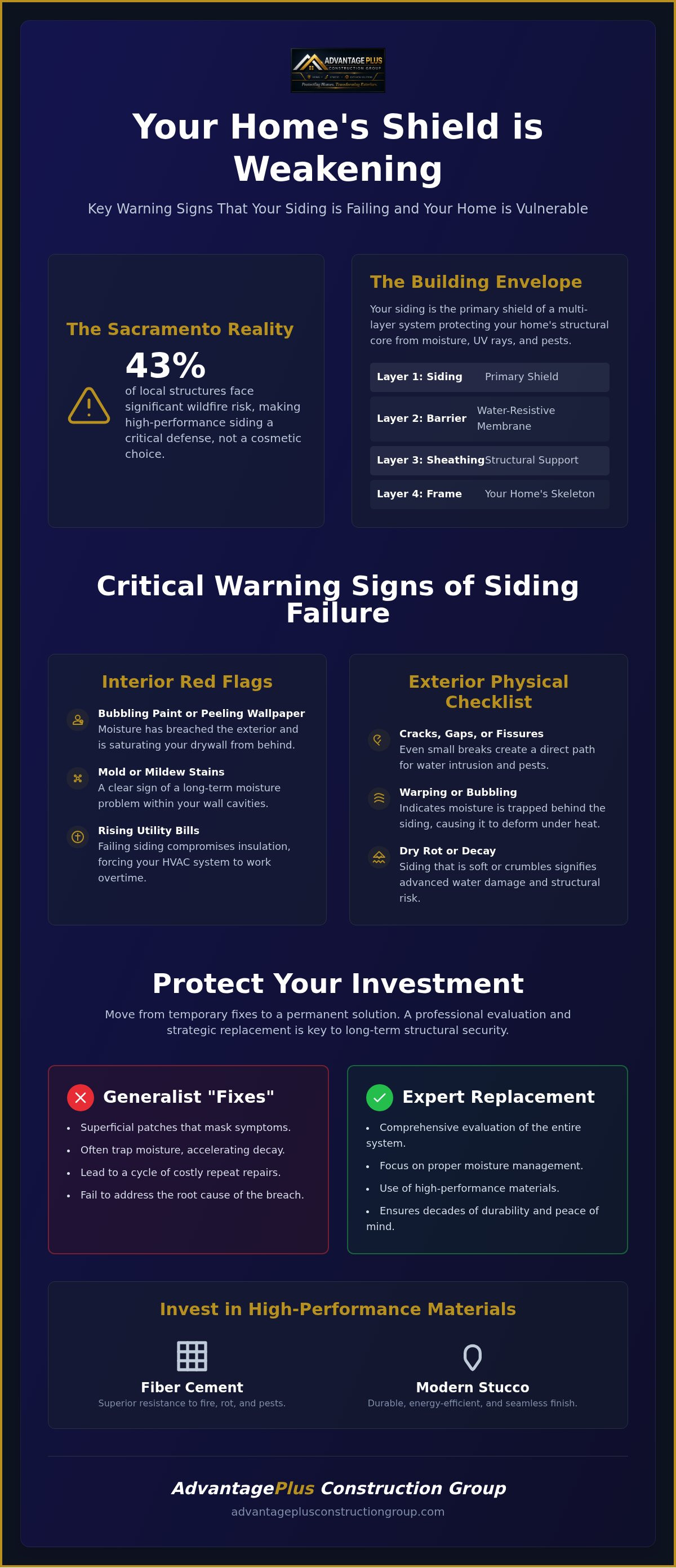
Nearly 43 percent of structures in the Sacramento area face a significant wildfire risk, yet many homeowners still view their exterior as a purely cosmetic choice. Your siding is your home's primary defense. It acts as a specialized shield against the relentless Valley sun, the risk of ignition, and the silent threat of moisture. If you have noticed peeling paint or rising utility bills, you're already sensing the vulnerability. Ignoring the early signs you need new siding on your home doesn't just hurt your curb appeal; it invites moisture, decay, and structural instability into your sanctuary.
We understand that property maintenance can feel like a cycle of anxiety. You want security, durability, and a home that reflects your high standards. This article provides a clear path forward by identifying critical warning signs before they lead to expensive structural repairs. We will examine the 2026 Sacramento Resilience Checklist, detailing how to evaluate moisture intrusion, energy efficiency, and compliance with the latest California Wildland-Urban Interface (WUI) Code. It is time to move from uncertainty to the peace of mind that comes with professional protection, disciplined maintenance, and expert craftsmanship.
Key Takeaways
- Understand the building envelope and why your siding serves as the critical first line of defense against Sacramento’s intense UV rays and seasonal rain.
- Learn how to identify interior warning signs, such as bubbling paint or mold, that indicate your exterior barrier has already been breached.
- Discover the seven physical signs you need new siding on your home, ranging from subtle fissures to significant warping that invites pest intrusion.
- Navigate Sacramento-specific threats like dry rot and heat-driven expansion cycles that compromise traditional materials over time.
- Explore the long-term benefits of transitioning to high-performance fiber cement or stucco systems for superior environmental resistance and structural security.
The Exterior Envelope: Why Siding is Your Home’s Primary Shield
The building envelope is the physical separator between your home’s conditioned interior and the unconditioned external environment. It is a complex system designed for defense, longevity, and thermal control. For homeowners in the Sacramento region, this system faces relentless pressure from intense UV radiation, heavy seasonal rains, and shifting thermal cycles. Siding serves as the outermost layer of this envelope, acting as your property’s primary shield. To understand the signs you need new siding on your home, one must first recognize that siding is a functional barrier, not just a cosmetic finish.
We approach every project with the mindset of a specialized guardian. Your home’s structural integrity depends on a disciplined approach to moisture management. Prevention is always more affordable than remediation. When siding begins to fail, the entire building envelope becomes vulnerable to moisture intrusion, leading to the silent threat of dry rot. A high-performance exterior protects your investment, secures your family, and preserves the value of your property. It's about doing it right the first time to ensure peace of mind for decades.
The Anatomy of a High-Performance Exterior
A resilient exterior is more than skin deep. It is a multi-layered system where each component plays a vital role. Beneath the visible siding lies the water-resistive barrier, specialized flashing, and structural sheathing. These layers must work in harmony to repel liquid water while allowing water vapor to escape. A breach in the outer layer compromises the entire structural core. Precision installation is the only way to maintain this shield. We focus on the technical nuances of moisture management to ensure that every corner, seam, and transition is sealed against the elements. A disciplined installation process transforms standard materials into a permanent defense system.
Why Generalist Fixes Often Fail
Many homeowners turn to general contractors for quick fixes, but "handyman" patches often do more harm than good. These superficial repairs often trap moisture behind the siding, accelerating the decay of the wood frame beneath. We advocate for a comprehensive evaluation when you notice the early signs you need new siding on your home. A specialized expert understands how to diagnose the root cause of failure rather than just masking the symptoms. By prioritizing the long-term health of the structure, we eliminate the need for constant repainting and frustrating temporary repairs. The building envelope is a home’s primary defense against environmental decay.
Interior Red Flags: How Your Home’s Inside Reveals Outside Failures
Your home often communicates its distress from the inside out. While we frequently focus on the curb appeal of a property, the interior walls provide a direct diagnostic report on the health of your building envelope. If you are searching for signs you need new siding on your home, look past the exterior aesthetics. Bubbling paint or peeling wallpaper are rarely just signs of an aging interior. These symptoms often indicate that moisture has bypassed your primary shield and is now saturating the drywall from within. When the exterior barrier fails, the structural core of your home is no longer protected from Sacramento’s seasonal elements.
Environmental resistance is the hallmark of a high-performance home. When this resistance breaks down, you may notice mold or mildew appearing on interior walls, particularly near the ceiling or floor. These dark spots are more than a cleaning chore. They represent a breach in the moisture management system. You might also feel sudden "cold spots" or drafts during a winter storm. These temperature fluctuations suggest that your siding is no longer providing the thermal seal necessary to maintain a stable environment. Rising utility bills often follow these symptoms, as your HVAC system works harder to compensate for the loss of insulation. Identifying the signs you need new siding on your home early can prevent these minor inconveniences from becoming major structural liabilities.
The Hidden Danger of Wall Cavity Moisture
Water is a persistent force. When it travels behind failing siding, it often settles against the OSB or plywood sheathing. This leads to the silent, destructive progression of dry rot. Interior mold is frequently the final stage of a long-term exterior leak that has gone unnoticed for years. We encourage homeowners to check the dark corners of closets and behind furniture for damp smells or unexplained staining. These subtle cues are the early warnings of a failing envelope. A professional assessment can reveal if these interior symptoms require a full envelope restoration. You can consult with our exterior specialists to ensure your home remains a secure, dry environment.
Energy Efficiency and the Envelope Breach
Gaps in your siding allow conditioned air to escape, creating a direct strain on your home’s efficiency. Modern fiber cement systems are designed to stabilize home temperatures by providing a consistent, durable barrier against the Sacramento heat. If you are noticing these efficiency drops, it is worth exploring how different materials perform in our local climate. See our Fiber Cement vs Vinyl Siding in Sacramento: The 2026 Durability Guide for a detailed performance breakdown. Investing in a specialized solution ensures that your home’s interior remains comfortable while your energy costs stay under control.
The Physical Checklist: 7 Visible Signs of Siding Deterioration
A visual inspection is the first step toward securing your home’s future. While interior damage reveals a breach, physical deterioration on the exterior marks the progression of structural vulnerability. Identifying the signs you need new siding on your home requires a disciplined eye for detail. Look for warping or buckling where panels no longer lay flush against the wall. This distortion indicates that the material has lost its structural memory, often due to moisture absorption or extreme heat cycles. When siding pulls away from the home, it creates gaps that invite water, wind, and debris to bypass your primary defense.
Cracking and fissures represent more than just age. In the Sacramento climate, even hairline fractures serve as entry points for invasive pests. Termites and carpenter ants exploit these small openings to reach the wooden sheathing beneath. If you find yourself repainting every few years just to keep the exterior looking presentable, the material itself is likely failing. A finish that won’t stick is a symptom of a substrate that can no longer hold a bond. Sacramento experiences an average of 269 sunny days per year; this relentless UV exposure eventually causes chemical breakdown in traditional materials, leading to significant fading and loss of material integrity.
Surface Level Failures and Their Meaning
Surface issues often provide the earliest warnings of a terminal decline. Run your hand across the siding; if a powdery residue remains on your fingers, you are witnessing "chalking." This oxidation indicates that the protective resins are disintegrating. Bubbling is another critical red flag, suggesting that moisture is trapped within the siding material itself rather than just behind it. During a Delta Breeze or a winter wind event, loose or missing panels signal that the fastening system has failed. These are not isolated incidents but clear indicators of a system-wide collapse that requires specialized attention.
The Maintenance Trap: When Repairs Are No Longer Enough
Many homeowners fall into the cycle of constant repair, yet there is a clear tipping point where annual costs exceed the value of a full replacement. Recurring maintenance is often a mask for terminal material failure. Choosing a long-term solution like fiber cement offers a transition from the frustration of constant upkeep to the peace of mind of permanent protection. It provides the stability, protection, and permanence your property deserves. When you move beyond temporary patches, you invest in a shield that stands firm against the elements, ensuring your home remains a secure sanctuary for decades to come.
Sacramento-Specific Risks: Dry Rot, Heat Cycles, and Pest Intrusion
Sacramento’s climate is a study in extremes. The combination of triple-digit summer heat and the cooling influence of the "Delta Breeze" creates a constant, aggressive cycle of expansion and contraction. This movement tests the limits of traditional building materials, often leading to premature failure. If you are noticing the signs you need new siding on your home, you are likely witnessing the result of this environmental fatigue. In our region, siding failure is rarely just about age. It is a consequence of thermal stress, moisture entrapment, and the unique biological pressures of the Central Valley.
Stucco cracks are a common sight in local neighborhoods, yet they are often dismissed as simple "settling." In the Sacramento valley, these fissures are frequently more sinister. They represent a break in the building envelope that allows moisture to seep into the wall cavity. Once water enters, it becomes trapped, creating a breeding ground for wood-destroying organisms. This vulnerability is further exploited by Central Valley pests like termites and carpenter ants. These insects don't just live in the wood; they consume the structural security of your property from the inside out.
The Dry Rot Epidemic in the Central Valley
In areas like Roseville and Rocklin, we frequently encounter the devastating effects of dry rot, specifically the fungus Serpula lacrymans. This particular strain is notorious for its ability to transport moisture and spread through masonry, making it a terminal threat to wooden frames. When moisture is trapped by poor siding choices or aging stucco, it triggers a decay process that can go unnoticed until structural remediation is required. Addressing this epidemic requires the expertise of a specialized exterior envelope contractor Sacramento who understands how to design a system that breathes. We prioritize fiber cement systems because they are naturally immune to the rot that destroys wood and engineered wood products.
Thermal Stress and Material Fatigue
The intense sun exposure in Granite Bay, Loomis, and Citrus Heights is particularly unforgiving. When temperatures soar during our 100-degree summers, standard vinyl siding is prone to warping, buckling, and gapping. This is especially true for dark-colored panels on south or west-facing walls. Wood siding often responds to this heat by cracking and losing its protective seal. We advocate for materials with low thermal expansion rates that maintain their shape and integrity regardless of the temperature. A disciplined approach to material selection ensures your home remains a permanent fortress against the sun. To secure your home against these regional threats, schedule a comprehensive envelope assessment with Advantage Plus Construction Group today.
Strategic Replacement: Investing in Long-Term Structural Security
Once you recognize the signs you need new siding on your home, the focus must shift from observation to action. A strategic replacement is more than a cosmetic upgrade; it is a fundamental investment in the long-term structural security of your property. In the Sacramento market, resale readiness often hinges on the integrity of the exterior envelope. Buyers are increasingly sophisticated, looking past fresh paint to find the underlying health of the structure. By choosing a high-performance system, you eliminate the anxiety of hidden decay while significantly increasing your home’s market value.
Advantage Plus Construction Group positions itself as your protective advisor. Our role is to guide you through the transition from a vulnerable exterior to a permanent defense. This requires more than just labor; it demands specialized project management, technical oversight, and rigorous attention to detail. A successful renovation ensures that every layer of the building envelope is optimized for performance. It is about craftsmanship, longevity, and professional standards. When you invest in a comprehensive solution, you are securing your home against the environmental pressures of the Central Valley for the next generation.
Choosing the Right Shield: Fiber Cement vs. Stucco
Sacramento homeowners typically choose between two premium paths: fiber cement siding and professional stucco systems. Both offer exceptional durability and low-maintenance longevity. Fiber cement provides the classic aesthetic of wood without the susceptibility to rot, warping, or pests. Stucco offers a seamless, timeless finish with superior thermal mass properties that help stabilize interior temperatures. For a detailed breakdown of the financial implications of these choices, see our Cost of Stucco vs. Fiber Cement Siding in Sacramento: 2026 Investment Guide. Choosing the right material is the first step in creating a resilient shield that stands firm for decades.
The Advantage Plus Construction Group Process: Beyond Installation
Advantage Plus Construction Group acts as a specialized guardian for your home. Our process goes beyond simple installation to include comprehensive envelope management. We identify and remediate existing issues, such as moisture damage or dry rot, before the new shield is applied. This "do it right the first time" philosophy is essential for preventing future decay and ensuring a permanent bond. A generalist might cover up problems; we expose and solve them. We invite you to secure your home’s future with a professional evaluation. It is the most disciplined way to ensure your property remains a source of pride, protection, and peace of mind.
Securing Your Home’s Future Against the Elements
Your home deserves a defense that matches the intensity of the Sacramento climate. We have explored how the building envelope functions as a critical shield and why interior symptoms, such as bubbling paint or damp smells, are often the final warning of an exterior breach. Recognizing the signs you need new siding on your home is the first step toward preventing the silent progression of dry rot and structural decay. It's about moving from reactive repairs to a strategy of permanent, disciplined protection.
As premium fiber cement and stucco specialists, we understand that true security requires more than just a surface level fix. It demands the oversight of specialized exterior envelope experts who prioritize moisture management and environmental resistance. We are proud to serve Roseville, Granite Bay, and the Greater Sacramento Area with a serious approach to craftsmanship and longevity. Protect your home with a specialized exterior evaluation from Advantage Plus. It is time to trade the anxiety of constant maintenance for the peace of mind that comes with a permanent, professional solution. Your property is your most significant investment; let's ensure it remains a secure sanctuary for years to come.
Frequently Asked Questions
How long does siding typically last in the Sacramento climate?
Siding lifespan varies based on material and exposure to the 269 sunny days we experience annually. Traditional wood or vinyl may show fatigue after 15 to 20 years. Premium fiber cement and stucco systems are engineered for the Sacramento heat; often lasting 30 to 50 years with proper maintenance. Investing in high-quality materials ensures your home remains a permanent fortress against the relentless Central Valley sun.
Can I just paint over my old siding if it looks faded?
Painting over faded siding is often a temporary cosmetic fix that ignores underlying structural issues. If the material is chalking or bubbling, the substrate has already begun to break down. Applying a new coat of paint won't restore the integrity of a failing barrier. We recommend a professional evaluation to determine if your exterior is still providing the necessary protection or if replacement is required.
What is dry rot, and how does new siding prevent it?
Dry rot is a form of fungal decay that consumes the structural timber of your home when moisture becomes trapped. Our exterior envelope services prevent this by creating a multi-layered defense system. We install a water-resistive barrier and precision flashing beneath your new siding to ensure moisture cannot reach the wooden frame. This specialized approach protects the core of your Roseville or Granite Bay property from environmental decay.
Is fiber cement siding worth the extra investment compared to vinyl?
Fiber cement offers superior environmental resistance and fire safety compared to standard vinyl. In 2026, many Sacramento homes must meet strict Wildland-Urban Interface (WUI) codes that favor non-combustible materials. Unlike vinyl, fiber cement won't warp or melt during our 100-degree summers. It provides a sense of security and a premium aesthetic that significantly enhances your property's long-term value and structural integrity while requiring far less maintenance.
How do I know if I need a full replacement or just a small repair?
Determining the scope of work requires a technical assessment of your home’s building envelope. If damage is limited to a single, isolated area, a repair may be sufficient. However, if you observe systemic signs you need new siding on your home, such as widespread warping or interior moisture spots, a full replacement is necessary. A comprehensive solution addresses the root cause of failure rather than masking visible symptoms.
What happens if I ignore the cracks in my home’s stucco?
Ignoring stucco cracks in the Sacramento valley often leads to expensive structural remediation. These fissures allow rainwater to bypass the exterior finish and saturate the OSB or plywood sheathing. This moisture entrapment accelerates the growth of dry rot and invites pest intrusion. Addressing these gaps early preserves the health of your home's frame and prevents a minor cosmetic flaw from becoming a major structural security breach.
How long does the siding replacement process take for a standard home?
A standard siding replacement project typically takes between ten days and three weeks to complete. The duration depends on the size of your home, the chosen material, and any necessary structural repairs identified during the teardown phase. We prioritize specialized project management to ensure the process is methodical and unhurried. This disciplined timeline allows our craftsmen to focus on the technical nuances that ensure a permanent, high-quality installation.
Does new siding really help lower my monthly energy bills?
New siding restores the thermal efficiency of your building envelope; directly reducing the strain on your HVAC system. By eliminating drafts and gaps, modern materials help maintain a stable interior temperature during Sacramento’s intense heat cycles. Homeowners often notice a decrease in monthly utility costs after upgrading to premium fiber cement or stucco. It is a practical way to combine enhanced protection with long-term financial benefits.


