

A small stucco crack can be more than a surface flaw: water may enter around wall details, including where a patio cover or awning meets the house, and damage can stay hidden. In Loomis, check stucco periodically, especially after heavy rain, and take signs of moisture seriously.
Advantage Plus Construction Group serves Sacramento, Placer, and El Dorado counties, including Loomis, Roseville, Granite Bay, New Castle, Rocklin, Penryn, Citrus Heights, Orangevale, Fair Oaks, Carmichael, Antelope, Sacramento, Auburn, Folsom, and El Dorado Hills. The company specializes in stucco systems, stucco repairs, and exterior-envelope work.
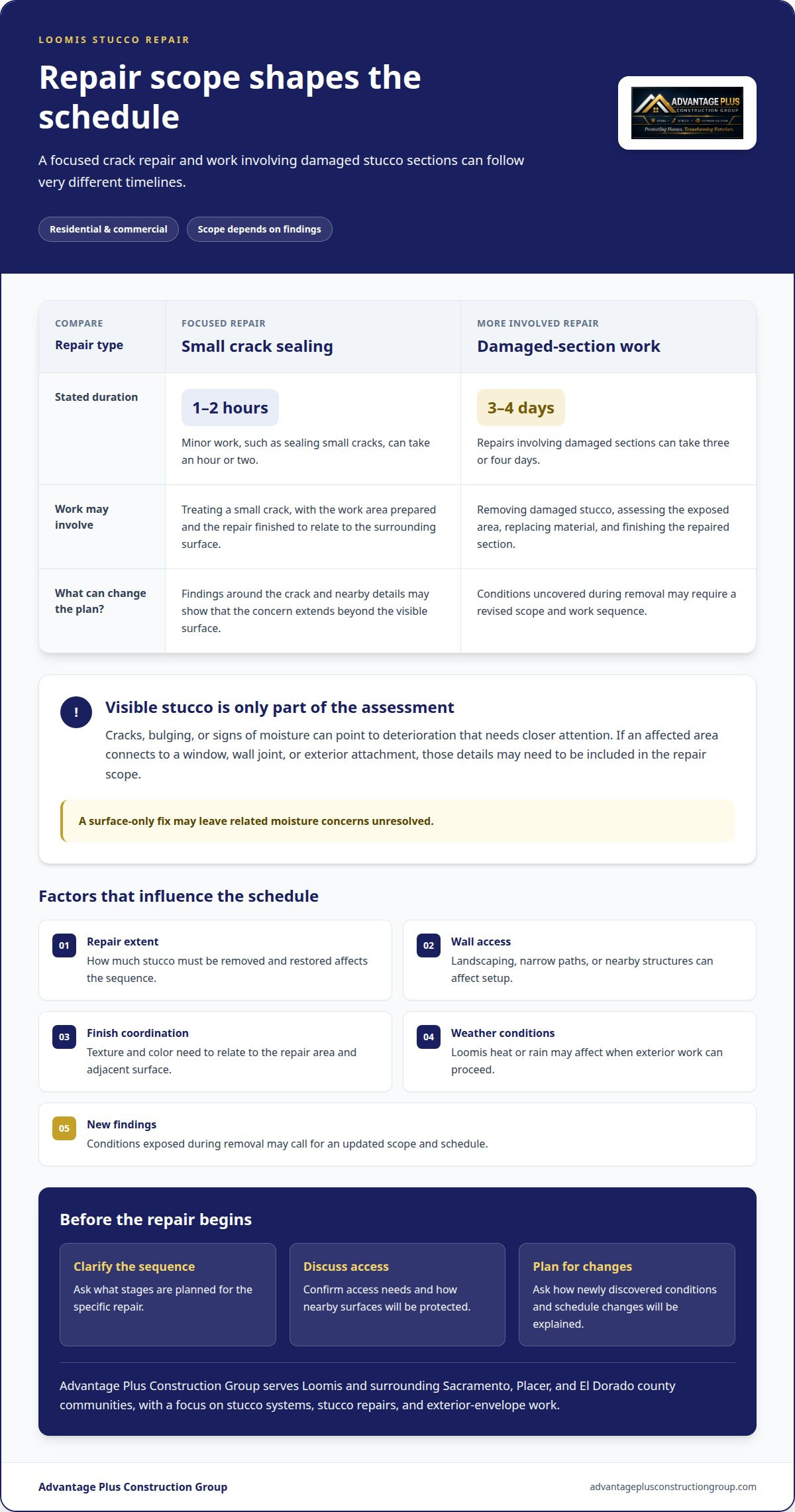
This article explains what to look for during inspections, how possible moisture damage may show up, and what can affect repair timelines. Minor work, such as sealing small cracks, can take an hour or two; repairs involving damaged sections can take three or four days. You’ll also learn what to ask about estimates, warranties, and repairs that address the building envelope, not just the visible stucco.
Key Takeaways
- Have stucco evaluated when you notice changes that may indicate developing issues.
- Cracks, bulging, and signs of moisture can point to deterioration that needs prompt professional attention.
- Repair timelines depend on the scope of damage, from small crack repairs to replacement of damaged sections.
- A thorough assessment considers possible water intrusion, the surrounding exterior details, and how repaired areas will blend with existing texture.
- Learn what to clarify in an estimate and warranty, and why repairs may need to address the full building envelope rather than the stucco surface alone.
Do you handle both residential and commercial projects?
Stucco repair work can apply to residential and commercial properties. The right project scope depends on the building, damaged areas, and existing stucco system. At a home, for example, the work may involve a crack beside a window. At a commercial property, an assessment may cover a larger wall section or several affected elevations. These examples illustrate possible scopes, not completed projects.
Relevant experience matters most when it relates to the property and repair being considered. Ask about comparable work and what each project involved. Useful details include the original condition, areas repaired, whether damaged sections were replaced, and how the finish was blended. A clear explanation should identify the contractor’s role and the work involved, rather than relying on broad claims of experience.
Local contractor listings can help Loomis property owners identify stucco businesses serving the area. The average homeowner rating shown for listed Loomis stucco services is 4.3. Reviews include posts from January 2026 and May 2025. Treat ratings as one reference point; read comments for specific information about project communication, repair scope, and finished work. A review cannot establish how a contractor would assess a different building.
Traditional stucco contractors should explain how a proposed repair relates to the existing material and finish. For example, a small patch, replacement of a damaged section, and broader refinishing involve different scopes. The contractor’s written description should identify which areas the work covers. Information about stucco systems and repair work can also help clarify the terminology used in a project proposal.
Permit requirements depend on the proposed work and applicable local rules. Before work starts, establish whether the specific repair requires a permit and who will handle the process. Do not assume every stucco patch has identical requirements.
When evaluating a California contractor, request the business’s license information and current proof of insurance. Use the California Contractors State License Board’s official lookup to review license status. Make sure the insurance documentation identifies the business performing the work.
For Loomis homes, a suitable finish should complement the existing stucco and account for the wall’s exposure to hot summers and occasional heavy rain. The repair plan should identify the materials and finish approach, then explain how the repaired area will relate to surrounding surfaces. Matching the existing texture and color helps maintain a consistent exterior appearance.
For a home repair or commercial property project, consider relevant examples, clear documentation, and an explanation of the proposed work. These details help you assess whether the contractor’s experience matches the building and stucco conditions.
How long do stucco repairs take?
The schedule depends on the findings, the amount of stucco needing attention, and whether the repair extends beyond the finish. A crack on one wall and deterioration across several connected areas require different scopes. In Loomis, the planned work sequence should be explained before scheduling, so you understand what affects the start, progress, and completion of your repair.
A professional repair generally moves through defined stages. First, the work area is prepared and the stucco needing attention is identified. If damaged material must be removed, the exposed area is assessed before replacement work proceeds. The repair is then completed and finished to relate to the surrounding surface. Each stage may change if the condition behind the visible stucco differs from what the initial review showed.
Cracking and bulging can affect the work in different ways. A narrow crack may call for focused treatment, while bulging can indicate separation that needs closer assessment and more extensive work. If the affected section connects to a window, wall joint, or exterior attachment, those details may need to be included in the repair scope. Addressing visible deterioration without considering related moisture concerns can leave important work unresolved.
Several practical factors shape the work plan:
- Repair extent: The amount of stucco removed and restored affects the sequence.
- Wall access: Landscaping, narrow paths, or nearby structures can affect setup.
- Finish coordination: Texture and color work must fit the repair area and adjacent surface.
- Weather conditions: Loomis heat or rain may affect when exterior work can proceed.
- New findings: Conditions exposed during removal may require a revised scope.
For example, a repair beside an accessible exterior wall may be scheduled differently from work behind dense landscaping. If removal reveals additional deterioration, the contractor should explain how that changes the planned sequence. Clear communication about revised work helps property owners understand the reason for schedule changes rather than treating every delay as unexplained.
Before work begins, clarify the expected sequence, access needs, and how changes will be communicated. Ask how nearby surfaces will be protected and the work area kept orderly at each stage. These practical details help homeowners and commercial property managers plan around exterior repairs without assuming every stucco project follows the same schedule. For business owners and remote professionals needing uninterrupted workspace during disruptive exterior work, citizensbusinesscenter.com provides flexible office suites in the Sacramento area.
For a Loomis property with cracking, bulging, or possible moisture concerns, a professional assessment can define the work scope and its likely sequence. You can explore stucco repair options and consider the next step for your exterior.
How does a contractor determine if there’s water behind my stucco?
A professional looks beyond the visible stain or crack. The inspection connects damage patterns with nearby openings, joints, and exterior attachments. For example, a leak below an awning may relate to the point where it meets the wall. Water entering at that connection can leave damage hidden behind the stucco surface.
The assessment starts with a close visual review of the affected wall. The contractor notes cracking, bulging, discoloration, loose material, and the condition of nearby trim. They also examine windows, doors, penetrations, and transitions between materials. A stain beneath a window gives the inspection a location to investigate, but the stain alone does not establish where water entered.
Moisture checks help determine whether the concern extends beyond the finish. Depending on visible conditions, a professional may use a moisture meter or recommend opening a limited area for direct inspection. The findings guide the repair scope: a surface patch may address isolated stucco damage, while deterioration behind the finish calls for broader work. The goal is to identify the likely path of water and address affected materials, not simply conceal the mark.
Before stucco leak repair begins, the contractor should explain the inspection findings and how the proposed work responds. A clear repair scope identifies the affected section, related wall details, and how the surface will be restored. If patio-cover or awning attachments are involved, those junctions deserve attention because leaks there can contribute to hidden wall damage and dry rot.
Texture and color matching require a separate finishing assessment. Stucco texture varies with the original application and the material’s age. The contractor compares the repair area with the surrounding wall, then works to reproduce the pattern and blend its edges. A smooth patch against a textured finish can remain conspicuous, even when both surfaces use similar colors.
Color matching also takes exposure into account. Existing stucco may have weathered or faded, and a repair can look different in direct sun than in shade. The professional considers the wall’s current appearance and may extend finish blending to a natural break, such as a corner or trim edge. Exact invisibility is not a realistic standard for every aged surface; careful matching aims for a consistent overall appearance.
For Loomis properties, a thorough evaluation links the suspected entry point, moisture evidence, repair method, and finish plan. A professional exterior assessment can help clarify whether the issue is limited to the stucco surface or involves the surrounding wall details.
Free estimates and warranties
A useful estimate turns a visible stucco concern into a defined repair scope. For a Loomis property, the on-site review should identify affected areas, visible damage, and relevant wall details. A written quote should explain the proposed work and distinguish surface repairs from work involving damaged sections. That clarity helps homeowners understand what the project includes before deciding.
A free, no-obligation on-site estimate provides an opportunity to assess the actual exterior instead of relying only on a brief description. Photographs can help explain the concern, but an in-person review lets the estimator examine access, surrounding finishes, and the extent of visible deterioration. A detailed written quote is typically provided within 48 hours. The estimate should make the proposed scope understandable, including what areas are addressed and how the repair will be finished.
Several project details shape the estimate:
- Repair area: A small isolated patch differs from replacing a larger damaged stucco section.
- Surface condition: Cracking, loose material, or bulging can affect preparation and repair steps.
- Access: A wall behind landscaping or near an exterior attachment may require different work planning.
- Finish work: Texture and color blending influence how the repaired area relates to adjacent stucco.
A warranty deserves the same careful reading as the scope. Review what work is covered, which materials or workmanship the coverage applies to, and how the terms are provided. Manufacturer material warranties and workmanship warranties address different parts of a project. Coverage depends on the specific materials and work performed, so written documents should define the applicable terms rather than relying on a general verbal assurance.
For example, a repair quote might describe patching one cracked area, while a separate finding could require replacing deteriorated stucco. The estimate and warranty information should correspond to the agreed scope. If the scope changes during work, document the revised work and any related coverage. This keeps expectations aligned and gives property owners a clear record of the repair.
Before approving a proposal, review its description of the affected area, repair method, finish work, and warranty terms. Compare the written scope with the conditions discussed during the site visit. A complete estimate helps Loomis homeowners weigh the work based on protection, appearance, and documented responsibilities, not just a brief description of the repair.
Exterior building-envelope repairs
A stucco wall is one part of an exterior building envelope, the boundary separating indoor spaces from outdoor conditions. A crack may be the visible clue, while water enters elsewhere and travels behind the finish. In Loomis, a leak near a patio cover or awning attachment can contribute to hidden wall damage and dry rot. Repairing only the stained stucco may leave that connection unresolved.
A building-envelope assessment follows the path water could take rather than treating every mark as an isolated defect. The contractor considers the damaged area alongside nearby transitions, openings, and attachments. For example, a stain below a roofed patio connection calls for attention to both the stucco and the attachment point. A crack near a window makes the surrounding edge and adjacent finish relevant to the repair plan.
This broader view helps define the work in connected stages:
- Locate the evidence: Record stains, cracks, bulging, and deterioration on the exterior.
- Trace nearby details: Examine joints, openings, and attachments that meet the stucco.
- Set the repair scope: Identify affected materials and the exterior areas involved.
- Restore the finish: Complete the stucco repair after addressing the identified condition.
Those steps matter because the visible symptom and water entry point may differ. A damaged patch beneath an awning, for instance, does not prove the stucco surface caused the leak. The attachment and adjoining wall details also factor into the assessment. A repair plan should explain which areas need work and how the proposed scope responds to observed conditions.
Exterior details can interact. A wall connection, window edge, and patio-cover attachment may meet within a small area, yet each creates a transition in the building envelope. If a repair addresses only one spot, water may continue affecting another vulnerable detail. A complete evaluation considers these relationships without assuming every exterior stain has the same cause.
For Loomis properties, occasional heavy rain makes careful attention to water pathways especially relevant. The practical takeaway is simple: connect stucco damage to nearby exterior details before selecting a repair. That approach helps distinguish a surface-only patch from work that must address a larger section of the envelope.
If a leak appears near an exterior attachment or transition, arrange a professional assessment that includes the surrounding wall details. Request an exterior assessment to clarify the affected areas and develop a repair scope.
Advantage Plus Construction Group: Exterior Envelope Services
Advantage Plus Construction Group helps Loomis property owners address stucco damage and related exterior concerns through Exterior Envelope Services and siding and stucco repairs. Turn to the team when cracking, suspected moisture, or damage near an exterior connection calls for a professional assessment of the affected surfaces and surrounding details.
Depending on the condition of the building exterior, the work may involve Stucco Systems or Fiber Cement Siding. The appropriate scope depends on the materials already in place and the areas needing repair. A focused assessment can clarify the work involved and provide a detailed written estimate for consideration.
If you’re ready to discuss stucco or exterior-envelope concerns at your Loomis property, contact Advantage Plus Construction Group.
Choose a Clear Next Step for Your Loomis Property
Stucco concerns are easier to address when the next step is a focused assessment of the exterior and the areas needing attention. Whether you manage a business property or own a home, a defined repair plan can help you make informed decisions about appearance, moisture protection, and long-term upkeep.
Advantage Plus Construction Group provides Exterior Envelope Services, Stucco Systems, and Fiber Cement Siding. Its exterior-focused work connects stucco repairs with surrounding building details, helping property owners understand the scope before moving forward. If you’re considering stucco repair services in Loomis, describe the areas of concern and discuss a plan tailored to your property.
Start a conversation with Contact Advantage Plus Construction Group to discuss your exterior needs. A thoughtful next step can bring greater clarity to your repair decisions and help protect the property you value.
Frequently Asked Questions
How often should a professional inspect my stucco for damage?
Schedule a professional stucco inspection twice a year, in spring and fall. Seasonal inspections can identify cracks, bulging, or deterioration before defects worsen. Give particular attention to areas near windows, doors, and exterior attachments, where water may reach the wall. Properly installed and maintained stucco can last 50 to 100 years, so routine inspections support its long-term performance.
How can I get a quote for my upcoming project?
Request an on-site estimate and describe the areas that concern you, such as a cracked wall, loose finish, or suspected leak. Photos can help explain what you’ve noticed, while an in-person assessment lets the estimator examine the exterior. Advantage Plus Construction Group offers a free Exterior Consultation and a detailed written quote, with no obligation, so you can review the scope before deciding how to proceed.
Which stucco repair contractors serve Loomis, California?
Advantage Plus Construction Group serves Loomis with Stucco Systems and stucco repairs. Homeowners seeking stucco repair services in Loomis can consider whether a contractor’s experience matches the property and repair scope. Look for a clearly described approach to patching, damaged sections, and related exterior concerns. A written scope helps you understand the proposed work and how it addresses conditions at the property.
Where can I find customer reviews for stucco repair services near Loomis, CA?
Customer reviews can offer context about communication, project coordination, and how similar repairs were handled. When reading reviews of stucco repair services in Loomis, focus on specific comments about the work rather than relying on a rating alone. Reviews cannot establish how a contractor will approach your particular wall or moisture concern, so consider them alongside a discussion of the project scope and proposed repair plan.
How do I choose between stucco crack repair and full stucco replacement?
A localized crack may need a targeted repair, while widespread deterioration or damage behind the finish may call for broader replacement. The decision depends on the crack pattern, whether stucco is loose or bulging, the condition of nearby sections, and evidence of moisture. A professional inspection can distinguish an isolated surface issue from damage affecting a larger area of the wall.
What causes stucco damage in Loomis homes?
Stucco damage can result from water entering through cracks or exterior connections, including where patio covers and awnings meet a house. That intrusion can contribute to concealed wall damage or dry rot. Openings, joints, adjoining materials, and seasonal exposure also matter. A visible stain identifies an area of concern, while an inspection helps determine where water may be entering and what needs attention.
What should a stucco repair estimate and warranty explain?
A useful estimate identifies affected areas, proposed repair work, and finish treatment. Warranty documents should clearly describe the coverage that applies to completed work. Manufacturer material warranties and workmanship warranties address different aspects, so review the written terms rather than relying on a general description. Keep the estimate and warranty documents together as a record of the agreed scope and applicable coverage.
How long does stucco repair take, and what steps are involved?
Repair duration depends on whether the work involves a limited patch or replacement of damaged stucco sections. The professional process generally starts with an exterior assessment, followed by defining the scope and preparing the affected area. The repair is then completed and the finish blended with adjacent stucco. Access, underlying conditions, and the size of the damaged area shape the work plan.


