

The cost to repair a stucco chimney in Orangevale depends on more than the visible crack. Advantage Plus Construction Group serves Sacramento, Placer, and El Dorado counties, including Roseville, Granite Bay, Rocklin, Loomis, Citrus Heights, Fair Oaks, Carmichael, Antelope, Sacramento, Auburn, Folsom, and El Dorado Hills.
In Orangevale, hot summers and occasional heavy rain make it important to distinguish a surface defect from damage to materials beneath the stucco. Repair scope, chimney access, preparation, and finish work can all affect the estimate.
Advantage Plus Construction Group provides stucco repairs and exterior-focused work for homeowners assessing chimney damage. This article explains how location and labor conditions, damage severity, and repair area shape an estimate, and why a square-foot figure alone may not describe the full project.
Key Takeaways
- Assess the extent of the damage, including whether moisture has affected materials beneath the stucco.
- Consider chimney height and accessibility, since difficult access can increase labor needs.
- Use square-foot estimates as a starting point, not the full picture; repair scope and finish matching also affect the work.
- Compare written estimates by checking that each describes the repair area, materials, labor, and finish work.
- Learn how stucco repair specialists evaluate the chimney and plan a repair that addresses both appearance and exterior protection.
Geographic and labor cost differences
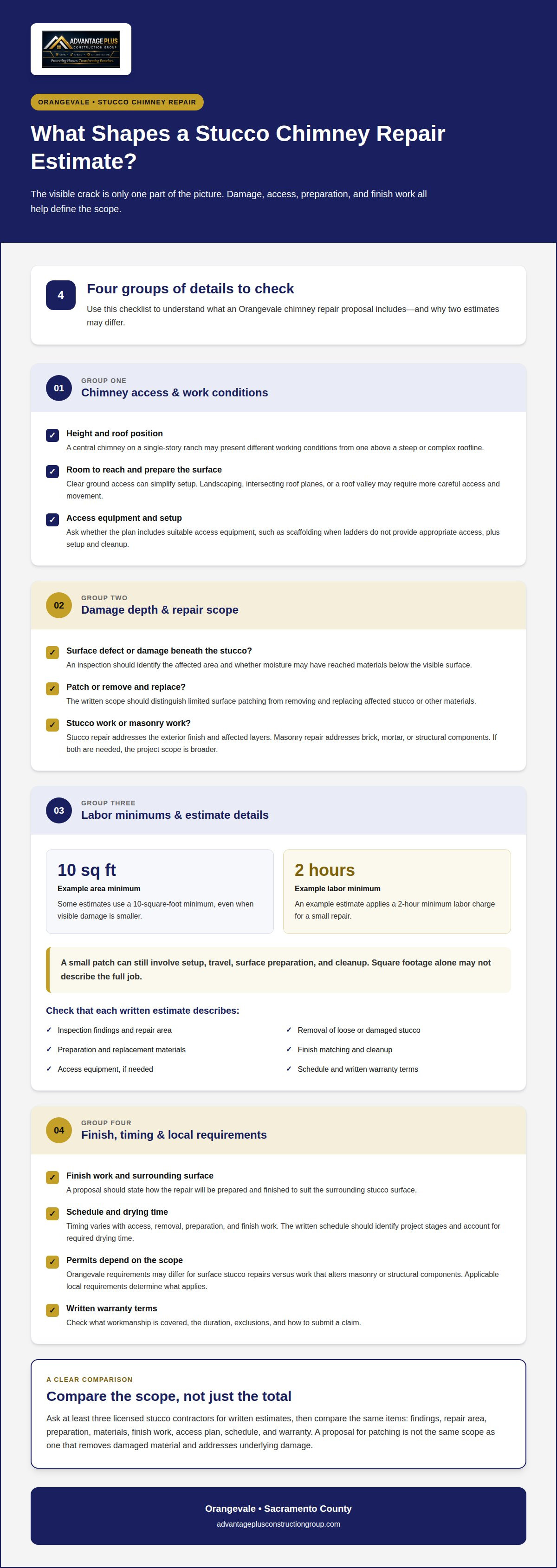
Labor conditions differ by location, even when chimney damage looks similar. In Orangevale, an estimate reflects the site, access, preparation, and time needed to complete the exterior work. A central chimney on a single-story ranch home presents different working conditions from one above a steep roofline. The visible repair area alone does not capture these differences.
Access shapes the work plan. A crew must safely reach the damaged surface, protect nearby areas, remove loose material, and prepare the repair for a sound finish. A chimney with a clear work area may need less setup than one blocked by landscaping or above a complex roof. Scaffolding may be needed when ladders do not provide suitable access, affecting how workers and materials move around the exterior.
Roof complexity adds another consideration. A low, uncomplicated roof is easier to access than one with intersecting planes, steep pitches, or few places to position equipment. For example, repairing a chimney near a roof valley may require more careful preparation than reaching one beside a broad, accessible roof section. The work area, not just the chimney’s height, affects labor planning and safe movement.
Minimum labor charges also matter for small repairs. Some estimates use a 10-square-foot minimum, while an example estimate applies a 2-hour minimum labor charge. These minimums help account for setup, travel, surface preparation, and cleanup when the visible damage covers only a small patch. A few cracks may therefore involve more work than the repair area suggests.
Compare the scope behind each estimate, not just the total. Review the access plan, surface preparation, repair area, finish work, and any scaffolding. One proposal may include setup and cleanup, while another describes only patching. Those are different scopes, even if both address the same chimney.
- Open access: A low chimney with clear ground access usually requires simpler preparation.
- Restricted access: A steep roof or crowded work area may require additional setup and careful movement.
- Small repair: A patch below the minimum area can still require the full setup process.
Orangevale’s hot summers and occasional heavy rain make exterior condition relevant to planning. The repair scope should account for the affected surface and the work needed to prepare it, rather than treating every crack as an isolated spot. A properly detailed stucco exterior system depends on sound preparation and a finish suited to the surrounding surface. Those details help explain why two chimneys in the same neighborhood can require different labor plans.
Stucco Repair Cost Factors: What Determines the Price?
An accurate estimate starts with an inspection, not a guess based on visible cracks. The contractor needs to identify the damaged stucco, define the repair area, and describe preparation and finish work. In Orangevale, the proposal should distinguish surface patching from removing and replacing affected material. A clear scope makes it easier to see what the project includes.
Masonry repair and stucco repair involve different work. Masonry repair addresses brick, mortar, or structural components; stucco repair addresses the exterior finish and any affected layers. Their costs are not comparable unless the work included is the same. A chimney needing both masonry and stucco work has a broader scope than one needing only a finish patch.
Ask for written estimates from at least three licensed stucco contractors, then compare the same details across each proposal. Check whether each includes inspection findings, the repair area, removing loose or damaged stucco, preparation, replacement materials, finish matching, cleanup, and any access equipment. If one estimate includes removing damaged material and another only describes patching, the totals represent different scopes. A clear estimate names those differences rather than leaving them implicit.
A professional assessment considers more than the surface. For example, staining near a chimney joint may warrant closer inspection before deciding on a repair method. The estimate should explain what was observed and how it shapes the planned work. Clear descriptions help distinguish a limited finish repair from work that also addresses damage beneath the stucco.
General contractor supervision can add overhead to a stucco project because management becomes part of the scope. That may include coordinating trades, scheduling work, and handling project administration. A direct stucco contractor’s estimate may present those responsibilities differently. Compare the listed tasks, not just the contractor’s title, and confirm that preparation, repairs, and finishing are clearly described.
Permit and inspection requirements for Orangevale chimney repairs depend on the scope. Surface stucco repairs may be treated differently from work that alters masonry or structural components. Applicable local requirements determine what applies to a particular project.
Repair time varies with access, removal, preparation, and finish work. The written schedule should identify the planned stages and account for any required drying time. A warranty should explain in writing what workmanship it covers, its duration, exclusions, and how to submit a claim.
For a sound comparison, use one scope: inspection findings, work included, schedule, and written warranty terms. Reviewing exterior project planning alongside those details can help clarify how repair scope fits into broader home protection.
Repair cost estimates by damage severity
Repair scope depends on the depth and spread of damage, from isolated surface defects to moisture-affected materials beneath the stucco. In Orangevale, the estimate should distinguish cosmetic patching from work that restores the underlying exterior.
Underlying Water Damage
Underlying water damage means moisture has passed through the stucco and affected materials behind it, such as lath, sheathing, or framing. Repair may involve removing damaged sections, addressing affected layers, and restoring the stucco finish, making it more involved than patching a visible crack.
Damage at the wall base deserves attention because water can collect where the exterior meets the ground or another surface. Staining, soft or bulging stucco, recurring cracks, and deteriorated material near the base can point to moisture concerns. These signs do not reveal the full extent on their own. An inspection helps determine whether damage reaches the framing or is limited to the finish.
Repair costs depend on the affected area, how far moisture has traveled, which materials need replacement, and the preparation and finish work involved. A quote based on the chimney’s condition and repair scope provides the project-specific figure.
A minor, localized defect may need only limited patching if the surrounding stucco and underlying layers remain sound. More extensive damage calls for a broader plan if removal exposes compromised sheathing or framing. The distinction matters: covering a stain without addressing its source can leave damaged materials in place and allow the problem to continue.
Flashing and Waterproofing Repairs
Flashing is installed at joints, including where a chimney meets the roof, to direct water away from vulnerable connections. Waterproofing repairs address how water enters or moves through those transitions. The required work depends on where the failure is and how extensive it is.
The cost of chimney flashing or waterproofing repair in Orangevale depends on access, the joint’s condition, and whether nearby stucco or underlying materials also need repair. A quote should identify the affected transition and clarify whether it covers flashing alone or related stucco restoration.
Water entering near the roofline can travel behind the exterior before damage becomes visible. Interior staining, damp areas, or recurring deterioration near a chimney joint warrant attention to the connection, not just the surface mark. Damage near the wall base points to a different location and may require a separate repair scope.
For a useful estimate, the inspection should connect each visible symptom to the proposed work. It should distinguish the moisture source, the materials to be removed or replaced, and the finish restoration. These details help homeowners understand whether the repair addresses the underlying condition or only its visible signs.
Factors affecting stucco repair prices
The repair method depends on the stucco system, damaged area, and finish required. A narrow crack in sound stucco differs from a loose section that needs removal. For an Orangevale chimney, the estimate should connect each visible defect to its repair scope. This clarifies the work and explains why similar-looking cracks may need different treatment.
Material compatibility matters. Traditional three-coat hard-coat stucco and synthetic stucco are different systems, so repair materials and methods should suit the existing exterior. A patch that does not match the original system may look different or fail to blend properly. Assessing the surface helps identify the system around the damaged area before work is planned.
Finish matching also affects the work. Stucco can have a distinct texture, color, or sheen, and a fresh patch may stand out against a weathered chimney. Matching a coarse texture, for example, calls for different finishing work than blending a smooth surface. The repair scope may include painting the repaired area when stucco work alone cannot match the existing finish.
- Repair area: A small isolated defect differs from damage spanning a wider chimney section.
- Removal: Loose or unsound stucco must be removed before a durable patch can be applied.
- Texture: A distinctive finish may require careful blending across the repair boundary.
- Paint: A repaired surface may need color blending to reduce visible contrast.
Cracks should be assessed by their pattern and surrounding condition, not appearance alone. A single hairline crack in a sound surface differs from multiple cracks with bulging or loose stucco. If a patch would leave a weak or mismatched edge, replacing the affected section may make more sense. A repair larger than about one square foot may be better handled as a whole-section replacement.
Preparation is another factor. The repairer must remove damaged material, create a suitable edge, and prepare the surface before applying new stucco. Patching over loose material can prevent a sound bond. Cracks extending into a weak section, for example, may require broader removal than a stable crack limited to the finish.
The written scope should describe the repair boundary, compatible materials, preparation, and finish. These details show whether the estimate covers visible cracks alone or the work needed to restore the affected surface. In Orangevale, a careful match helps preserve the chimney’s appearance while addressing its specific exterior condition.
Estimated stucco repair cost per square foot
A square-foot estimate can help compare repair scopes, but it cannot price every chimney consistently. Measured area is only one part of the calculation. Stucco type, access, removal, preparation, and finish work also shape the estimate. A small repair with difficult access may require more setup than a larger, straightforward one.
This broad range reflects differences in materials, damage, labor, and project conditions. These are general market estimates, not a project quote for an Orangevale chimney.
For a chimney, the surface area should reflect the actual repair boundary, not automatically the entire structure. The measured finished area includes openings within that boundary. A narrow patch and a repair spanning several faces therefore involve different quantities. The estimate should explain what was measured and which surfaces are included.
Area bands can help frame the amount of work without replacing a detailed scope. Small repairs covering 1-10 square feet, medium repairs covering 11-50 square feet, and larger repairs covering 51-200 square feet involve different quantities of material and finishing. A chimney repair may also include work outside the visible patch, depending on what removal reveals.
Labor is not always calculated by area alone. Setup, access, removing old stucco, and matching the surrounding texture all affect the work. A small repair requiring scaffolding and careful finish blending, for example, may need more preparation than its square footage suggests. A per-square-foot figure that leaves out these tasks can understate the scope.
Use a square-foot estimate as a comparison tool, not a guaranteed total. Check whether each estimate describes the same measured area, stucco system, removal, preparation, and finish. Ask how access and concealed damage discovered during the work are handled. These details help explain why estimates for the same chimney may differ.
- Confirm the area: Identify the repair surfaces and included openings.
- Review the system: Note whether the existing material is cement-based or synthetic.
- Compare the scope: Include removal, preparation, access, and finish work.
For a tailored scope based on the chimney’s measured area and condition, request a detailed exterior estimate.
Advantage Plus Construction Group: siding and stucco repairs
Advantage Plus Construction Group provides siding and stucco repairs for homeowners assessing chimney cracks, failing finishes, or signs of moisture damage. A clear repair scope distinguishes surface patching from work that may involve affected exterior materials. This supports decisions that consider both the chimney’s appearance and the home’s protection.
For Orangevale homeowners, a stucco assessment can clarify the damaged area, preparation needs, and finish work. Advantage Plus Construction Group also provides Stucco Systems and Exterior Envelope Services when a project extends beyond an isolated patch. The right scope depends on the chimney’s condition and the surrounding exterior.
For a repair estimate tailored to your home, contact Advantage Plus Construction Group.
Plan the Right Repair for Your Orangevale Home
The next step is to turn the visible chimney concern into a defined repair scope. A project-specific estimate for the cost to repair a stucco chimney in Orangevale can help you decide how to protect the exterior and address the condition you see, rather than treating a square-foot figure as the whole answer.
If the inspection points beyond an isolated chimney patch, Advantage Plus Construction Group offers Stucco Systems, Fiber Cement Siding, and Exterior Envelope Services. These options can help address connected exterior needs while keeping moisture protection, durability, and curb appeal in view. Advantage Plus Construction Group serves Sacramento County, Placer County, El Dorado County, and surrounding Northern California communities, including Orangevale.
Move forward with a clear understanding of the work your home needs. Request a free, no-obligation estimate from Advantage Plus Construction Group to discuss your exterior repair. A well-planned next step can bring greater confidence to caring for your home.
Frequently Asked Questions
What is the average cost to repair a stucco chimney in Orangevale, California?
There is no average that can predict the price for every Orangevale chimney. The amount depends on the repair scope and the chimney’s condition. A project estimate should reflect the work required at the property, not a broad national figure. Advantage Plus Construction Group offers free, no-obligation on-site estimates for homeowners considering stucco repairs.
What factors affect the cost of stucco chimney repair, such as damage size and access?
Repair costs depend on the affected area, stucco system, access, and finish requirements. A chimney with damage across several faces, for example, has a different scope from one with a localized defect. The proposed work may also change if an inspection reveals damage beneath the visible surface. A written estimate should describe the property’s conditions so you can understand what the scope covers.
How can I get accurate chimney stucco repair estimates from Orangevale contractors?
Arrange an on-site assessment and request a written scope based on the chimney’s condition. Ask the estimate to identify the surfaces, materials, preparation, finish work, and any related work such as flashing. Comparing proposals with these details in view helps show whether they cover equivalent work. Advantage Plus Construction Group provides free, no-obligation on-site estimates for homeowners in Orangevale.
How often should I inspect a stucco chimney?
Rather than relying on a fixed twice-a-year inspection schedule, check the chimney when you notice possible changes such as new cracking, staining, loose finish, or deterioration around joints. In Orangevale, checking after heavy rain can also help you spot visible changes on the exterior. A visual check does not replace a professional assessment when damage appears to be spreading.
What temperatures are suitable for stucco repair?
A fixed range such as 40°F-100°F should not be treated as a universal guideline for stucco repair. Ask the contractor to account for the repair materials and conditions during application and finishing. In Orangevale, hot summer weather can affect scheduling, so the forecast matters alongside access and repair scope.
How long does stucco chimney repair take, and what warranty should contractors provide?
Repair time varies with access, removal, preparation, and finish work. Ask for a written schedule identifying the work stages and any required drying time. The written warranty should explain what workmanship it covers, its duration, exclusions, and how to submit a claim.


