
Your home's siding is its primary shield. A single mistake during installation isn't just a cosmetic flaw. It's a breach in your property's defense system that can lead to decades of structural decay. You likely want to save on labor costs and take pride in your home's upkeep. It's a natural instinct for any homeowner looking to maximize their investment while maintaining a beautiful exterior. However, the technical demands of fiber cement are unforgiving. This guide will help you navigate the high-stakes choice of DIY vs professional fiber cement siding installation so you can protect your home's structural integrity and your 30-year warranty.
We will examine the specialized tools required, the strict OSHA safety standards for 2026, and the technical benchmarks you must hit to ensure your home remains dry and secure. You will gain a clear understanding of the difficulty level involved. We provide a framework to decide if you are truly prepared for this undertaking. Ultimately, you will see how professional installation provides the long-term security, technical precision, and peace of mind your property deserves. This perspective ensures your home remains a source of pride rather than a source of anxiety.
Key Takeaways
- Understand why fiber cement is a high-performance material that functions as your home's primary shield within a complex exterior envelope system.
- Identify the specialized tools and 2026 OSHA safety protocols required to mitigate critical health hazards like respirable silica dust.
- Learn how minor installation errors, such as improper flashing or misplaced nails, can void your 30-year manufacturer warranty and lead to hidden water damage.
- Use our 5-point self-assessment to weigh your technical skill and risk tolerance when deciding on DIY vs professional fiber cement siding installation.
- Discover how professional oversight ensures your property remains protected against environmental threats through disciplined moisture management and expert precision.
Beyond Aesthetics: Why Fiber Cement is a Specialized Installation
Fiber cement is a high-performance composite that demands a level of precision far beyond traditional materials. It blends cement, sand, and cellulose fibers to create a substrate that mimics the look of wood while offering the durability of masonry. Unlike vinyl, which is lightweight and flexible, or wood, which is susceptible to rot and pests, fiber cement provides a rigid and stable exterior. This rigidity is its greatest strength, yet it also presents a significant challenge for those weighing the choice of DIY vs professional fiber cement siding installation. This material is not just a cosmetic upgrade; it's a critical component of your home's structural health. It requires a disciplined approach to ensure the exterior remains a permanent shield rather than a temporary fix.
We view your home through the lens of a specialized guardian. This means prioritizing the long-term integrity of the structure over quick, superficial results. Professional reliability matters because fiber cement is unforgiving of mistakes. A single gap or a misplaced nail doesn't just look bad. It creates a path for moisture to penetrate the building's core. Choosing a specialist ensures that every technical nuance is addressed with the care your investment deserves.
The Weight of the Matter
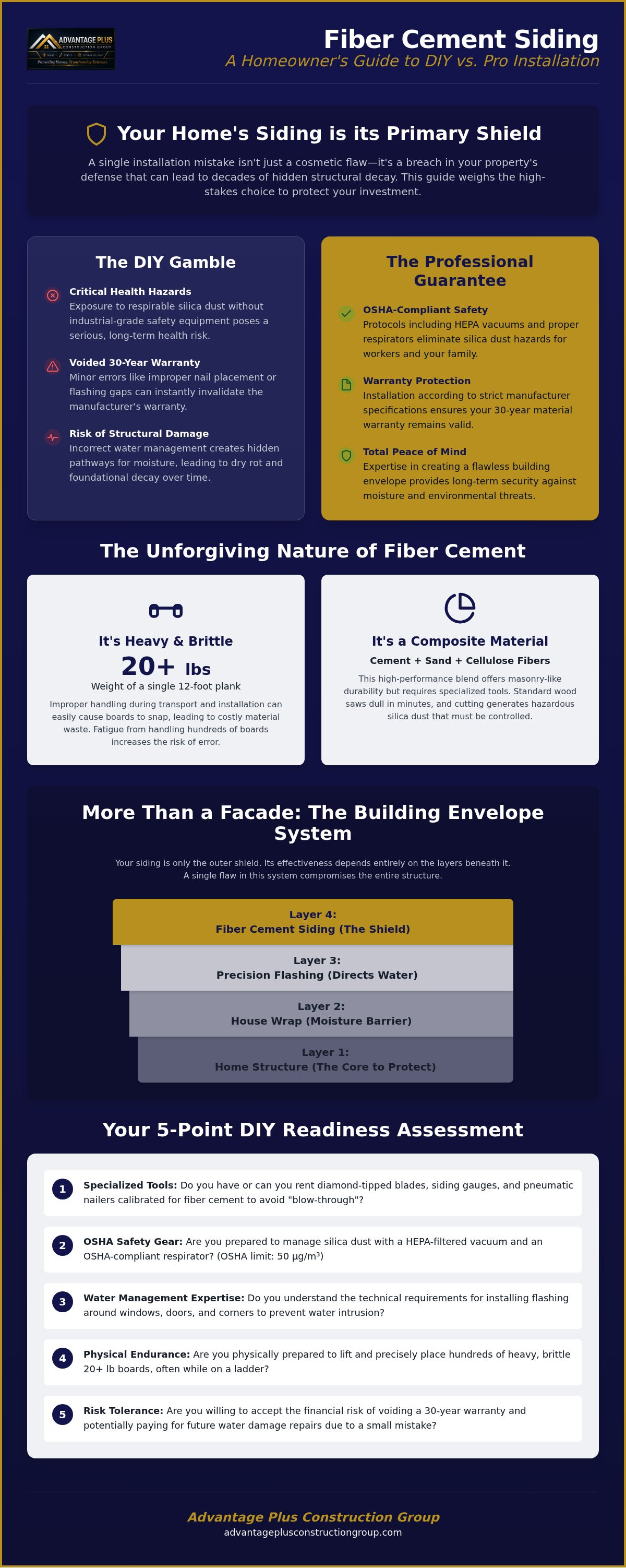
Fiber cement is heavy. At approximately 2.3 pounds per square foot, a single plank can weigh upwards of 20 pounds. This density makes the material incredibly durable once installed, but it also makes it brittle during transport and handling. If you carry a long board improperly, it can easily snap under its own weight. For a solo DIYer, the physical toll is immense. Handling hundreds of these boards over a multi-day project leads to fatigue. Fatigue leads to errors. A specialized team uses specific carrying techniques and equipment to prevent board breakage; they ensure every piece arrives on the wall in pristine condition. This physical discipline is essential for maintaining the quality of the material and the safety of the workspace.
The Building Envelope Philosophy
Your siding is the primary shield, but it's only one part of a multi-layered defense system. Beneath the Fiber cement siding boards lie critical components like high-grade house wrap, precision flashing, and drainage planes. These layers work together to manage moisture and prevent dry rot. This is the "Building Envelope" philosophy. If the flashing around a window is off by even a fraction of an inch, water will find its way behind the boards. This is why many homeowners choose an exterior envelope contractor Sacramento residents trust for their expertise. They understand that the siding is only as effective as the moisture barrier behind it. Doing it right the first time protects your home's skeleton from the inside out; it provides the peace of mind that comes from high-quality protection.
The DIY Reality Check: Specialized Tools and Health Hazards
Embarking on a siding project requires more than standard carpentry skills. It demands a specialized toolkit and a rigorous commitment to safety. When weighing DIY vs professional fiber cement siding installation, homeowners often underestimate the technical barrier to entry. This isn't a project where you can "make do" with what's in your garage. Standard wood saws will dull within minutes. Improper handling leads to costly material waste. The learning curve is steep. You'll likely encounter "blow-through" where nails penetrate too deeply, or loose boards that rattle in the wind. These errors compromise the very protection you're trying to build. A disciplined approach is the only way to ensure your home's exterior remains a permanent shield.
The Silica Dust Factor
Cutting fiber cement generates respirable crystalline silica. This is a significant health hazard that requires serious attention. OSHA has established a permissible exposure limit of 50 micrograms per cubic meter of air over an 8-hour period. Professionals mitigate this risk through disciplined protocols. They use HEPA-filtered dust collection systems, specialized polycrystalline diamond-tipped blades, and OSHA-compliant respiratory protection. A DIYer often lacks these industrial-grade defenses. Dust doesn't just vanish. It settles on your lawn, your driveway, and your porch. Proper site cleanup is essential to protect your family and pets from inhaling these fine particles. Our teams prioritize this environmental safety; we ensure your home remains a sanctuary throughout the construction process.
Specialized Tool Investment
The financial reality of a DIY project often shifts once you calculate the tool budget. To do the job right, you need more than a hammer and a level. You'll require a specific set of high-performance equipment:
- Fiber cement shears for clean, dust-free cuts.
- Specialized circular saws with integrated dust ports.
- Pneumatic nailers calibrated for the specific density of the boards.
Buying these professional-grade tools represents a heavy upfront cost for a one-time project. Renting them is an option, but the "opportunity cost" of extended rental periods during a slow DIY pace quickly erodes any perceived savings. A professional brings these assets to the job site as a standard part of their service. This includes expert material procurement, waste management, and technical precision. If you're feeling overwhelmed by the technical requirements, you might prefer to partner with a specialized exterior expert who handles these complexities for you. We take the weight of responsibility off your shoulders; we deliver a finished product that stands the test of time.
The Invisible Risks: Warranties, Flashing, and Water Management
A home can look flawless from the sidewalk while its structural integrity slowly erodes from within. This is the central risk of DIY vs professional fiber cement siding installation. While the physical boards are designed to last for decades, their performance is entirely dependent on the invisible work behind them. A single misplaced nail or an overlooked flashing detail doesn't just create a cosmetic flaw. It creates a breach in your home's primary shield. Professional installation provides three essential layers of security: technical precision, warranty protection, and long-term structural health. Without these, your investment remains vulnerable to the elements.
Warranty Compliance Requirements
Manufacturer warranties are often the most misunderstood part of a siding project. James Hardie offers a 30-year limited warranty, but it's strictly contingent on following their exact installation instructions. This includes specific requirements for gap spacing, joint treatment, and fastener depth. "Close enough" is a recipe for a denied claim. If an inspector finds that nails were over-driven or that the required clearance from hard surfaces wasn't maintained, the warranty is voided instantly. Partnering with trusted siding contractors Sacramento homeowners depend on ensures that every technical benchmark is met. We take pride in our discipline. We ensure that your 30-year protection remains legally and structurally sound.
The Science of Flashing
Flashing is the most frequent site of DIY failure. It's a complex science that manages water at every penetration in the building envelope. Windows, doors, and roof intersections require specialized metalwork to divert water away from the structure. Kick-out flashing is particularly critical in our region to prevent water from entering the wall cavity where a roof meets a vertical wall. When flashing is handled improperly, moisture becomes trapped. This leads to dry rot and mold that can go unnoticed for years. Understanding the signs you need new siding on your home often reveals that the problem isn't the siding itself, but the failed water management system behind it. Professional oversight ensures that every seal is permanent and every drainage plane is functional. It's the difference between a temporary upgrade and a lifetime of security.
Evaluating Your Capacity: DIY vs. Specialist
Deciding between DIY vs professional fiber cement siding installation requires more than a simple cost-benefit analysis. It demands an objective audit of your own capacity to act as the guardian of your home's structural integrity. This isn't a project where "good enough" suffices; it's a multi-layered technical challenge that impacts your property's longevity. Before you strip the first board from your exterior, consider this 5-point self-assessment of your resources, skills, and risk tolerance:
- Time: Are you prepared to dedicate 150 to 200 hours of manual labor over several months?
- Tools: Do you own the specialized shears, diamond-tipped saws, and pneumatic nailers required for this specific substrate?
- Physicality: Can you safely maneuver 20-pound boards while perched on high-reach scaffolding for hours at a time?
- Technical Skill: Do you understand the physics of drainage planes, moisture barriers, and thermal expansion?
- Risk Tolerance: Is the potential for a voided 30-year warranty worth the perceived labor savings?
A mistake in any of these areas doesn't just cost money. It costs peace of mind. While the physical durability of the boards is unquestioned, the technical execution determines whether those boards protect your home or trap moisture against its skeleton. If you find yourself hesitating on even one of these points, the specialized approach is likely the safer path for your investment.
The Sacramento Climate Factor
Roseville and Granite Bay experience intense thermal shifts that directly impact building materials. In the peak of a California summer, surface temperatures on dark-colored siding can soar. This causes significant expansion and contraction that fiber cement must be able to handle without buckling. Professionals calculate these tolerances with surgical precision; they ensure gaps are wide enough to prevent board damage but tight enough to maintain the building's seal. This local expertise is why many homeowners review our fiber cement vs vinyl siding Sacramento guide to understand the durability required for our valley climate. Even in dry summers, improper joint spacing can lead to winter dry rot when the rains finally return. We prioritize this environmental resistance to ensure your home remains a source of pride, not a source of maintenance anxiety.
The Timeline Reality
When assessing DIY vs professional fiber cement siding installation, consider the "exposure window." A professional crew typically finishes a standard home in five to seven days. A solo DIYer often takes three to four months of weekends to achieve the same result. During this extended timeline, your home's plywood sheathing remains exposed to UV rays, wind, and unexpected showers. This vulnerability can lead to underlying structural damage before the siding is even finished. Furthermore, professional installation records serve as a powerful asset during home appraisals. Appraisers in 2026 increasingly look for certified installation documents to justify premium home values and confirm the structural health of the building envelope. If you want to protect your investment and your weekends, request a professional consultation with our specialized project managers to secure your property's future.
The Advantage Plus Standard: Professional Exterior Envelope Protection
The choice between DIY vs professional fiber cement siding installation is a choice between uncertainty and permanence. It's the difference between a weekend project and a lifetime of security. We don't just hang boards. We build a protective shield. Our team views every home as a legacy that deserves specialized guardianship. This perspective ensures that your property remains a source of pride rather than a source of maintenance anxiety. We prioritize your investment and your emotional connection to your property through a serious, disciplined, and protective approach.
Our project managers are not generalists. They are specialists. They understand the technical nuances of the building envelope better than any general contractor could. They monitor every fastener, every joint, and every seal with disciplined attention to detail. This level of oversight removes the weight of responsibility from your shoulders. It transforms the anxiety of home maintenance into the peace of mind that comes with high-quality protection. We take accountability for every inch of your home's exterior.
Our Specialized Process
We begin every project with a rigorous site preparation phase. This isn't just about clearing the area. It's about establishing a clean, safe, and efficient environment for precision work. Our material handling standards are unyielding. We ensure that every board is stored, carried, and cut according to the manufacturer's strictest specifications. This discipline prevents the breakage and waste that often plague DIY attempts. We believe in doing it right the first time; we reject shortcuts and temporary fixes in favor of lasting craftsmanship.
When you consider the cost of siding installation sacramento homeowners face, it's clear that professional execution is a strategic investment. It eliminates the need for future remediation. It protects your home's skeleton from the inside out. Our process is methodical and logical; we move from broad protective goals to specific technical advantages to ensure your home's long-term health.
Securing Your Investment
The Advantage Plus standard delivers three critical outcomes: warranty protection, structural integrity, and curb appeal. We ensure that your 30-year warranty remains valid through perfect compliance. We protect your home from the environmental threats of the Sacramento climate. We enhance your property's visual appeal with craftsmanship that stands up to the closest inspection. This dual focus on physical durability and visual appeal is the hallmark of our work.
Sacramento homeowners trust us because we are dedicated to the concept of long-term security. We are your partners in property protection. We take the high stakes of structural integrity seriously. If you're ready to transition from property anxiety to professional peace of mind, now is the time to act. Request a Professional Exterior Assessment today and secure your home's legacy with the specialized expert who understands the technical nuances of your craft.
Protect Your Investment with Professional Precision
The choice between DIY vs professional fiber cement siding installation isn't just about labor costs. It's about the long-term health of your property. You've seen how specialized tools, strict safety protocols, and complex flashing requirements define the success of a project. A single error in moisture management can lead to decades of structural decay. It can also void your 30-year manufacturer warranty. You deserve the peace of mind that comes from doing it right the first time.
Our team brings specialized building envelope expertise and Sacramento climate-specific solutions to every job site. We provide the project management oversight needed to ensure every technical nuance is handled with surgical precision. This disciplined approach transforms your home into a permanent shield against the elements. We take the weight of responsibility off your shoulders; we deliver a finished product that stands as a testament to quality craftsmanship. Your home is your greatest asset. It's time to give it the protection it deserves. Secure Your Home with a Professional Siding Assessment today. We look forward to being your partner in property defense.
Frequently Asked Questions
Is fiber cement siding harder to install than vinyl?
Fiber cement is significantly more difficult to install than vinyl because of its density and weight. While vinyl is flexible and lightweight, fiber cement requires specialized cutting tools and precise handling to prevent board breakage. The installation process demands a disciplined approach to moisture management that vinyl simply doesn't require. This technical gap is a primary consideration when evaluating DIY vs professional fiber cement siding installation for your Roseville home.
Can I install fiber cement siding over my old siding to save time?
You should never install fiber cement over old siding. Professional standards require a clean, flat substrate to ensure the building envelope remains secure. Installing over old boards creates uneven surfaces and traps moisture against your home's skeleton. This leads to dry rot and structural decay. We always strip the exterior to the sheathing to install a fresh moisture barrier and ensure long-term property protection in Granite Bay.
Does DIY installation void the James Hardie warranty?
DIY projects often lead to voided warranties because of technical non-compliance. James Hardie requires siding to be installed according to very specific technical manuals. Most homeowners lack the specialized gauges to maintain perfect gap spacing or the calibration to set nail depth correctly. If these standards aren't met, the manufacturer will likely deny any future claims. Professional installation ensures your 30-year protection remains structurally and legally sound.
What are the most common mistakes DIYers make with fiber cement?
The most frequent errors involve improper flashing and incorrect fastener placement. DIYers often overlook kick-out flashing at roof intersections or fail to leave the required clearances at hard surfaces. These mistakes allow water to penetrate the building envelope, which causes hidden damage in Sacramento's wet winter months. Our project managers oversee these technical details to prevent the common failure points that plague amateur installations in Rocklin and Loomis.
How much can I realistically save by installing siding myself?
Real savings are often lower than they appear on paper. While you avoid labor fees, you must purchase or rent specialized shears and polycrystalline diamond-tipped saws. You also face a higher material waste rate during the learning phase. When you factor in the value of your own time and the lack of a professional labor guarantee, the financial benefit of DIY vs professional fiber cement siding installation often diminishes over time.
Do I need a permit for siding installation in Roseville or Sacramento?
Yes, a building permit is typically required for siding replacement in Roseville and Sacramento. Local building departments mandate these permits to ensure the project meets current fire resistance and energy efficiency standards. We handle the permitting process for our clients in Citrus Heights and Orangevale to ensure every project is fully compliant with municipal codes. This administrative oversight is a key part of our role as a specialized guardian for your property.
How long does a professional crew take to side a standard house?
A specialized professional crew can complete a standard home in five to seven days. This timeline includes the removal of old materials, site preparation, and the precision application of the new exterior envelope. A solo homeowner often spends three to four months of weekends on the same project. This extended timeline leaves your home's sheathing exposed to the elements, which increases the risk of moisture damage during the construction process.
What safety gear is mandatory for cutting fiber cement boards?
Respiratory protection is the most critical safety requirement. Cutting fiber cement boards releases respirable crystalline silica dust, which is a known health hazard. You must use an N95 or P100 respirator and a saw equipped with a HEPA-filtered dust collection system to comply with OSHA standards. We also utilize safety glasses and hearing protection as part of our disciplined site safety protocols to protect our workers and your property in Antelope.


