

Most Sacramento homeowners don't realize that the structural integrity of their property is being quietly compromised until the repair bill reaches five figures. It's a heavy burden to carry. You likely feel the weight of anxiety every time you spot a soft board or a peeling patch of paint. You want a home that stands firm against the elements, yet the cycle of repetitive, expensive wood repairs feels never-ending. We understand that your property is more than just an asset; it's a sanctuary that demands professional reliability, disciplined craftsmanship, and long-term security.
Achieving effective dry rot prevention Sacramento homes need in 2026 requires moving beyond superficial patches toward a precision-engineered exterior system. This guide provides a clear path from structural vulnerability to lasting peace of mind. You'll discover how advanced moisture management, high-performance fiber cement systems, and strict adherence to the latest Title 24 building standards create a permanent defense for your home. We'll examine the technical nuances of the exterior envelope, the importance of non-combustible materials in new fire safety zones, and the specialized methods that ensure your home remains beautiful, secure, and resilient for decades to come.
Key Takeaways
- Understand how the Sacramento cycle of wet winters and intense heat creates the perfect environment for fungal decay to compromise your home's structural integrity.
- Learn how a precision-engineered building envelope serves as a specialized guardian. It shields your home from the destructive effects of moisture intrusion.
- Discover why fiber cement and professional stucco systems offer the most effective dry rot prevention Sacramento homes can employ to eliminate repetitive, expensive, and stressful repairs.
- Master a proactive maintenance checklist and the simple probe test to identify early warning signs before they become costly structural failures.
- Precision matters. Recognize why specialized project management and disciplined installation techniques are essential for creating a durable, long-term defense for your property.
The Silent Threat: Why Dry Rot Plagues Sacramento Homes
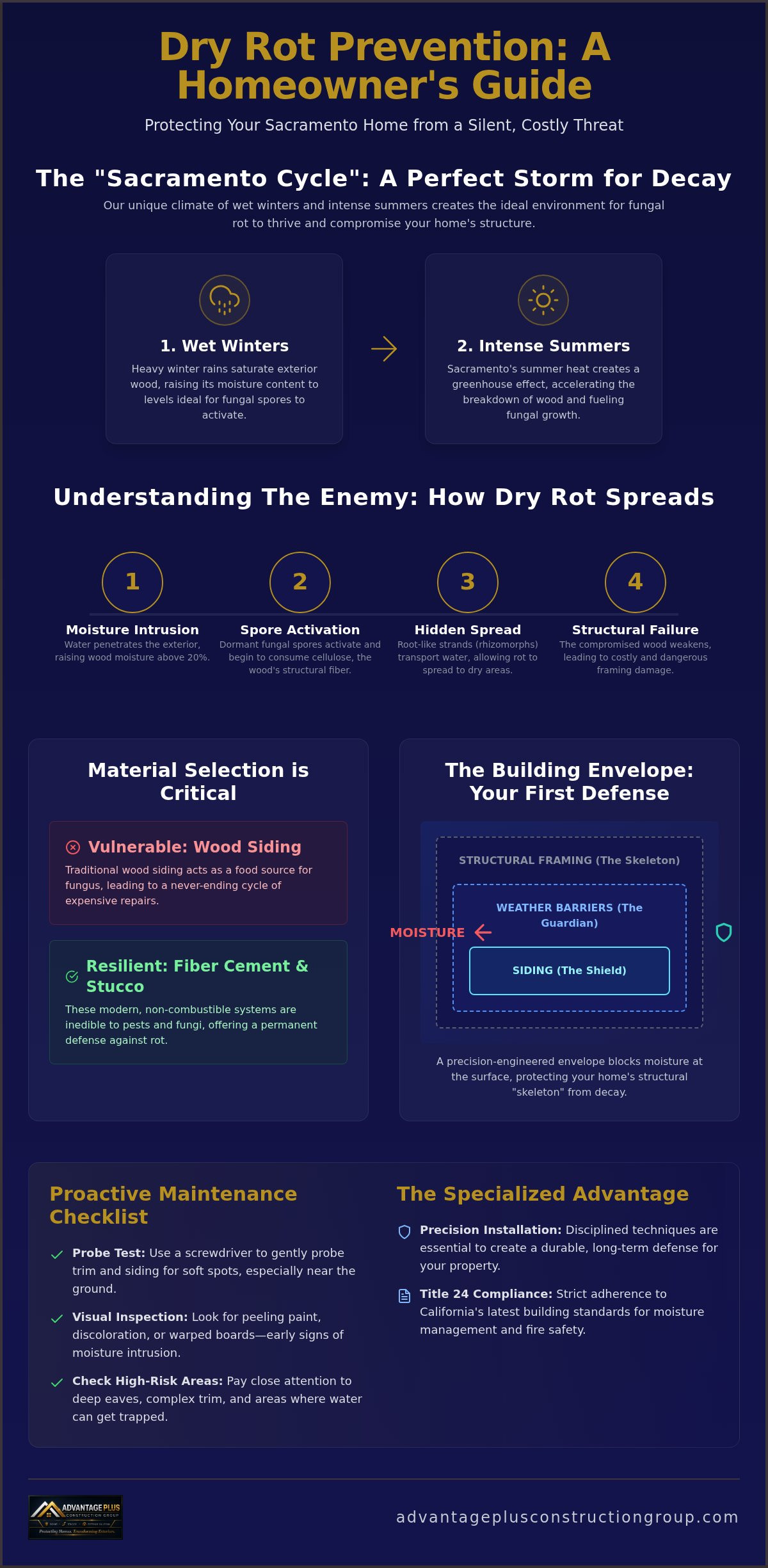
Dry rot isn't just a cosmetic annoyance. It's a biological invasion. For homeowners in the Central Valley, the stakes are exceptionally high because of our unique environmental conditions. We call it the "Sacramento Cycle." During our heavy winter rains, exterior wood becomes saturated. When the intense summer heat arrives, it creates a greenhouse effect within your walls. This environment accelerates the breakdown of traditional wood siding, turning a minor soft spot into a structural catastrophe. Effective dry rot prevention Sacramento homes require starts with understanding that this invisible enemy operates beneath the surface. By the time you notice a patch of peeling paint, the fungal infection may have already compromised the framing underneath.
Understanding the Fungal Lifecycle
To protect your property, you must first understand the enemy. What is dry rot? It's a fungal infection caused by Serpula lacrymans, a specialized organism that consumes cellulose. This is the substance that gives wood its structural strength. When wood moisture content exceeds 20%, dormant spores activate and begin their work. They don't stay confined to the wet area. They grow through "rhizomorphs," which are root-like strands that transport moisture to dry sections of the home. This allows the fungus to spread deep into your home's framing. It's a disciplined, relentless process of decay. Despite its name, "dry" rot always starts with water intrusion. It's a misnomer that masks the true cause: failed moisture management.
Sacramento’s Specific Risk Factors
Our local climate presents challenges that general contractors often overlook. The Delta breezes carry localized humidity into exterior trim, keeping wood damp even on sunny days. This moisture lingers in the shadows of the intricate architectural styles found in Roseville and Granite Bay. These designs often feature deep eaves or complex trim work that trap water against the structure. As of January 1, 2026, California's Title 24 building standards have become even more stringent, reflecting the urgent need for better moisture barriers. Older homes often lack these modern defenses. They rely on outdated materials that can't handle the Central Valley's shifting humidity. To achieve true dry rot prevention Sacramento homes need, we must look beyond surface aesthetics and focus on the technical integrity of the exterior envelope.
- Cellulose Consumption: The fungus literally eats the strength out of your home's skeleton.
- Hidden Spread: Rhizomorphs allow the infection to travel through masonry to reach fresh wood.
- Structural Failure: What looks like a small soft spot often hides thousands of dollars in framing damage.
The transition from a secure home to a compromised structure happens quietly. It's a slow-motion disaster that rewards proactive maintenance and punishes delay. We approach this threat with the discipline of a guardian, ensuring that every layer of your home's exterior is engineered to repel moisture before the first spore can take root.
The Building Envelope: Your Home’s First Line of Defense
At Advantage Plus Construction Group, we approach your property with the mindset of a Specialized Guardian. We recognize that your home isn't just a collection of materials; it's a complex system designed to keep you safe and dry. The building envelope is the technical term for the physical separator between your conditioned indoor living space and the unconditioned Sacramento environment. It includes your siding, windows, doors, and the hidden barriers beneath them. When this "skin" is compromised, the structural "skeleton" of your home becomes vulnerable. Effective dry rot prevention Sacramento homes require begins with a holistic understanding of this system rather than viewing siding as a purely aesthetic choice.
A leak in the exterior skin is a direct threat to your home's framing. Water that penetrates the outer layer can remain trapped against wooden studs and headers for weeks. This creates the exact conditions needed for fungal spores to thrive. Because these failures happen behind the scenes, professional exterior envelope services are essential for identifying vulnerabilities before they manifest as visible rot. We focus on the integrity of the entire assembly, ensuring that every component works in harmony to repel moisture and preserve your investment.
The Anatomy of a Protective Shield
A high-performance exterior system relies on three critical layers of defense. First, the Water-Resistive Barrier (WRB) acts as the primary shield against liquid water while allowing water vapor to escape. Second, flashings serve as the unsung heroes of your home. These metal or flexible membranes direct water away from vulnerable window and door headers, preventing the most common points of failure. Finally, modern rain screens and air gaps provide a dedicated space for the home to "breathe." This allows any incidental moisture to evaporate quickly, ensuring that the wood remains dry and the structure stays secure. These elements represent a disciplined, detail-oriented approach to craftsmanship that prioritizes longevity over temporary fixes.
Where Most Contractors Fail
Many generalists fall into the trap of "caulk-and-walk" temporary fixes. They use high-grade sealants to mask deeper structural issues, which only delays the inevitable. True dry rot prevention Sacramento homes need involves more than just a tube of caulk. We frequently see failures caused by the inadequate overlapping of moisture barriers at joints and corners. When these technical flashing details are overlooked, water finds a path of least resistance into your walls. A general contractor might focus on the visual appeal of a project, but a specialized expert prioritizes the technical nuances that prevent moisture intrusion. Our commitment is to doing it right the first time, providing a level of professional reliability that generalists simply cannot match. If you suspect your current siding is failing, a professional evaluation of your building envelope is the first step toward long-term peace of mind.
Material Selection: Fiber Cement and Stucco as Rot-Resistant Shields
Choosing the right exterior material is a decisive act of protection. In the Sacramento region, traditional wood siding often fails because it acts as a food source for the very fungi we aim to defeat. While vinyl siding is often marketed as a low-maintenance alternative, it can inadvertently trap moisture against your home’s sheathing; this creates a hidden breeding ground for decay. True dry rot prevention Sacramento homes require involves selecting materials that are fundamentally incompatible with fungal growth. By transitioning to advanced systems like fiber cement or professional stucco, you move from a cycle of constant repair to a state of permanent security. These materials don't just look superior. They perform under the specific environmental pressures of the Central Valley, ensuring that fiber cement siding durability becomes a cornerstone of your home's defense.
Fiber Cement: The Ultimate Rot-Proof Solution
Fiber cement stands as the gold standard for homeowners seeking a permanent remedy for moisture intrusion. Composed of a disciplined blend of Portland cement, sand, and cellulose fibers, this material is virtually immune to the biological processes that destroy wood. It doesn't rot. It doesn't buckle. It doesn't provide a foothold for the Serpula lacrymans fungus. Beyond its resistance to moisture, fiber cement offers a secondary layer of defense by repelling wood-boring insects like termites and carpenter ants. These pests often follow the trail of softened, damp wood, but they find no sustenance in a cementitious barrier. For a property owner, this represents a "set it and forget it" investment. You gain the aesthetic warmth of natural wood grain without the inherent vulnerabilities that lead to structural failure.
Stucco Systems: Seamless Protection
Modern stucco systems provide a different but equally effective form of protection. When applied by specialists, stucco creates a continuous, seamless moisture shield that wraps your home in a protective shell. This is not a simple layer of plaster. A professional system utilizes a complex assembly of lath, base coats, and finish layers designed to shed water efficiently. In Sacramento's climate, the inclusion of weep screeds is non-negotiable. These specialized components allow any incidental moisture that manages to get behind the system to drain out at the foundation line, preventing it from saturating the framing. This technical precision is why stucco contractors in Sacramento CA must be viewed as system specialists rather than general laborers. A properly installed stucco envelope offers a level of environmental resistance that few other materials can match, providing a clean, lasting aesthetic that reinforces your home’s structural integrity.
- Fiber Cement: Immune to fungal decay and wood-boring pests.
- Stucco: A continuous, engineered barrier with integrated drainage.
- Longevity: Both materials offer a lifespan that far exceeds traditional timber.
We prioritize these premium materials because they align with our commitment to doing it right the first time. By removing the biological "fuel" that rot requires, we take the weight of maintenance anxiety off your shoulders. Your home deserves a guardian that doesn't require constant vigilance; it deserves a shield that lasts a lifetime.
Strategic Maintenance: Proactive Steps to Safeguard Your Structure
Maintaining your home's exterior shouldn't be a source of constant stress. It requires a disciplined, methodical approach to identify risks before they evolve into structural failures. For effective dry rot prevention Sacramento homes depend on, you must act as a vigilant observer of your property's defenses. A simple probe test is your most effective tool. Use a small screwdriver to gently press against window sills, door frames, and corner boards. If the wood feels soft or yields to pressure, the cellular structure has already begun to fail. Similarly, pay close attention to your paint. Bubbling, cracking, or peeling paint often indicates that moisture is trapped behind the coating, creating an ideal environment for fungal growth. Gutter health is equally vital. When gutters overflow, they saturate the siding below, bypassing the natural shedding capabilities of your building envelope.
The Annual Exterior Audit
A thorough audit once a year is the hallmark of a responsible homeowner. The 6-inch rule is a non-negotiable standard for structural health. Ensure there's at least a six-inch clearance between the soil or mulch and your siding. This prevents wicking, a process where moisture travels upward into the wood fibers. Inspect every penetration point, including dryer vents, outdoor light fixtures, and hose bibs. These are common breach points where the exterior skin is interrupted and moisture can sneak behind the barrier. If you notice persistent issues in these areas, it may be among the signs you need new siding to restore your home's resilience.
Managing Irrigation and Landscaping
In the Sacramento region, misaligned sprinklers are the primary cause of localized rot. A system that repeatedly sprays the side of your house will eventually overwhelm even the best moisture barriers. We often find that homeowners prioritize a green lawn while inadvertently rotting their home's framing. Likewise, dense foliage like ivy might look charming, but it traps humidity against your walls and prevents the siding from drying. Proper grading is the final piece of the puzzle. The ground should always slope away from your foundation to ensure water moves toward drainage systems rather than pooling against your home's skeleton. A disciplined eye saves thousands in future repairs. If your self-inspection reveals soft spots or chronic moisture issues, contact us for a professional exterior envelope assessment to secure your home’s future.
The Specialized Advantage: Precision Installation for Long-Term Security
The final defense against structural decay isn't found in a bucket of paint or a single layer of siding. It's found in the discipline of the installation process. For comprehensive dry rot prevention Sacramento homes require, the difference between a temporary patch and a permanent cure lies in specialized project management. A general contractor might view a siding project as a surface-level upgrade. We see it as a technical restoration of the exterior envelope. By choosing a specialist, you move away from the uncertainty of repetitive repairs. You embrace a methodology that prioritizes structural performance, environmental resistance, and professional reliability. Precision is our standard.
Our Specialized Project Management Process
Our approach begins long before the first board is installed. We assign specialized project managers to every job to ensure absolute accountability. This process starts with detailed site preparation. We don't just cover up existing issues. We identify and remediate hidden structural damage before the new skin is applied. This ensures that every flashing, barrier, and joint meets the rigorous 2026 Title 24 building standards. Our oversight guarantees timely completion and budget compliance. It's a disciplined, detail-oriented, and unhurried workflow that rejects shortcuts. We believe in doing it right the first time, protecting your property from the high stakes of moisture intrusion.
Your Investment in Longevity
Investing in premium fiber cement or professional stucco systems is a strategic decision for your property's future. In the competitive Sacramento real estate market, particularly in areas like Roseville and Granite Bay, a secure exterior significantly enhances long-term property value. The cost-benefit is clear. Preventing rot through specialized installation is far more economical than the escalating price of severe structural repairs. This proactive approach to dry rot prevention Sacramento homes need ensures that your home’s shield remains impenetrable. Beyond the financial advantages, you gain something more valuable: peace of mind. You can finally transition from the anxiety of property maintenance to the satisfaction of ownership. Your home becomes a sanctuary protected by a seasoned expert. Secure your home with a professional exterior evaluation and take the weight of responsibility off your shoulders.
Securing Your Home’s Future Against the Elements
Protecting your property requires more than just high-quality siding; it demands a disciplined commitment to structural integrity. You've learned that effective dry rot prevention Sacramento homes need involves a precision-engineered building envelope and the selection of materials that refuse to harbor fungal growth. By moving away from the vulnerabilities of traditional wood toward premium fiber cement or professional stucco, you're not just making a repair. You're establishing a permanent defense that stands firm against the Central Valley's challenging climate.
As your Specialized Guardian, we bring niche expertise to the Sacramento region, focusing on technical nuances that generalists often overlook. We replace the stress of hidden damage with the confidence of a resilient structure. Our team of fiber cement and stucco specialists is ready to help you transition from maintenance anxiety to the lasting satisfaction of a protected home. Request a Professional Exterior Envelope Consultation today to ensure your sanctuary remains secure for decades to come. Your investment deserves the highest standard of professional reliability, and we're here to provide the long-term security your property requires.
Frequently Asked Questions
Is dry rot common in the dry Sacramento climate?
Dry rot is extremely common in Sacramento, Roseville, and Granite Bay. Our region experiences heavy winter saturation followed by intense summer heat; this creates a greenhouse effect within your walls. This cycle provides the moisture and temperature needed for fungal spores to activate. Effective dry rot prevention Sacramento homes require focuses on managing this seasonal moisture before it reaches the structural timber. Without professional moisture management, local wood siding remains highly vulnerable to structural decay.
Can you just paint over dry rot to stop it?
No, you cannot stop dry rot by painting over it. Paint acts as a vapor barrier that traps existing moisture inside the wood, which actually accelerates the fungal growth. This is a common "caulk-and-walk" mistake that hides the damage while the fungus continues to consume the cellulose. Proper remediation in Loomis or Penryn requires removing the infected material and addressing the source of the water intrusion before applying a new protective skin.
How much does it cost to replace rotted siding in Sacramento?
Repair costs in the Sacramento area depend entirely on the extent of the damage. Minor cosmetic repairs to trim or fascia are relatively affordable, but costs escalate rapidly if the fungus has spread to the structural framing. If your home's skeleton is compromised, the project requires specialized oversight to ensure structural integrity. We recommend a professional evaluation to determine the full scope of any necessary remediation before minor issues become major, expensive failures.
What is the best siding material to prevent dry rot?
Fiber cement is widely considered the best material for dry rot prevention Sacramento homes. Unlike traditional timber, fiber cement is composed of sand, cement, and cellulose fibers that are immune to fungal decay. It doesn't provide a food source for rot or wood-boring insects. Professionally applied stucco systems also offer superior defense in areas like Orangevale and Fair Oaks by creating a continuous, seamless moisture shield around your property.
Does homeowners insurance cover dry rot repair?
Homeowners insurance policies in California almost never cover dry rot repair. Insurance is designed to cover sudden, accidental damage like fire or storm impact. Because dry rot is a biological process that occurs over time, carriers categorize it as a maintenance issue. This makes proactive inspections and the use of rot-resistant materials essential for protecting your long-term financial investment. Delaying repairs only increases out-of-pocket expenses as the damage spreads through your home's framing.
How can I tell if my stucco has dry rot behind it?
Detecting rot behind stucco requires a disciplined eye. Look for dark staining, persistent dampness at the base of walls, or "bubbling" in the finish. Cracks around window corners or door frames are also common entry points for moisture. If the stucco feels soft or sounds hollow when tapped, it may indicate that the underlying sheathing or framing has begun to fail. A professional moisture probe test is often the only way to confirm hidden structural damage.
How long does fiber cement siding last in California?
Fiber cement siding is engineered for longevity, often lasting 30 to 50 years in the California climate. Its resistance to UV rays, high heat, and moisture makes it ideal for local areas like Citrus Heights and Rocklin. When installed by specialized project managers who follow strict moisture barrier standards, this material provides a permanent solution that requires very little maintenance over its lifespan. It is a premium investment that offers lasting security and enhanced curb appeal.
Is stucco or siding better for preventing moisture damage?
Both stucco and fiber cement siding are excellent choices, provided they are installed as part of a complete exterior envelope system. Stucco provides a seamless, protective shell that is highly effective in our climate. Fiber cement siding offers the advantage of being easier to inspect and maintain over time. The "best" choice often depends on your home’s architectural style and your personal preference for curb appeal. Both systems require specialized installation to ensure long-term moisture resistance.


