

Stucco’s greatest risk isn’t always the crack you can see. Moisture may be working behind the finish, where poor drainage or installation can put your home’s structure at risk. If you’re weighing the stucco exterior pros and cons, that distinction matters: stucco can offer lasting protection, but its performance depends on how the entire exterior envelope manages water.
It’s reasonable to have questions about dry rot, visible cracking, and whether stucco is a sound long-term investment. HomeGuide reports that properly installed and maintained stucco can last 50 years or longer, but lifespan alone doesn’t tell the whole story. Sacramento’s hot summers and rainy periods make careful moisture management an important part of the decision.
This guide will help you assess stucco’s durability, maintenance needs, and potential drawbacks, then compare it with fiber cement siding. You’ll see how installation quality and drainage affect performance, and find a practical way to choose the exterior that suits your home, priorities, and plans for the years ahead.
Key Takeaways
- Understand how stucco’s layered construction protects your home’s exterior and why each layer matters.
- Weigh the stucco exterior pros and cons, including durability and fire resistance alongside cracking and repair considerations.
- Learn what Sacramento’s hot summers and wet winters demand from an exterior system.
- Compare stucco with fiber cement siding based on your home’s style and maintenance priorities.
- Recognize why moisture management and skilled oversight are central to protecting the structure behind the finish.
What is a Stucco Exterior? The Guardian of Your Home’s Envelope
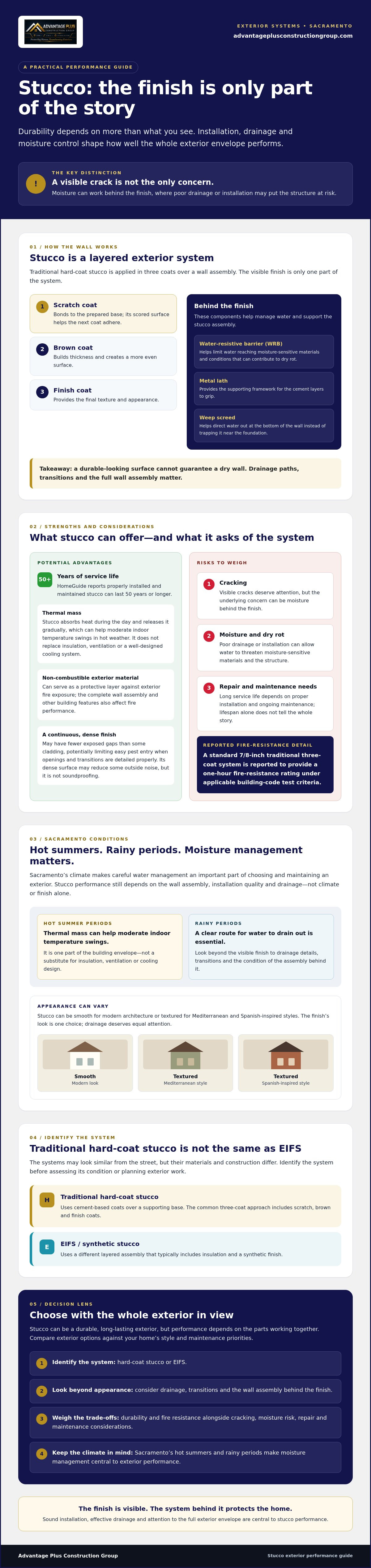
Stucco isn’t simply a decorative coating or a substitute for paint. It’s a cementitious exterior system applied in layers over a wall assembly. Each component contributes to weather protection and moisture management. The finish is what you see, but the layers beneath it help determine how well the home’s exterior envelope performs. For background on its history and traditional application, see What is Stucco.
Traditional hard-coat stucco is commonly applied in three coats. The scratch coat bonds to the prepared base and is scored to help the next coat adhere. The brown coat builds thickness and creates a more even surface. The finish coat provides the final texture and appearance. Together, these layers form a durable exterior finish, but they must work with the components behind them, not conceal shortcomings in the wall assembly.
That distinction matters when you assess the stucco exterior pros and cons. Think of stucco as part of an exterior envelope, not a painted shell. Its appearance can range from smooth surfaces suited to modern architecture to textured finishes associated with Mediterranean and Spanish styles. The visual choice is only part of the decision; drainage details deserve equal attention.
The Components of a Modern Stucco System
Behind the finish, several elements help protect the wall. A water-resistive barrier (WRB) helps limit water reaching moisture-sensitive materials, reducing conditions that can contribute to dry rot. Metal lath provides a supporting framework, or “skeleton,” for the cement layers to grip. At the bottom of the wall, a weep screed helps direct water out rather than trap it near the foundation.
These parts work as a system. If water gets behind the stucco, the barrier and drainage path matter. A durable-looking finish alone can’t guarantee that the wall stays dry. That’s why evaluating an exterior means looking at transitions, drainage, and the wall assembly as a whole.
Traditional vs. Synthetic Stucco (EIFS)
Hard-coat stucco uses cement-based coats over a supporting base. Exterior Insulation and Finish Systems (EIFS), sometimes called synthetic stucco, use a different layered assembly that typically includes insulation and a synthetic finish. They may look similar from the street, but their materials and construction differ. Identify which system is present before assessing its condition or planning exterior work.
In Northern California, hard-coat’s cement-based construction can appeal to homeowners seeking a robust finish, though performance still depends on sound installation and moisture management. Advantage Plus Construction Group specializes in stucco systems and exterior envelopes, with a focus on durable protection. The principle is straightforward: attend to the layers and drainage details, not just the visible surface.
The Structural Pros: Why Stucco Remains a Premium Choice
Stucco’s strongest advantage is the combination of a substantial exterior finish and long service life. HomeGuide reports that properly installed and maintained stucco can last 50 years or longer. That durability isn’t automatic: the wall assembly must manage moisture, and the finish needs appropriate care. Done well, stucco offers a lasting protective surface rather than an exterior that needs frequent replacement.
Stucco also brings thermal mass to Sacramento homes. It absorbs heat during the day and releases it gradually, which can help moderate indoor temperature swings during hot weather. It won’t replace insulation, ventilation, or a well-designed cooling system, but it can contribute to a more stable building envelope.
Fire Defense and Structural Integrity
As a non-combustible exterior material, stucco can serve as a protective layer between an exterior fire exposure and the home’s underlying components. This matters to California homeowners, including those in wildland-urban interface areas, though the complete wall assembly and other building features also affect a home’s fire performance.
A standard 7/8-inch traditional three-coat stucco system is reported to provide a one-hour fire-resistance rating under the applicable building-code test criteria.
A continuous stucco finish can also have fewer exposed gaps than some types of cladding, potentially limiting easy entry points for pests when openings and transitions are properly detailed. Its dense surface may help reduce some outside noise, but it shouldn’t be treated as soundproofing. The wall’s full construction matters.
Curb Appeal and Property Appreciation
Stucco’s visual range suits the varied architecture found in Sacramento-area communities, including the refined, substantial look often seen in Granite Bay. Smooth finishes complement modern homes; textured finishes can reinforce Mediterranean and Spanish-inspired designs. Pigment incorporated into the finish can reduce reliance on a separate painted surface, although color and finish still need appropriate maintenance over time.
Stucco also avoids some vulnerabilities associated with other materials: cement-based coats don’t rust or warp, and the finish itself doesn’t rot. That doesn’t make the whole wall immune to damage. Moisture intrusion can still harm materials behind the stucco, so sound detailing and periodic attention remain essential. The stucco exterior pros and cons depend not only on the visible finish but also on the integrity of the complete exterior envelope.
A system-level evaluation can help clarify how durability, appearance, and moisture control fit together. Explore exterior envelope expertise as you assess your home’s long-term protection needs.
Stucco Exterior Pros and Cons: Cracking, Maintenance, and Moisture Risks
Stucco’s strength comes with an important condition: the finish and the layers behind it must work together. Cracks, repairs, and hidden moisture deserve attention because a surface flaw can sometimes point to a problem in the exterior envelope, not just a cosmetic blemish. That’s a key part of weighing the stucco exterior pros and cons.
The Reality of Stucco Cracking
Hairline cracks can develop as a home settles or responds to movement, including seismic shifts. A fine, isolated crack isn’t automatically evidence of structural damage. But cracks that widen, return after patching, spread, or appear alongside signs of moisture deserve closer evaluation. A qualified assessment can help determine whether the cause is surface-level movement or a deeper concern.
Be cautious about simply filling a crack and repainting. A patch may hide the symptom without addressing movement or water entry, and an unsuitable repair can interfere with the finish or drainage. Flexible acrylic finishes may accommodate some minor movement, depending on the system, but they can’t correct a problem in the wall assembly.
Moisture Management and the Dry Rot Threat
Water can reach the wall through cracks, failed seals, or poorly detailed transitions around windows and other openings. If flashing, the water-resistive barrier, or the drainage path is improperly installed or obstructed, moisture may become trapped behind the stucco. The finish can still look intact while dampness affects vulnerable materials underneath, creating conditions that can lead to dry rot and costly structural repairs.
A careful exterior-envelope review looks beyond the visible surface. It considers how water is directed away from openings and transitions, and whether the wall has a functioning route to drain. This system-level approach is more protective than treating every crack as an isolated defect.
Professional stucco repairs can be more involved than replacing an individual section of modular siding because the repair may require matching the finish and investigating what caused the damage. The right scope depends on the condition beneath the surface, so cost and effort vary. For additional clues to watch for across different exterior materials, review these signs you need new siding on your home.
Stucco calls for informed maintenance, not constant intervention. Pay attention to changes, avoid covering recurring cracks without understanding their cause, and treat moisture clues as a reason to examine the whole assembly. Early investigation can help protect the wall behind the finish.
Stucco Performance in Sacramento: Climate-Specific Considerations
Sacramento’s exterior conditions shift with the seasons: intense summer sun gives way to winter rain. That contrast makes material choice only part of the decision. The wall must also manage heat, water, and movement at the foundation without letting small weaknesses undermine the home’s protection.
Thermal Mass in the Central Valley
Stucco’s density can absorb heat during the day and release it gradually, helping moderate indoor temperature swings. In Roseville, where summer days can exceed 100°F, this thermal lag may be useful, but it doesn’t guarantee a cooler home or replace insulation and efficient cooling. Light-colored finishes can reflect more sunlight than darker ones, which may reduce heat absorbed at the exterior surface. The overall effect depends on the full building design, including windows, insulation, and ventilation.
Winter brings a different test. Heavy rain in communities such as Citrus Heights and Rocklin can expose weak drainage details, especially around windows, wall transitions, and the base of the exterior. A properly designed drainage path helps water that gets behind the finish exit rather than remain against moisture-sensitive materials. Stucco’s performance depends on those concealed details as much as on the visible surface.
Ground conditions matter, too. Where clay-rich soils expand and contract as moisture levels change, foundation movement can place stress on exterior finishes and contribute to cracking. The effect varies by property, so don’t assume every crack signals a foundation problem. Consider the home’s movement history and the pattern of damage, and have concerning changes assessed before treating the surface alone.
Local Regulations and Best Practices
Exterior renovation requirements depend on the project and local jurisdiction. California’s 2025 Building Standards Code took effect January 1, 2026, and permit applications submitted on or after that date must comply with the updated standards. Confirm which requirements and permits apply to your specific work with the local building department rather than relying on a general rule.
Local experience in Roseville and Loomis can help account for site conditions, drainage, and the details that protect an exterior assembly. Before work begins, clarify who is responsible for checking applicable requirements and coordinating the project. For a closer look at how these systems protect a home, read about an exterior envelope contractor in Sacramento.
When weighing stucco exterior pros and cons, consider your home’s exposure, not just its appearance. For guidance on stucco systems and exterior envelope protection, discuss your Sacramento exterior project with a specialist.
Making the Right Choice: Stucco vs. Fiber Cement Siding
Stucco and fiber cement can both suit Sacramento homes, but neither is automatically the better protective system. Your decision should account for architectural style, weather exposure, maintenance preferences, and how each complete wall assembly handles water and impact. Look beyond the surface to the condition and protection of the home’s core.
Stucco vs. Fiber Cement: The Performance Duel
Stucco creates a continuous cement-based finish, while fiber cement siding uses manufactured boards or panels with joints and transitions that must be detailed correctly. Both are non-combustible materials, but fire performance depends on the complete assembly and the specific product specifications. Impact resistance and moisture behavior also vary by system, installation, and exposure, so avoid choosing based on a broad claim that one material always performs better.
For stucco, sound drainage details help manage water that reaches behind the finish. With fiber cement, the cladding, joints, and water-management layers need to work together. A modular siding format may appeal if you prefer defined boards, panel lines, and a more contemporary or traditional siding appearance. Stucco may better complement Mediterranean, Spanish, or smooth modern designs. For a closer look at the investment factors, see this guide to the cost of stucco vs fiber cement siding in Sacramento.
Compare more than initial expense. Across a 30-year ownership horizon, consider installation scope, inspection and maintenance needs, potential repairs, and the likelihood of replacing affected sections. No material guarantees a particular lifecycle cost; the home’s condition and installation quality influence the outcome.
Choosing a System for Your Home
In Roseville or Granite Bay, neighborhood alone shouldn’t dictate the choice. Consider the home’s design, site exposure, existing wall condition, and how reliably the proposed system will manage moisture. Advantage Plus Construction Group specializes in stucco systems, fiber cement siding, and exterior envelopes, with a focus on protecting structural components and preventing dry rot. The goal is to address the complete exterior envelope, not just select a finish that looks right.
A professional evaluation can help clarify which material best fits your home and what the existing exterior assembly requires. As you weigh the stucco exterior pros and cons, prioritize a system suited to your architecture and installed with careful attention to the full envelope.
Protect your home with a professional stucco system evaluation
Choose an Exterior That Protects for the Long Term
The right exterior is more than a finish. Stucco can offer lasting durability and a distinctive look, while fiber cement may better suit homeowners seeking a modular siding style. Either choice depends on the home’s architecture and, crucially, how well the complete exterior envelope manages moisture. That’s the central lesson in weighing the stucco exterior pros and cons: protection relies on sound system design and careful installation, not appearance alone.
Advantage Plus Construction Group brings Sacramento exterior-envelope expertise, fiber cement siding and stucco systems, and project management to help homeowners make an informed choice. A professional evaluation can help you consider your home’s condition, design, and long-term protection needs.
Contact Advantage Plus Construction Group to discuss your stucco or fiber cement exterior project
Frequently Asked Questions
How long does a professional stucco exterior last in Sacramento?
Properly installed and maintained stucco can last 50 years or longer, according to HomeGuide’s 2026 durability information. Actual service life depends on installation quality, drainage, exposure, and ongoing care. Sacramento’s hot summers and rainy winters make moisture management especially important. Keep an eye on cracks and wall openings, and investigate changes that recur or appear alongside signs of water intrusion.
Is stucco more expensive than fiber cement siding?
There isn’t one answer for every home. The total investment depends on the existing wall’s condition, project scope, material selection, access, and finish details. Rather than compare materials alone, consider installation requirements, expected maintenance, repair needs, and replacement over your ownership period. The stucco exterior pros and cons become clearer when you compare complete systems and long-term priorities, not just the initial estimate.
Can stucco be repaired, or does the whole wall need to be replaced?
Stucco can often be repaired without replacing an entire wall, especially when damage is limited and the underlying assembly remains sound. The repair should address the cause, not only cover the visible crack or damaged finish. If damage is widespread or moisture has affected materials behind the stucco, a broader repair may be needed. Have recurring cracks or suspected water intrusion evaluated before choosing a repair scope.
Does stucco help with home insulation and energy bills?
Stucco’s thermal mass can absorb heat during the day and release it gradually, helping moderate indoor temperature swings. That’s different from insulation, and stucco alone doesn’t guarantee lower energy bills. Comfort and energy use also depend on insulation, windows, air leakage, ventilation, and heating and cooling equipment. A light-colored finish may reflect more sunlight than a dark one, but results depend on the whole home.
What are the early signs of moisture damage behind stucco?
Watch for recurring or widening cracks, staining, peeling finishes near openings, persistent musty odors, or wood trim that appears swollen or deteriorated. These signs don’t prove moisture is trapped behind stucco, but they warrant investigation, particularly if they persist after rain. Homeowners in Roseville, Granite Bay, New Castle, Rocklin, Penryn, Loomis, Citrus Heights, Orangevale, Fair Oaks, Carmichael, and Antelope should pay attention to changes around windows and wall transitions.
How often should I paint or seal my stucco exterior?
There’s no universal schedule for painting or sealing stucco. The right timing depends on the existing finish, exposure, condition, and product guidance. Some stucco finishes have color integrated into the material, while others may be painted; neither should be assumed to need the same care. Inspect the surface periodically, follow finish-specific recommendations, and address cracks or moisture concerns before applying a new coating.
Is stucco fireproof for homes in California?
Stucco is non-combustible, but “fireproof” overstates what any exterior finish can promise for an entire home. The complete wall assembly, openings, and other construction details affect fire performance. A standard 7/8-inch traditional three-coat stucco system is reported to provide a one-hour fire-resistance rating under applicable test criteria. For a home in a fire-prone area, confirm the requirements for the specific project and location.


