

Your home's exterior isn't just a design choice; it's the primary shield against Sacramento's brutal triple-digit heat and the increasing threat of wildfire seasons. When you weigh the merits of stucco vs fiber cement siding Sacramento homeowners often find themselves caught between tradition and modern performance. You want a facade that looks prestigious, stays cool under the Valley sun, and remains impervious to the moisture that breeds silent, costly dry rot. Choosing the right material is the difference between a home that demands constant attention and one that provides lasting peace of mind.
It's natural to feel overwhelmed by the technical details of the 2026 California Wildland-Urban Interface codes or the long-term maintenance requirements of different materials. We understand that your property is your most significant investment. Protecting its structural integrity is your top priority. This guide provides the clarity you need to choose between these two premium options. We'll compare their fire resistance, thermal performance, and total ownership value. Our goal is to help you secure an exterior that offers defense, longevity, and professional craftsmanship, ensuring your home remains a source of pride for decades.
Key Takeaways
- Understand the exterior envelope as your home's primary shield against moisture, preventing the silent threat of dry rot before it compromises structural integrity.
- Compare the thermal resilience of stucco vs fiber cement siding Sacramento to determine which material provides the best protection against 100-degree heat and intense UV radiation.
- Evaluate the long-term maintenance requirements and durability of these premium materials to ensure your investment delivers maximum value over a 50-year lifespan.
- Learn how modern siding selections align with the 2026 California building codes to provide essential fire resistance in designated hazard zones.
- Discover why specialized installation oversight is the critical factor in creating a weather-tight exterior that generalist contractors often overlook.
Defining the Exterior Home Envelope: Stucco and Fiber Cement Basics
Your home's structural integrity begins at the perimeter. The exterior envelope serves as a sophisticated shield; it is a complex system designed to keep internal spaces dry, temperate, and secure. When evaluating stucco vs fiber cement siding Sacramento residents must look beyond aesthetics to understand the chemical and physical composition of their home's defense. The choice between these materials dictates how your property handles environmental stress for the next fifty years.
Traditional Stucco building material is a time-tested masonry product. It consists of a specific blend of cement, sand, lime, and water. When applied in multiple layers, it cures into a hard, stone-like surface that provides a seamless finish. Fiber cement, by contrast, is a high-performance composite. It blends cellulose wood fibers with Portland cement to create a material that mimics the look of natural wood while offering the durability of stone. This blend creates a resilient plank that resists the rot, warping, and insect damage that often plagues traditional wood siding.
The Role of Exterior Home Envelope Protection
Your home envelope is a hard-working barrier. It manages three critical elements: moisture, air, and thermal transfer. In Sacramento, where heavy winter rains follow months of intense heat, a failure in this system leads to catastrophic structural decay. Moisture that bypasses the surface can cause dry rot in the wall studs. This problem often remains hidden until it becomes a structural emergency. Professional installation prioritizes the moisture barrier behind the finish. This secondary layer ensures that even if the primary surface is breached, the framing remains dry, secure, and protected.
Stucco Systems vs. Siding: A Structural Overview
Stucco functions as a rigid, continuous shell. It provides a seamless protective layer that wraps the home in masonry. This system offers exceptional impact resistance; it stands up well to physical strikes and environmental debris. Fiber cement siding operates as a series of overlapping planks or panels. This overlapping design allows the structure to breathe and move slightly without compromising the weather seal. While stucco is prized for its solid, monolithic feel, fiber cement provides a flexible defense that resists cracking under pressure. Both systems require specialized craftsmanship to ensure the transitions at windows and doors are perfectly sealed against the elements.
Performance in the Sacramento Climate: Heat, UV, and Fire
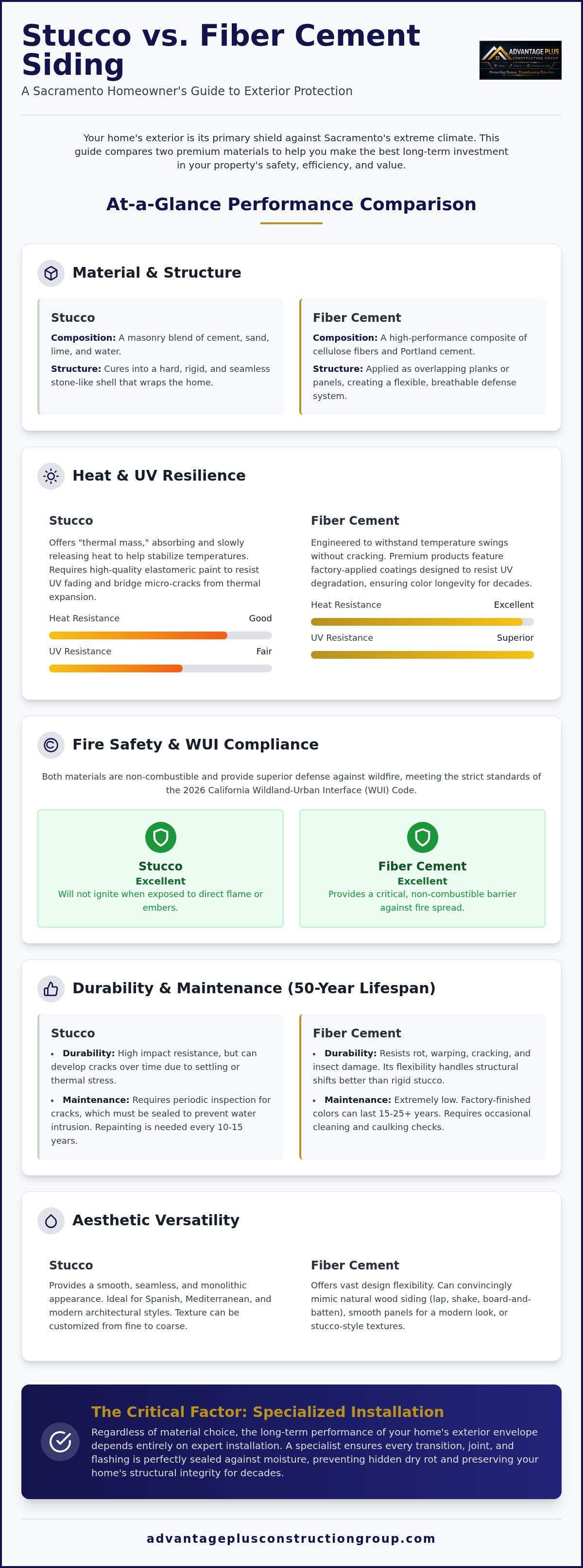
Sacramento's climate is notoriously unforgiving. With summer temperatures frequently exceeding 100 degrees, the comparison of stucco vs fiber cement siding Sacramento becomes a matter of structural survival rather than simple aesthetics. Unlike the milder coastal regions, the Central Valley experiences rapid temperature swings and intense, dry heat that stresses building materials. Stucco provides a unique "thermal mass" effect. It absorbs heat during the day and releases it slowly at night, which helps stabilize indoor temperatures when paired with a high-performance insulation system.
Surviving the Central Valley Heat
Intense UV radiation is a silent destroyer of home exteriors. It breaks down the chemical bonds in standard paint, leading to premature fading and chalking. Premium fiber cement often features factory-applied coatings engineered specifically to resist this solar degradation, maintaining its color for decades. Stucco, while naturally durable, requires high-quality elastomeric paints to bridge the microscopic gaps caused by thermal expansion. When materials heat up, they expand. Without the precision installation techniques found in International Building Code standards, this movement causes unsightly and dangerous cracking that invites moisture into the home envelope.
Fire Safety and Wildfire Resilience
Safety is the primary concern for Northern California homeowners. As of January 1, 2026, the new California Wildland-Urban Interface (WUI) Code (Title 24, Part 7) mandates stricter standards for homes in designated fire-hazard zones. Both fiber cement and stucco are recognized as superior, non-combustible materials that offer a critical line of defense against wildfires. These materials won't ignite when exposed to direct flame or drifting embers, providing a level of security that wood or vinyl simply cannot match.
- Fiber Cement: Engineered to withstand extreme heat without fueling a fire. It is often the dominant choice for modern wildfire resilience.
- Stucco Systems: Traditional three-coat stucco acts as a literal stone wall. It provides excellent fire ratings and natural insulation.
- Zone 0 Compliance: New regulations focus on the first five feet around a structure. Using non-combustible siding is essential for meeting these evolving safety standards.
A resilient exterior does more than just protect your family; it improves energy efficiency by reducing the load on your HVAC system during peak summer months. If you're concerned about how your home will handle the next record-breaking heatwave, consulting with a specialized exterior envelope expert can ensure your property is prepared for the long term.
Comparing Durability and Maintenance Requirements
Choosing between stucco vs fiber cement siding Sacramento involves looking at the next half-century of your home's life. Your exterior must defend, protect, and preserve the structural core of the property against the relentless passage of time. Fiber cement offers a reliable 50-year lifespan, while professional stucco systems can endure for 50 to 80 years when maintained with discipline. Both materials provide a formidable defense against local pests like termites, wood-boring insects, and woodpeckers that often compromise traditional wood exteriors.
Homeowners often feel anxiety when they spot fissures in their masonry. It's essential to distinguish between hairline cracks and structural concerns. Hairline cracks are common results of the natural curing process or minor seasonal settling. They require simple patching to maintain the envelope's integrity. Structural cracks, however, often signal foundation movement or deep-seated moisture issues. Specialized oversight identifies these risks early, protecting your property from the high stakes of structural repair and ensuring your investment remains secure.
The Battle Against Dry Rot
Moisture is the primary catalyst for structural failure in Northern California. While stucco forms a rigid shell, it is susceptible to thermal expansion that can create microscopic entry points for water. If these openings aren't sealed, moisture seeps behind the envelope and breeds silent dry rot. Fiber cement is virtually immune to rot and decay. Its composition of Portland cement and cellulose fibers does not support fungal growth, making it an ideal choice for the wet winter cycles of the Central Valley. Preventative maintenance is the key to longevity; a well-sealed exterior keeps the framing dry and the structure sound.
Repainting and Refinishing Cycles
The intense Sacramento sun dictates your long-term maintenance schedule. Traditional stucco requires repainting every 7 to 10 years to maintain its water-resistant properties and aesthetic appeal. This process isn't just for looks; it's a vital part of the envelope's defense. Premium fiber cement siding utilizes baked-on color technology that fuses the finish to the material in a controlled factory environment. This results in a surface that resists fading, peeling, and cracking for decades. Over a 20-year period, the cost-benefit analysis often favors fiber cement for homeowners seeking a maintenance-free lifestyle. It eliminates the recurring expense of professional painting while maintaining a pristine, high-register appearance that enhances curb value.
Aesthetic Versatility and Curb Appeal in Northern California
Your home is a reflection of your standards. The visual profile of your property should match its structural resilience. When comparing stucco vs fiber cement siding Sacramento offers a diverse architectural landscape that welcomes both traditional and contemporary finishes. Whether you live in an established historic neighborhood or a new development, the right choice enhances curb value, property prestige, and personal satisfaction. A specialized guardian of your property ensures the finish is as disciplined as the structural shield beneath it.
The Mediterranean Legacy of Sacramento
Stucco remains the definitive choice for the Spanish Colonial and Italianate homes that define many of Sacramento’s most prestigious streets. It provides the seamless, monolithic appearance required for these classic designs. Expert craftsmen can achieve various textures; choices include smooth Santa Barbara finishes, heavy lace, or traditional sand surfaces. For historic renovations, precise color matching and texture replication are essential to preserving the property's character. Stucco isn't just a material; it represents a legacy of craftsmanship, permanence, and regional identity.
The Modern Appeal of Fiber Cement
Modern homeowners in areas like Roseville and Rocklin are increasingly turning to fiber cement for its incredible design flexibility. This material mimics natural wood grain with stunning accuracy, yet it lacks the vulnerabilities of organic wood. You can select horizontal lap siding for a clean look, rustic shingles for a textured feel, or sleek panels for a contemporary aesthetic. The board-and-batten trend is particularly popular for creating vertical interest and a custom, high-end appearance. Mixing these textures allows you to highlight architectural features with precision, durability, and style.
Achieving a truly custom look requires more than just picking a color from a catalog. It demands an eye for detail and a commitment to professional standards that a generalist simply cannot provide. Your home deserves an exterior that stands out for its beauty and stays strong for its longevity. To ensure your home's new facade is installed with the highest level of professional reliability, partner with our specialized exterior design experts to start your transformation.
The Specialist Advantage: Ensuring Long-Term Protection
The choice of stucco vs fiber cement siding Sacramento is a vital step toward securing your home's future. Yet, even the finest materials fail without disciplined, expert installation. Generalist contractors often prioritize speed and superficial upgrades, missing the critical envelope details that prevent structural decay. We approach every project as a specialized guardian of your property. Our focus remains on the invisible layers, the flashing, and the moisture barriers that define a building's true longevity. This disciplined approach ensures that your home isn't just beautiful on the surface, but remains structurally sound for decades.
Precision Installation and Management
Professional reliability is built on a foundation of rigorous oversight and technical expertise. Our experienced project managers maintain a steady, unhurried pace that mirrors the careful planning of a major construction project. This methodical approach ensures that every detail is addressed correctly the first time. The most frequent points of failure in residential exteriors are the flashing and gaps around windows, doors, and rooflines. When these areas are neglected, water finds a path to the structural studs, leading to the high stakes of dry rot repair. We provide a protective, serious, and highly competent service that takes the weight of responsibility off your shoulders. Our process prioritizes structural performance, environmental resistance, and professional craftsmanship to create a weather-tight shield.
Next Steps for Your Sacramento Home
Protecting your property begins with a clear understanding of its current condition. Walk the perimeter of your home and look for warning signs like hairline cracks in masonry, peeling paint on planks, or soft spots near the foundation. These symptoms often point to a breach in the exterior envelope. Consulting with a specialist allows you to develop a custom solution that addresses your home's unique vulnerabilities while improving its visual appeal. A high-quality installation doesn't just protect; it transforms your property into a source of pride. It ensures maximum home value protection, improved energy efficiency, and total fire resistance. You can move from the anxiety of property maintenance to the lasting peace of mind that comes with high-quality defense.
Your home is likely your most significant investment. It deserves a level of care that prioritizes structural integrity over quick fixes. To ensure your property is shielded against the unique challenges of the Northern California climate, Advantage Plus Construction Group offers the niche expertise required for a truly weather-tight home. Secure your home’s future today by partnering with a specialized expert who understands the technical nuances of the craft.
Securing Your Home’s Structural Legacy
Investing in your home's exterior is a decision that defines its longevity, visual prestige, and overall defense. We've explored the critical differences between stucco vs fiber cement siding Sacramento, focusing on how each material serves as a specialized shield against the Central Valley's intense environmental stress. Whether you prefer the timeless, monolithic appeal of a three-coat stucco system or the modern, low-maintenance versatility of fiber cement, the priority remains the same: a moisture-tight, fire-resistant, and high-performance envelope.
Real security comes from precision. Advantage Plus Construction Group is specialized in Sacramento climate challenges, providing expert project management for every installation. We are dedicated to dry rot prevention and structural security, ensuring your property remains a protected asset for decades. Don't leave your most significant investment to chance. You can transition from the anxiety of maintenance to the peace of mind that comes with professional reliability. Request a Professional Exterior Envelope Consultation today to begin your home's transformation. Your property deserves the protection of a specialized guardian who does it right the first time.
Frequently Asked Questions
Is stucco or fiber cement siding better for Sacramento heat?
Both materials perform exceptionally well in Central Valley heat, but they handle solar stress differently. Stucco provides a thermal mass effect that stabilizes indoor temperatures during peak hours. Fiber cement offers superior UV resistance through factory-applied coatings that won't chalk or fade. When deciding on stucco vs fiber cement siding Sacramento residents should consider that fiber cement generally requires less frequent repainting to maintain its protective barrier against the intense sun.
Does fiber cement siding increase home value more than stucco?
Fiber cement siding consistently ranks as one of the highest-return home improvements in Northern California. The 2025 Cost vs. Value Report indicates that fiber cement delivers a 113.7% return on investment. While stucco is a prestigious, classic choice that maintains value in historic neighborhoods, fiber cement's reputation for low maintenance and modern fire resistance often appeals more to contemporary buyers looking for long-term structural security and reduced ownership costs.
How much does it cost to replace stucco with fiber cement in Sacramento?
The investment for a full exterior replacement depends on your home's square footage, architectural complexity, and the condition of the underlying structural envelope. Every property requires a custom assessment to determine a precise project scope. Factors such as necessary dry rot repairs or the removal of existing masonry layers will influence the final cost. We recommend a professional consultation to assess your home's specific needs and provide a detailed, specialized project plan.
Can fiber cement siding be installed over existing stucco?
We don't recommend installing fiber cement over existing stucco because it prevents a thorough inspection of the structural envelope. A professional installation requires stripping the exterior back to the framing to identify hidden dry rot or moisture damage. This process allows for the application of a modern, weather-tight moisture barrier. Skipping this step risks trapping old moisture against your home's studs, which compromises the long-term integrity and security of your property.
Which material is more resistant to woodpeckers and pests?
Both stucco and fiber cement are highly resistant to woodpeckers, termites, and wood-boring insects because they are cement-based materials. Unlike traditional wood siding, these surfaces don't provide a food source for pests or an easy entry point for nesting birds. This durability is a primary reason why Sacramento homeowners choose these premium materials to protect their structural core from the biological threats common in established, tree-lined neighborhoods like Land Park or East Sacramento.
What are the signs that my stucco envelope is failing?
Visible indicators of a failing envelope include large structural cracks, dark water staining, or bubbling paint on the stucco surface. You should also check for soft spots or a hollow sound when tapping the wall, which often indicates that moisture has bypassed the barrier and begun to rot the underlying wood framing. Early detection is critical. Addressing these issues immediately prevents the silent spread of dry rot and protects your home's structural stability for the long haul.
How long does a typical siding or stucco installation take in Roseville?
A professional exterior replacement typically takes between two and four weeks, depending on the weather and the size of the structure. Our methodical process prioritizes precision over speed, ensuring every flashing detail and moisture barrier is perfectly sealed. This deliberate pace reflects our commitment to doing it right the first time. While generalist contractors might promise a faster turnaround, our specialized project management ensures a disciplined, thorough installation that provides permanent protection and peace of mind.
Is fiber cement siding actually fireproof?
Fiber cement siding is classified as a non-combustible material, meaning it won't ignite or provide fuel for a fire. While no building material is entirely fireproof under extreme conditions, fiber cement is an industry-leading choice for wildfire resilience. It meets the strict 2026 California Wildland-Urban Interface building codes. This material provides an essential layer of defense for your property, significantly slowing the spread of flames compared to combustible alternatives like wood or vinyl siding.


